
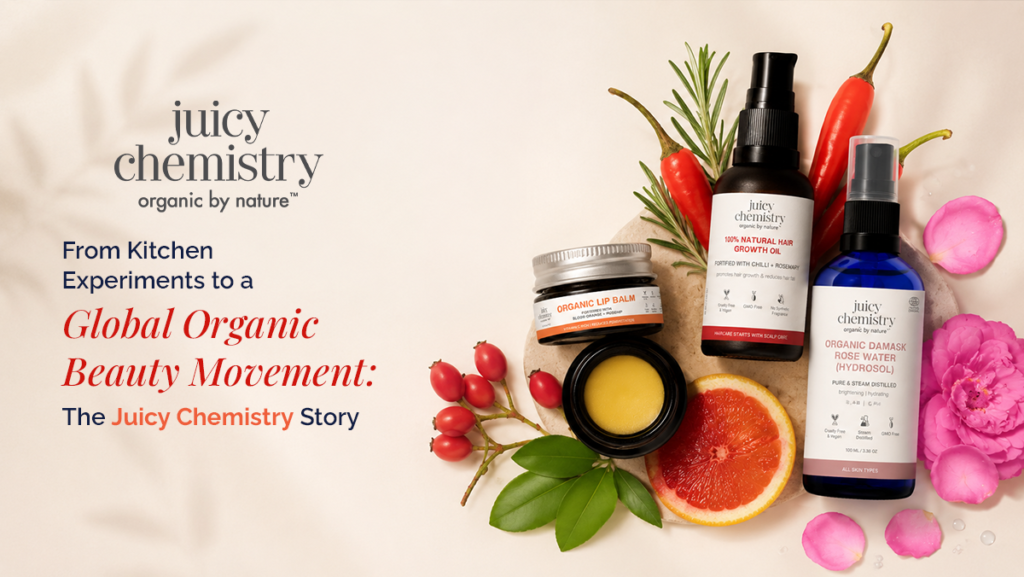
From Kitchen Experiments to a Global Organic Beauty Movement: The Juicy Chemistry Story
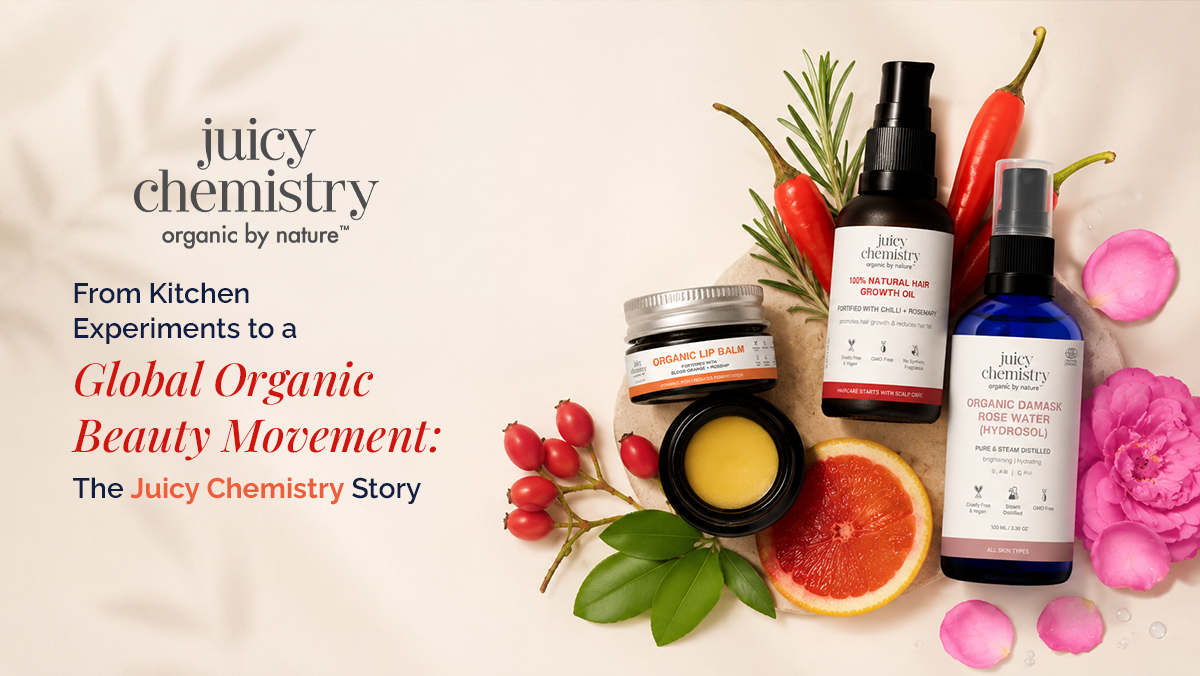
Juicy Chemistry did not begin as a business plan—it started with a simple but powerful realization. Founders Megha and Pritesh Asher noticed a troubling pattern in products marketed as “natural” or “organic.” Beautiful packaging filled with botanical imagery often hid ingredient lists containing synthetic fragrances, silicones, PEGs, and petrochemical-derived compounds like Dimethicone. This disconnect between what brands promised on the front label and what they actually delivered made them realize that the term organic was being used very loosely in the Indian market. They believed consumers deserved greater transparency, and that belief became one of the key reasons behind the creation of Juicy Chemistry.
Juicy Chemistry was born from Megha Asher’s own struggle with PCOS and acne. After experiencing the limitations of quick-fix skincare solutions, she began searching for formulations that worked with the skin rather than against it. The first product they ever made was a simple Salt & Sugar Scrub, created not for business, but out of a desire to make something honest, effective, and free from questionable ingredients. Soon after, they formulated a handcrafted hair oil, and these two products became the starting point of what would eventually grow into Juicy Chemistry. In the early days, everything was created in a small 10×10 kitchen where every batch, ingredient, and process could be personally monitored. However, as demand grew, the biggest challenge was not creating effective formulations—it was preserving their integrity while scaling. Growth required building systems that could maintain the same quality, consistency, and freshness across thousands of products.
The founders believe one of the biggest sacrifices in business is learning to say “no” more often than “yes.” There were opportunities to reduce costs through cheaper ingredients, faster suppliers, or trendy formulations, but if those options did not meet their standards, they were rejected. Maintaining ECOCERT certification became a daily commitment rather than a one-time achievement, influencing every sourcing, formulation, and manufacturing decision. When Juicy Chemistry introduced waterless skincare, they faced another major challenge—changing consumer perception of value. Most people compare skincare products by bottle size, without considering how much of the formula consists of active ingredients. In conventional skincare, water is often the first ingredient and makes up a significant portion of the product. Juicy Chemistry took a different approach by removing water and focusing on concentrated botanical oils, extracts, and actives.
At the heart of Juicy Chemistry is the belief that healthy skin is a journey, not a 24-hour transformation. Megha’s personal experience with PCOS-related acne taught her that quick fixes often come with compromises. Instead, the brand focuses on organic ingredients that support the skin’s natural functions. While results may take longer, they are often more sustainable and holistic. Even as the company has grown, the founders have stayed committed to their small-batch philosophy. For them, small-batch production does not mean staying small—it means maintaining control over quality. Every formulation, ingredient, and batch continues to undergo rigorous standards. Their belief is simple: growth should amplify values, not dilute them.
Looking ahead, the founders see consumers moving beyond beauty and focusing on overall wellbeing. Today’s customers want products that support them through different life stages, skin concerns, and lifestyle changes without compromising safety or transparency. Juicy Chemistry sees this shift as an opportunity to create solutions rooted in nature, backed by science, and designed to genuinely improve quality of life. Their journey is a testament to building a brand not around trends, but around trust, transparency, and long-term impact.
Trending Stories







Trending Stories
Related Popular Stories
-
-
 By Prerna Saini | September 23, 2026
VLAQ: Turning Everyday Hydration Into a Branded Digital Touchpoint
Read More -
 By Prerna Saini | September 19, 2026
From a Concern About Plastic to a Purpose-Driven Baby Brand: The Story of Nubokind
Read More