
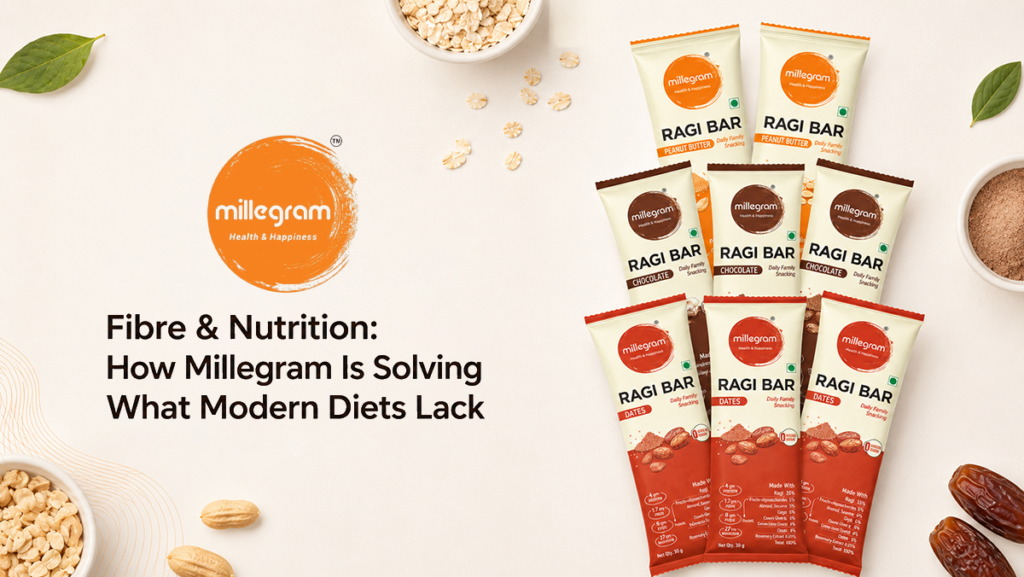
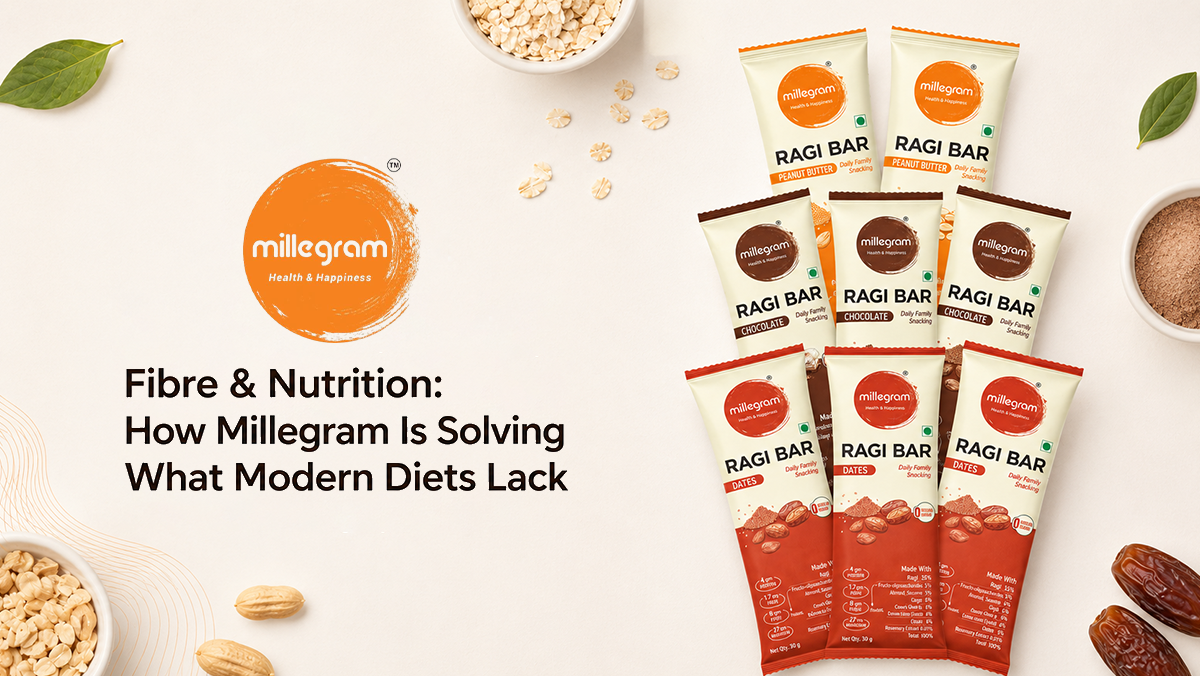
Fibre and Nutrition: How Millegram is Fixing Modern Diet Gaps
India may be one of the world’s fastest-growing economies, but behind the fast-food culture, instant breakfasts, protein snacks, and ultra-processed packaged foods lies a much deeper problem — nutritional deficiency. A large percentage of Indians today suffer from deficiencies in essential nutrients like iron, calcium, magnesium, and fibre. Poor fibre intake has increasingly been linked to digestive disorders, obesity, diabetes, and lifestyle diseases, while iron deficiency continues to affect energy levels and overall health across age groups.
Anup Kartalkar, founder of Millegram, spent over 20 years in the software industry before deciding to build something of his own. While exploring startup opportunities, he noticed that health-tech was highly crowded and chose to focus on a less-discussed but critical problem—India’s widespread micronutrient deficiency. His research revealed alarming gaps in calcium, iron, and magnesium intake among Indians, inspiring him to create a nutrition-focused food brand. Using traditional Indian ingredients like ragi, sesame, and almonds, Anup began experimenting in his kitchen to develop healthy yet tasty snacks. After multiple trials and real-world testing with professionals in Pune, he validated strong demand for convenient and nutritious options. This journey led to the launch of Millegram in December 2025, with a mission to make preventive nutrition simple, accessible, and part of everyday life.
Instead of creating another trendy health brand, the company is building foods around what modern Indian diets genuinely lack — fibre and balanced nutrition. Its products are made using ingredients like ragi, dates, peanuts, and seeds, foods that were once a natural part of Indian eating habits but slowly disappeared from modern packaged diets. The idea behind Millegram started with a simple realization: people do not necessarily need more supplements, powders, or artificially fortified foods. That belief shaped the company’s approach from day one. The team spent months experimenting with recipes, roasting methods, textures, and ingredient combinations to create snacks that could deliver both nutrition and taste without depending on maida, liquid glucose, preservatives, or ultra-processing.
India Isn’t Just Eating Junk. It’s Running Low on Nutrition.
One of the brand’s biggest strengths lies in how it modernizes traditional ingredients without losing authenticity. Ingredients like ragi, dates, peanuts, and sesame are paired with flavours such as peanut butter and chocolate to create snacks that feel both nutritious and enjoyable for today’s consumers. Without using maida, gluten, or liquid glucose as binders, the snack bars were initially brittle and difficult to stabilize. The team could have easily solved the issue using industrial ingredients, but that would have gone against the very purpose of the brand. Through continuous experimentation and refinement, they eventually succeeded in creating products that maintained both texture and digestibility.
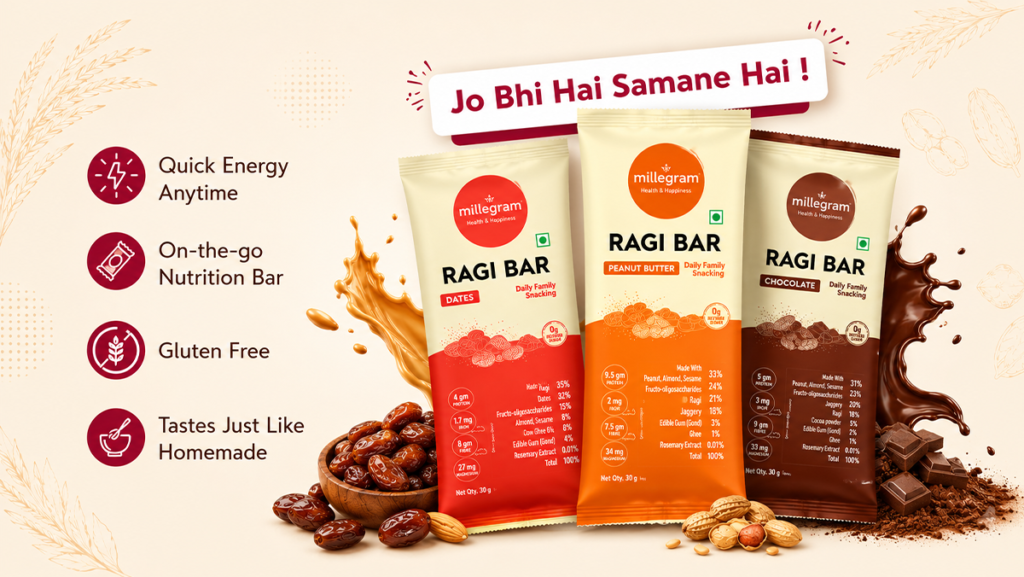
For months, the team refined recipes, tested nutritional values in labs, and shared samples with families, professionals, and fitness-conscious consumers. Eventually, they succeeded in creating snack bars that remained nutritious, easy to digest, minimally processed, and enjoyable to eat.Today, Millegram combines traditional ingredients with familiar flavours like chocolate and peanut butter to make nutrition feel less like a compromise and more like something people genuinely look forward to eating. Because Millegram stays away from ultra-processing and unnecessary preservatives, selling through traditional retail stores was not easy. Products with shorter shelf lives are often difficult for distributors to manage. Through Millegram, the brand wants to remind people that everyday ingredients like ragi, dates, peanuts, and seeds already carry real nutritional value when processed in the right way.
Trending Stories





Trending Stories
Related Popular Stories
-
-
 By Prerna Saini | September 23, 2026
VLAQ: Turning Everyday Hydration Into a Branded Digital Touchpoint
Read More -
 By Prerna Saini | September 19, 2026
From a Concern About Plastic to a Purpose-Driven Baby Brand: The Story of Nubokind
Read More