
Kesakambali – India’s First Hair-Based Environmental Technology
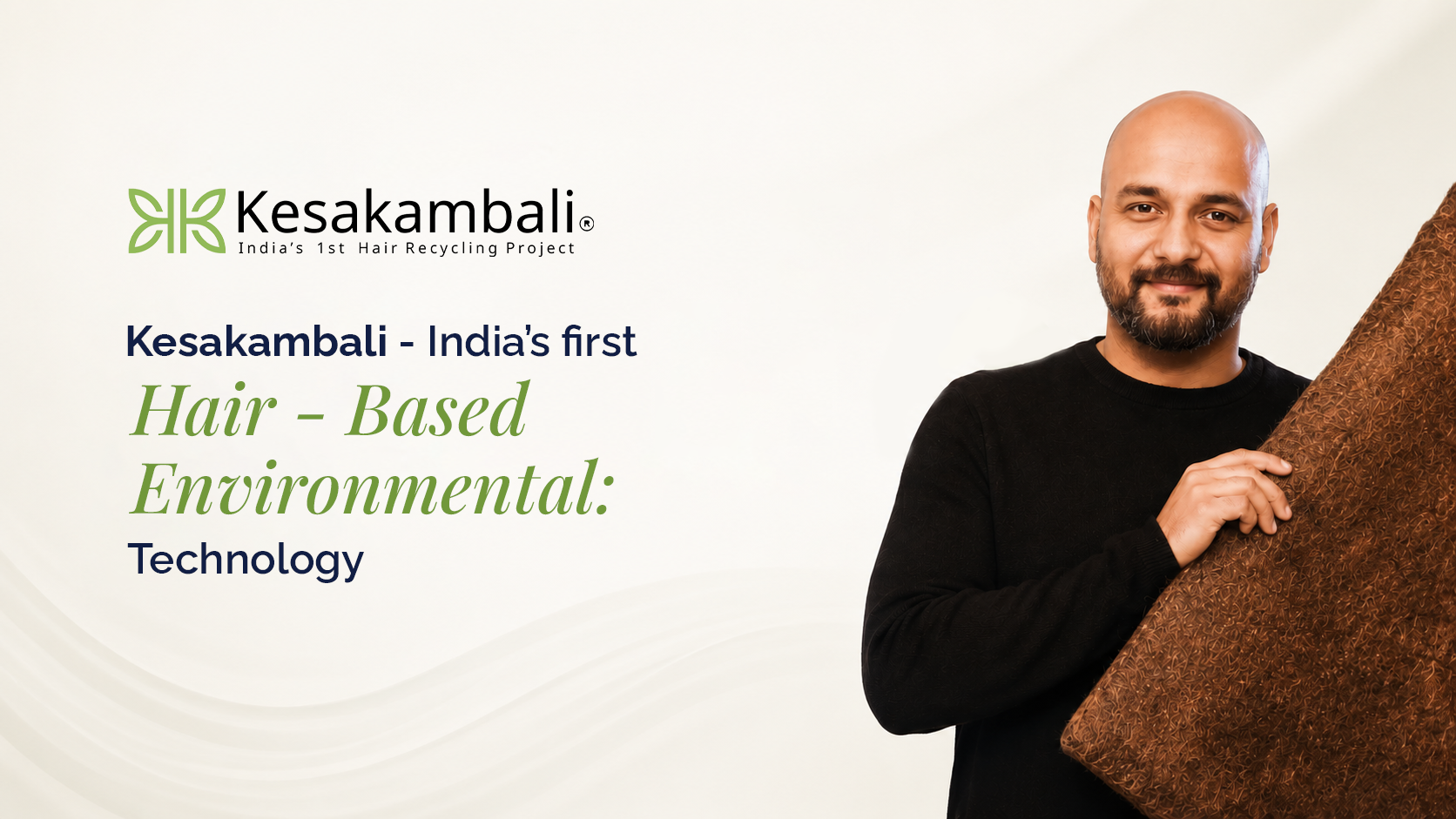
Rahul Gupta’s entrepreneurial journey has always been driven by a desire to solve real-world challenges through sustainable innovation. With years of experience in business development and social enterprise, he worked extensively at the intersection of community mobilisation, environmental responsibility, and practical solutions. Over time, one persistent question shaped his thinking — why do visible waste problems continue to grow despite increasing awareness around sustainability? His search for a scalable, science-backed solution led him to explore circular, bio-based alternatives. That journey culminated in the launch of Kesakambali Foundation in November 2023, an initiative dedicated to transforming salon hair waste into a valuable environmental resource.
At the same time, urban drains struggle with oil pollution and plastic waste, while agricultural lands continue losing soil health and fertility. Rahul discovered that human hair, often discarded as useless waste, possesses remarkable scientific properties. Human hair is keratin-rich, naturally oleophilic, and contains around 16.5% nitrogen by weight. Research supported by NASA has shown that hair can absorb five to six times its weight in oil. This revealed a powerful opportunity — the same waste material could help clean polluted water and improve soil health.
Convincing salon owners that discarded hair could help clean polluted drains, or persuading urban authorities that hair-based barriers could reduce pollutants like BOD and TSS, naturally invited skepticism. Kesakambali addressed this through scientific validation and institutional partnerships. Third-party lab testing by Vardan Envirolab LLP, a pilot supported by GMDA in Gurugram, and a formal partnership with Matter of Trust (USA) — global pioneers in hair-based environmental technology — gave the initiative strong scientific and operational credibility.
To solve the collection problem at its root, Kesakambali introduced the Zero Waste GreenSalon Programme, a structured initiative designed to prevent salon hair waste from reaching landfills. The programme encourages salons to become active participants in environmental sustainability by responsibly segregating and sending their hair waste to Kesakambali for processing. Rather than treating hair as waste, the programme redefines it as a resource that can contribute to water conservation and soil regeneration.
Under this programme, salons can join Kesakambali’s growing network through a tiered partnership model. They may begin as Free Partner Salons, where they voluntarily collect and self-dispatch hair waste to Kesakambali. As they deepen their commitment to sustainability and responsible waste management, they can upgrade to become Certified GreenSalon Partners, gaining recognition for their contribution to the circular economy. This model ensures that salons of all sizes can participate, making the movement scalable and inclusive.
The collected hair is transformed into two innovative product lines. The first is the HydroHair Barrier System (HBS), a floating barrier embedded with hair-textile mats that intercept plastic waste and absorb oil and contaminants from urban drains. The second is Agromat mulch discs, designed to reduce plant watering requirements by up to 50% while gradually releasing nitrogen into the soil. This creates a complete circular chain where hair from salon chairs is repurposed into practical environmental solutions.
Kesakambali’s impact is already becoming measurable. Under Jal Sanchay (Water Conservation), the deployment of the HydroHair Barrier System at Leg 3 of Gurugram’s Ramprastha drain resulted in significant reductions in pollutants such as faecal coliform, BOD, COD, and TSS, validated through ISO-certified lab testing. Under Bhoomi Sanchay (Soil Conservation), Agromat discs have demonstrated the ability to reduce irrigation frequency while enriching soil through slow-release nitrogen. The foundation is currently conducting field trials with Kerala Agricultural University across multiple soil types to further validate agricultural benefits. In addition to field impact, Kesakambali has reached over 21,000 students through awareness sessions focused on sustainability and waste management.
The response from industry and institutions has been encouraging. Truefitt & Hill India joined the initiative as a Certified GreenSalon Partner, setting a strong example for premium salon brands. Kesakambali has also received support from GMDA for its drain pilot and research collaboration from Kerala Agricultural University. Media coverage from platforms like Amar Ujala and The Better India has further amplified awareness around the initiative. While traditional barbers remain slower to adopt the model due to smaller waste volumes, Rahul sees them as an important part of the long-term collection network.
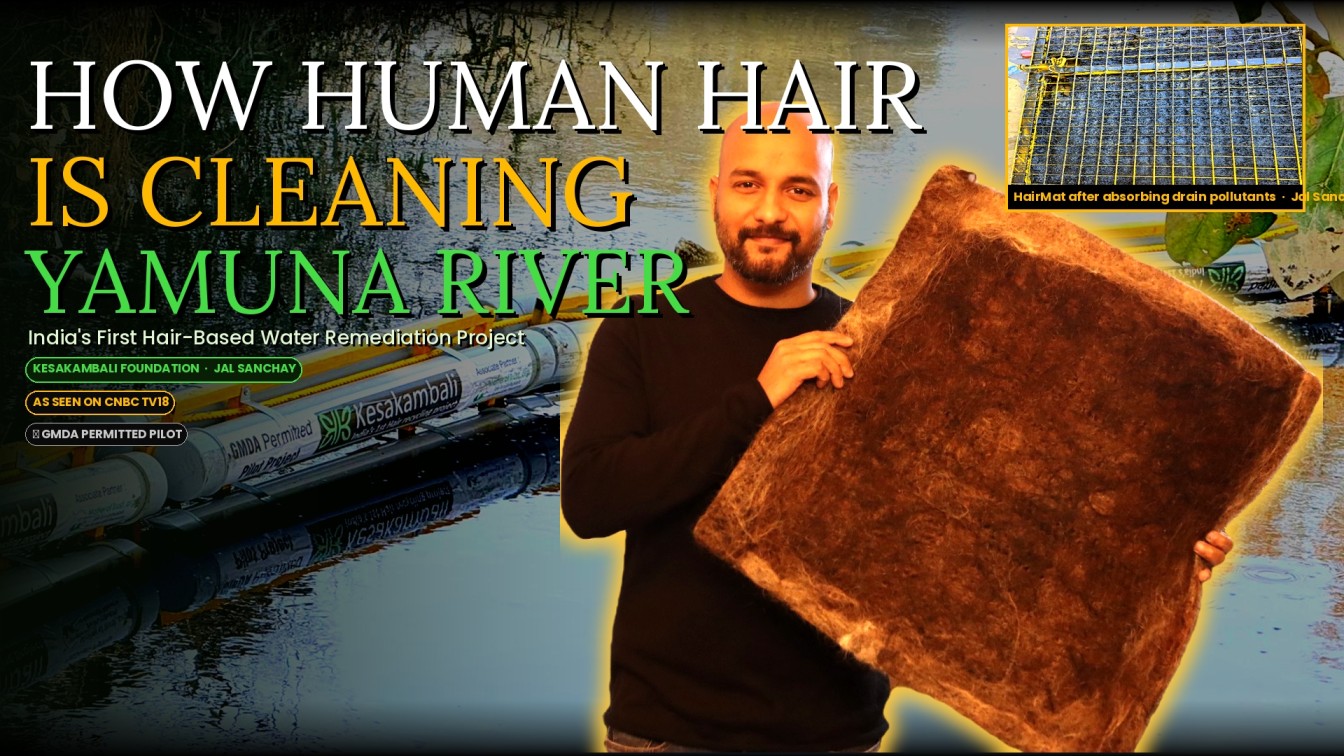
When I started Kesakambali, many people found the idea unusual — turning discarded salon hair into an environmental solution sounded almost impossible. But I saw potential where others saw waste. Every day, thousands of tonnes of hair end up in landfills, while our drains remain polluted and our soil continues to degrade. I believed this overlooked waste could become a resource for real change. Through research, partnerships, and continuous testing, we developed solutions that use hair to absorb oil, reduce pollutants, and support soil health. Seeing our work recognized by CNBC-TV18 is a proud moment, as it validates the impact of our mission. This journey has never been just about innovation; it has been about changing mindsets. Sustainability begins when we start reimagining waste as opportunity. At Kesakambali, we are committed to building a cleaner and more circular future for India.
Looking ahead, Kesakambali is building a scalable national infrastructure inspired by models like Sungai Watch. The long-term vision is to create a widespread hair collection network connecting salons, NGOs, municipal bodies, and industries into a unified waste-to-resource pipeline. Rahul believes the future of sustainability lies not in expensive futuristic technology, but in reimagining the value of everyday waste.
At its core, Kesakambali carries a powerful message — waste is not a disposal problem; it is a design and collection problem. India produces enormous volumes of bio-waste with documented scientific value, yet lacks efficient systems to harness that potential. Kesakambali demonstrates that meaningful environmental impact can begin with something as ordinary as discarded hair.
Over the next five to ten years, Rahul envisions Kesakambali becoming India’s national benchmark for hair waste collection and valorisation. With a growing GreenSalon network across major cities, HydroHair Barrier Systems deployed at urban drains and industrial discharge points, Agromat products supporting horticulture, and deeper research collaborations, Kesakambali aims to drive large-scale change at the intersection of water quality and soil health — two of India’s most urgent environmental priorities.
Trending Stories









Trending Stories
Related Popular Stories
-
-
 By Prerna Saini | September 23, 2026
VLAQ: Turning Everyday Hydration Into a Branded Digital Touchpoint
Read More -
 By Prerna Saini | September 19, 2026
From a Concern About Plastic to a Purpose-Driven Baby Brand: The Story of Nubokind
Read More