
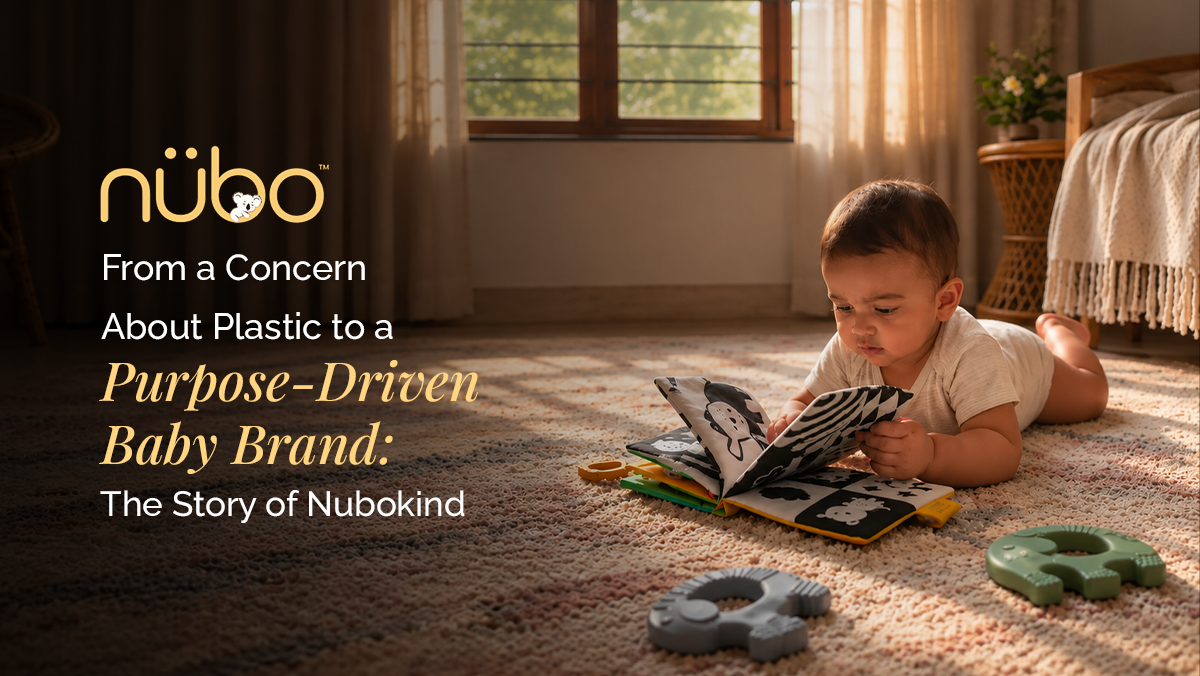
From a Concern About Plastic to a Purpose-Driven Baby Brand: The Story of Nubokind
The idea behind Nubokind began with a simple observation that gradually became impossible to ignore. As friends and family around founder Aditya Chopra became new parents, he noticed nurseries filled with plastic teethers, rattles and toys—many of which went directly into babies’ mouths. What seemed completely normal in everyday parenting raised an important question for him: were parents being given enough safe alternatives? Curious to understand the issue better, Aditya began researching microplastics and infant health and spoke with Professor Fay Couceiro, a researcher working in the field of microplastics. Her insights reinforced his concerns around infants’ exposure to microplastics and endocrine-disrupting chemicals. At the time, Aditya had built a stable career after studying at Oxford and working as a Vice President at Samagra, making the decision to leave his career particularly significant. However, his background had already shaped his approach to purposeful problem-solving—his father ran a garment export business, while his mother taught deaf and mute children, giving him an early understanding of manufacturing and the importance of thoughtful design. nübo emerged from bringing those two influences together: safer materials and purposeful products designed around a child’s development.
Rather than starting with a product and looking for a reason to sell it, nübo begins with the developmental stage of the child. The team considers what a baby is learning or experiencing at a particular age whether it is soothing sore gums, developing grip strength, recognising high-contrast shapes or exploring different textures and then designs products around those needs, drawing on Montessori principles and pediatric input. Safety remains central to every decision. nübo’s teethers use 100% food-grade silicone and are tested for BPA, PVC, phthalates and heavy metals against BIS IS 9873 standards, while its cloth books are made using soft, non-toxic fabrics without small parts. The company invested significantly in safety testing even before selling its first product. At the same time, nübo focuses heavily on practical usability for parents. Products such as the Kiko No-Drop Wrist Teether, which stays attached to the parent’s wrist, and the Ele ring, designed specifically for tiny hands, are created to solve everyday parenting frustrations while supporting developmental milestones.
As Aditya puts it, “Babies explore the world with their mouths. That means every product we hand them should be held to the highest safety standard, not just the one that is easiest to meet.”
The company’s product development process is closely connected to the experiences of real parents. The nübo team regularly reads customer reviews, participates in parent communities and WhatsApp groups, and speaks directly with families to understand their challenges. When a recurring problem emerges, the team first asks whether it represents a genuine developmental need or simply another product that could add clutter to a baby’s environment. If it passes that test, the idea moves through multiple stages of design, including work on shape, texture, weight and grip, followed by pediatric input, material selection and manufacturer sampling. Products then undergo safety testing against applicable BIS standards and several rounds of real-world use with parents and babies before reaching production. This approach takes considerably more time than sourcing and relabelling generic products, but for nübo, it is an essential part of building products that parents can trust. The philosophy also reflects the company’s strong influence from Montessori thinking: instead of filling nurseries with dozens of toys and gadgets, nübo believes babies benefit from a calmer environment and a smaller number of carefully chosen products that offer meaningful exploration.
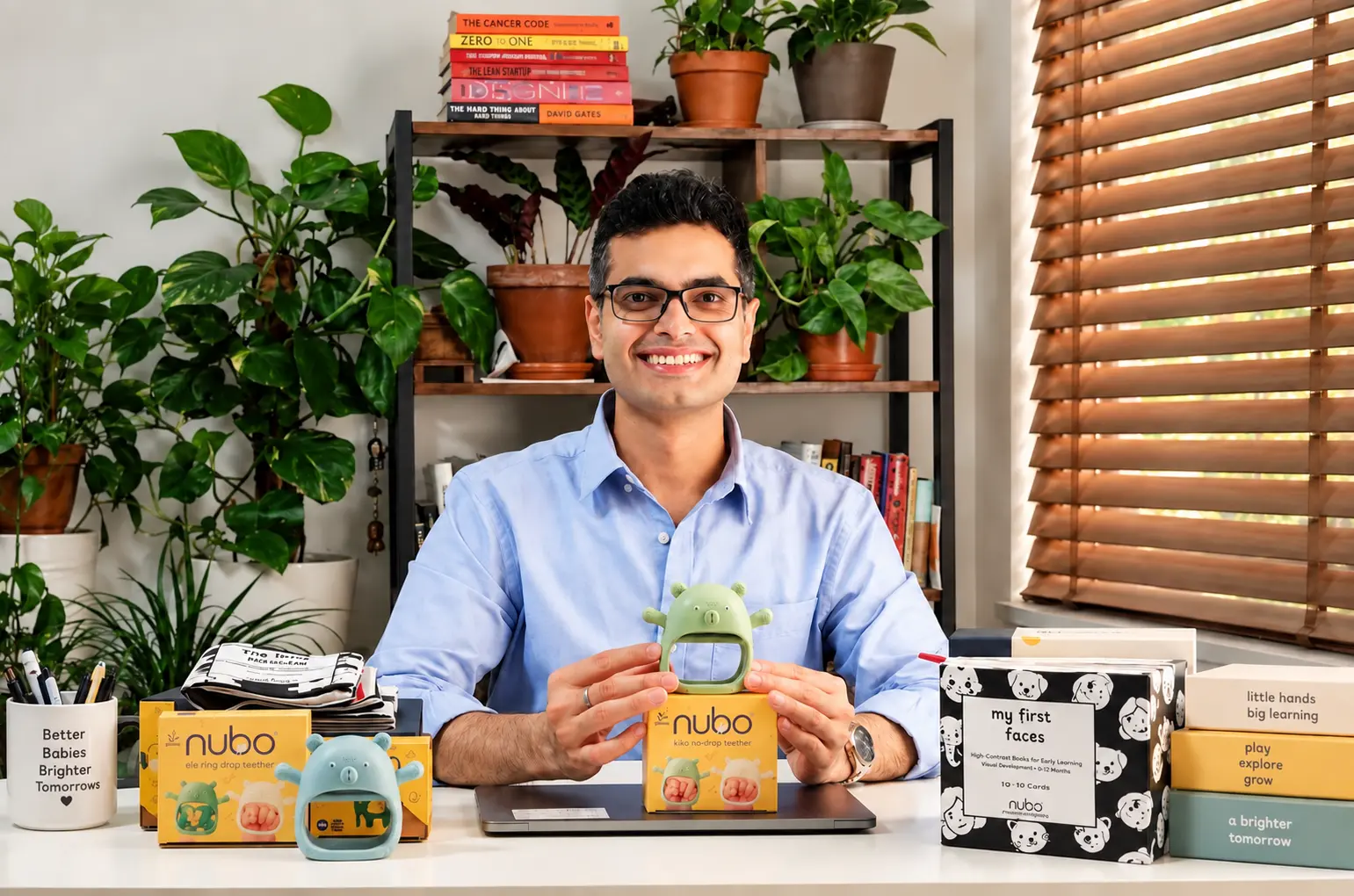
Since officially launching in July 2025, nübo has grown from a founding team of two supported by personal savings, friends and former colleagues to a team of around eight. The brand has processed more than 20,000 orders, built a portfolio of 15 products and has reported month-on-month growth of around 25%. One of its most significant learnings has been that demand for safer baby products extends far beyond India’s major metros. Approximately 60–65% of its revenue comes from more than 700 smaller cities, including Bhopal, Indore, Jabalpur, Raipur, Kohima and Coimbatore. The journey has not been without challenges. Building products with proper material selection and safety testing requires more time and capital than simply sourcing existing products, while finding manufacturing partners capable of consistently meeting food-grade and BIS requirements proved difficult in the early stages. Building trust with parents was another challenge in a crowded market, but customer reviews, repeat purchases and word-of-mouth gradually became important indicators that the approach was resonating. Crossing 20,000 orders, receiving the Baby Choice Gold Award 2026, earning Amazon’s Choice recognition for products and growing toward profitability have all marked important milestones for the young brand.
Looking ahead, nübo aims to become a global Baby products brand in India, focused on safe and purposeful products for children from birth to five years. The company plans to expand into early learning, sensory play and everyday baby care while preparing for international toy safety certifications that can support its entry into markets across the Middle East, followed by the UK and US. But its ambition extends beyond building a larger product catalogue. nübo wants to influence how parents think about buying for their children, moving the conversation away from simply choosing based on price, trends or the number of products available, and toward considering safety and developmental value first. Its core philosophy is built around the idea that less can be more: a few thoughtfully designed, safe and purposeful products can offer more meaningful value than a nursery filled with unnecessary plastic. For nübo, the goal is not simply to create another baby-products brand, but to make intentional, informed and safer choices a natural part of modern parenting.
Trending Stories


Trending Stories
Related Popular Stories
-
-
 By Prerna Saini | September 23, 2026
VLAQ: Turning Everyday Hydration Into a Branded Digital Touchpoint
Read More -
 By Prerna Saini | September 09, 2026
Bharat Biomaterials: From Agricultural Waste to the Future of Sustainable Materials
Read More