
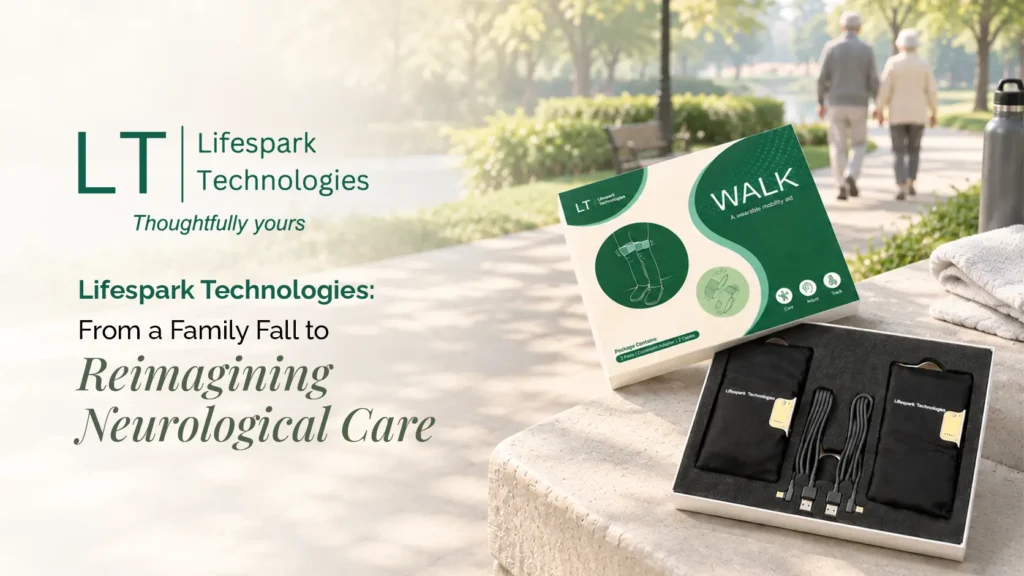
Lifespark Technologies: From a Family Fall to Reimagining Neurological Care
The story of Lifespark Technologies began with a deeply personal experience. When our founder’s grandfather suffered a fall and hip fracture, it became clear how quickly a single incident could affect a person’s mobility, confidence, and independence. Recovery was not simply about healing an injury; it was about regaining the ability to move freely and live independently again. That experience sparked a larger question: what if deterioration could be detected earlier, allowing families and healthcare professionals to intervene before a fall or serious injury occurred? With this vision, Lifespark Technologies began working toward seamless technologies that could help people maintain mobility and independence for longer.
As we started working closely with patients, particularly those living with Parkinson’s disease, we realized that healthcare innovation was not simply a technology challenge. Building a prototype was one thing; getting patients to consistently use it, helping caregivers understand changes, and earning the trust of clinicians and healthcare institutions was far more complex. We spent considerable time understanding how people with Parkinson’s actually move in their homes, where they struggle, and what makes rehabilitation difficult to follow consistently. Working alongside neurologists, physiotherapists, caregivers, and patients, we continuously tested and refined our solutions in real-world environments. Their experiences, movement patterns, gait data, and feedback became an important part of how the technology evolved.
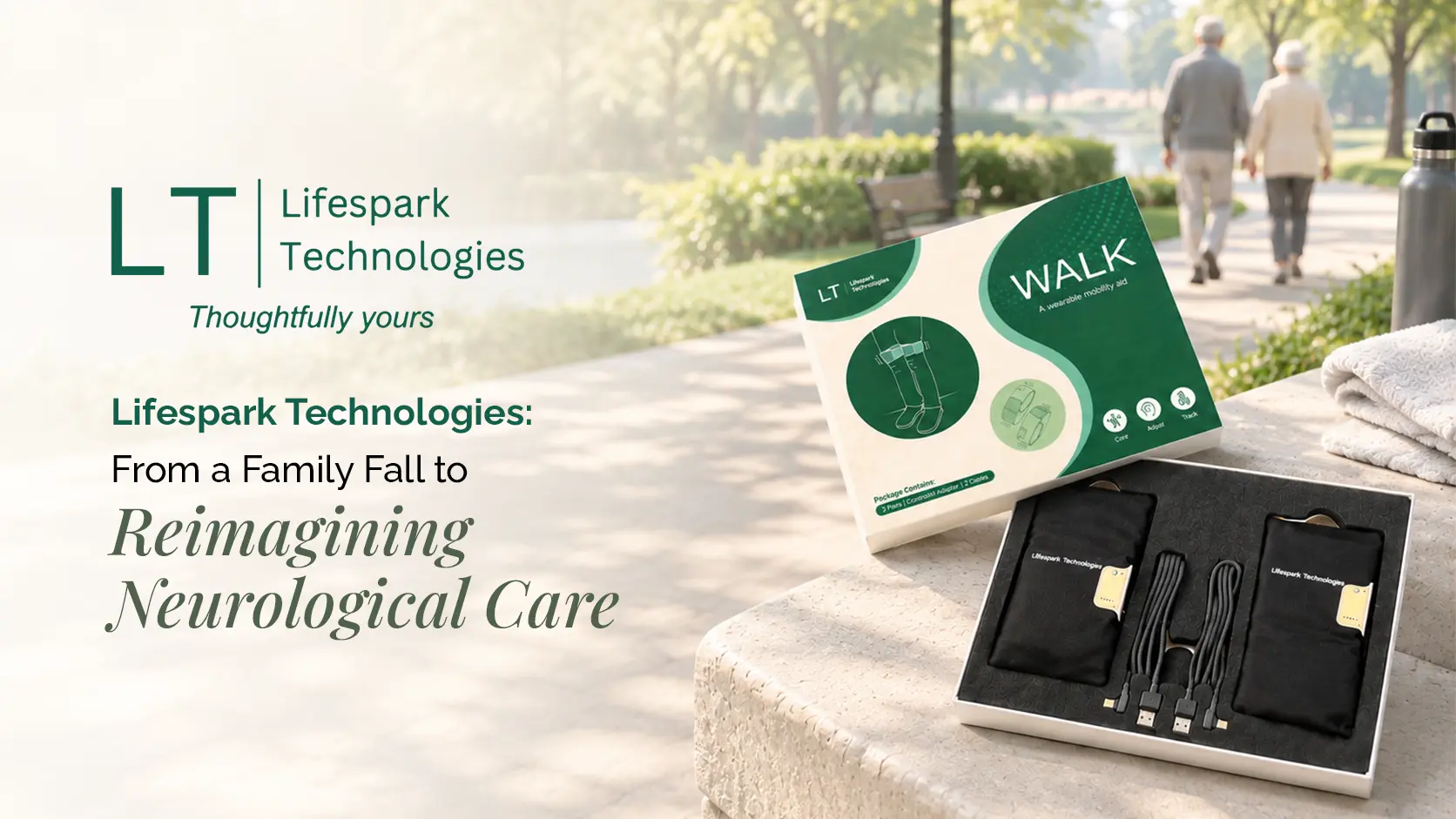
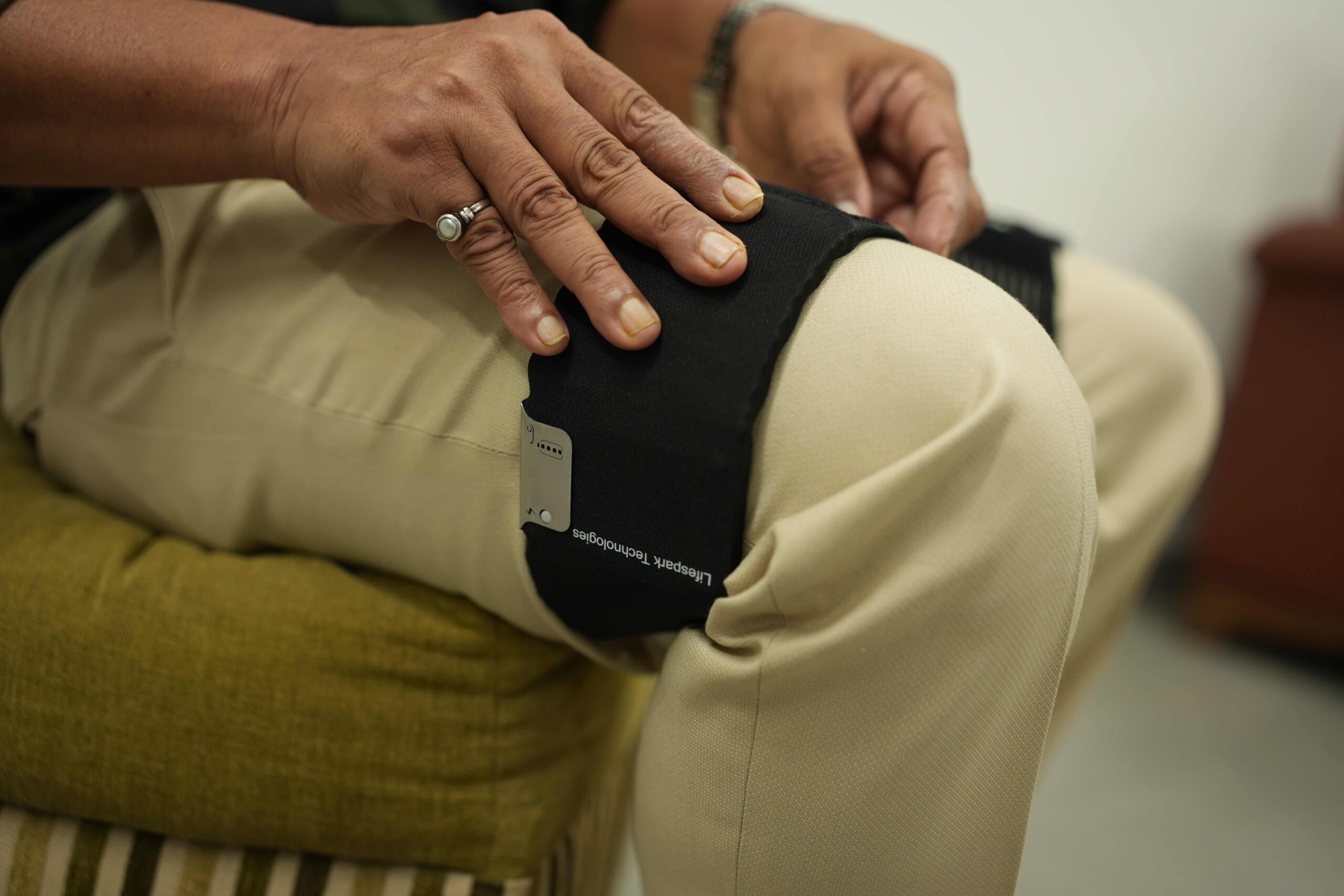
This journey led to the development of WALK, a wearable muscle stimulation aid designed for people with Parkinson’s disease and other neurological movement disorders. It focuses on gait challenges such as freezing of gait, which can significantly increase the risk of falls and loss of independence. But while developing WALK, we realized that intervention was only one part of the larger problem. Patients also needed continuous monitoring, objective measurement, risk identification, and personalized guidance between clinical visits. This realization led to PATHFINDER, our digital health platform that brings together movement and assessment data, remote monitoring, risk insights, and personalized rehabilitation pathways. Together, WALK and PATHFINDER allow us to extend neurological care beyond the hospital and into the home, where most long-term rehabilitation and daily care actually take place.
Some of the most meaningful moments in our journey have come from seeing people regain confidence in their everyday lives. We have seen individuals return to work, attend social events, and participate in activities they had gradually stopped doing because of restricted mobility. For caregivers, having better visibility into a loved one’s mobility and potential risks can bring greater confidence and reduce uncertainty. For healthcare professionals, real-world movement data can provide another layer of insight beyond what can be observed during periodic clinical visits. Our incubation at IIT Bombay, support from research and innovation programs, partnerships with healthcare stakeholders, growing adoption among families, and platforms such as Shark Tank India have also helped us build awareness around Parkinson’s-related mobility challenges and the need for more proactive solutions.
The next chapter for Lifespark Technologies is about making this approach accessible to more people, including patients beyond major metropolitan centres. We are working toward larger real-world datasets, stronger predictive capabilities, and increasingly personalized rehabilitation pathways that can help identify risks earlier and support better decision-making. Scaling healthcare responsibly requires clinical evidence, regulatory rigor, clinician trust, and strong delivery networks, but these challenges are essential to creating meaningful long-term impact. Our ambition is not simply to build medical devices; it is to create a connected care ecosystem that gives patients, caregivers, and clinicians greater visibility, confidence, and timely support—helping people maintain their independence and quality of life for as long as possible.
Trending Stories









Trending Stories
Related Popular Stories
-
 By Prerna Saini | October 16, 2026
The Story of Artiure: Bringing Indian Craftsmanship into Modern Living
Read More -
-
 By Prerna Saini | September 23, 2026
VLAQ: Turning Everyday Hydration Into a Branded Digital Touchpoint
Read More