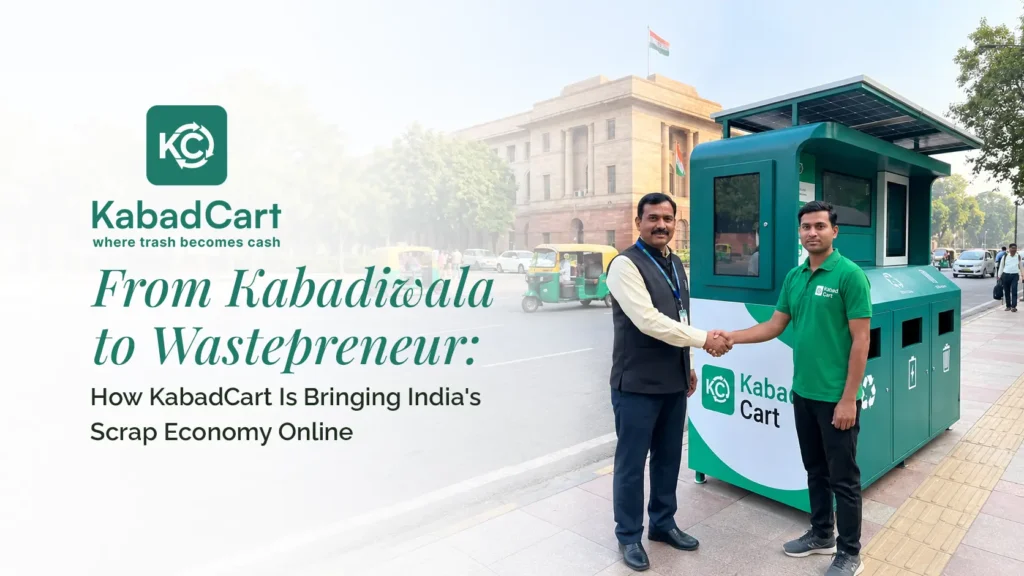
From Kabadiwala to Wastepreneur: How KabadCart Is Bringing India’s Scrap Economy Online
The idea behind KabadCart dates back to 2018, when Founder Govind Varshney represented the Jaipur team at the national round of EcoGrants in Delhi. During the initiative, his team surveyed more than 2,000 ragpickers and kabadiwalas, uncovering significant challenges within India’s informal recycling sector. Despite playing a crucial role in recovering recyclable waste, most local scrap collectors lacked formal identities, fair price discovery, and access to digital payments. At the same time, households and businesses had limited options for selling scrap transparently. Prices, weights, pickup schedules, and the movement of collected materials remained largely unorganised. This experience highlighted an opportunity to use technology to bring transparency and structure to an existing ecosystem rather than replace the people working within it. That vision eventually led to the creation of KabadCart, with the aim of transforming traditional kabadiwalas into digitally empowered “wastepreneurs.”
Building KabadCart, however, involved challenges beyond developing a digital platform. Convincing traditional scrap collectors to adopt technology, complete verification, and manage digital transactions required time and continuous engagement. On the customer side, years of inconsistent weighing practices and unclear pricing had created a lack of trust. Ensuring reliable pickups was another major challenge, as collectors were sometimes reluctant to travel for smaller quantities, while customers occasionally declined to sell when the offered rates did not meet their expectations. To address these issues, KabadCart introduced pincode-based service areas, transparent category-wise rate cards, verified collection partners, and free partner onboarding without upfront fees. The platform now allows customers to schedule pickups through its app or website, choose from 75 material categories, track pickup requests, and receive payments at the time of collection. Every transaction, including material weight, applicable rate, and payment amount, is digitally recorded, creating greater accountability throughout the process.
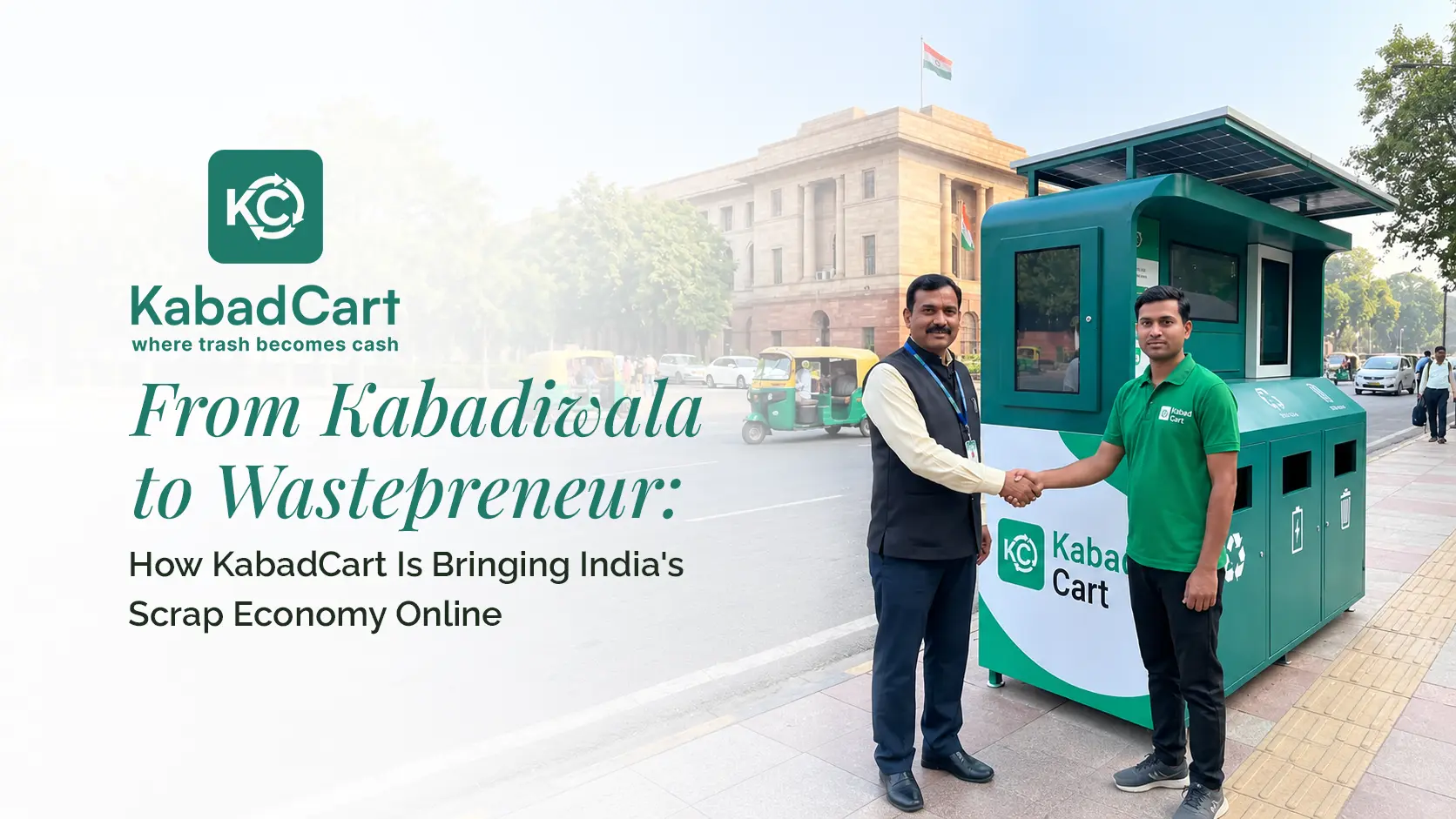
Trust and transparency remain central to KabadCart’s operating model. Every wastepreneur undergoes identity and background verification and receives a company T-shirt and ID card to help customers identify authorised collection partners. Scrap is weighed in front of customers, and pricing follows the platform’s published rates instead of doorstep negotiations. Once collected, materials such as paper, cardboard, metals, plastics, and e-waste are routed to appropriate aggregators and recycling partners, with e-waste directed only to authorised recyclers in accordance with applicable regulations. The platform also works with businesses, institutions, and bulk waste generators that require organised waste collection, digital invoices, and documentation to support their ESG and EPR reporting. Its asset-light partnership model brings together local collectors, residential communities, commercial establishments, aggregators, and recyclers to create a more connected recycling network. Support from organisations such as RAJCOMP and UP Electronics, mentorship through iStart, and an MoU with the Government of Rajasthan for a proposed dry-waste material recovery and aggregation facility have further supported its journey.
Measuring environmental and social impact is another important part of KabadCart’s approach. The company tracks every completed pickup by material category and weight, helping create a digital trail from the source to the next point in the recycling chain. As of September 2026, the platform had diverted approximately 4.5 tonnes of material through its operations. It also monitors the number of verified wastepreneurs earning through the platform and their earnings history. Over time, its experience with household pickups has highlighted an important business lesson: sustainable growth depends not just on expanding geographical reach but also on maintaining reliable service and predictable material volumes. KabadCart is now present across 11 states, covering markets such as Delhi NCR, Mumbai, Pune, Bengaluru, Hyderabad, Kolkata, Ahmedabad, Surat, Lucknow, Indore, Bhubaneswar, Jaipur, and Tonk. The company is also placing greater emphasis on bulk waste generators, including institutions, hotels, campuses, and commercial establishments, where larger and more consistent waste volumes can make collection and recycling operations more efficient.
Looking ahead, KabadCart aims to strengthen its presence across existing markets while entering new locations as its partner network expands. The company is developing a dedicated platform for bulk waste generators with real-time waste tracking, digital invoicing, audit-ready ESG/EPR documentation, and verified waste diversion reporting. Customer reward programmes and AI-based tools for pricing and route optimisation are also part of its technology roadmap. In parallel, the proposed dry-waste material recovery facility in Rajasthan is expected to add better segregation and aggregation capabilities, with operations planned from 2027. Through collaborations with urban local bodies, recyclers, and enterprises, KabadCart hopes to establish a more accountable and efficient recycling ecosystem. For Govind Varshney, the larger ambition is not simply to digitise scrap collection but to create the digital infrastructure for India’s circular economy, where collectors receive fair opportunities, customers get transparent prices, and every kilogram of recyclable material can be tracked from its source to the recycler. As he puts it, “We do not want to replace the kabadiwala. We want to make the kabadiwala the foundation of a modern circular economy.”
Trending Stories









Trending Stories
Related Popular Stories
-
 By Prerna Saini | November 13, 2026
From Textile Discards to New Possibilities: The Bunko Junko Story
Read More -
 By Prerna Saini | October 16, 2026
The Story of Artiure: Bringing Indian Craftsmanship into Modern Living
Read More