
The Vision Behind Acres of Ice: A Conversation with Basit Afzal
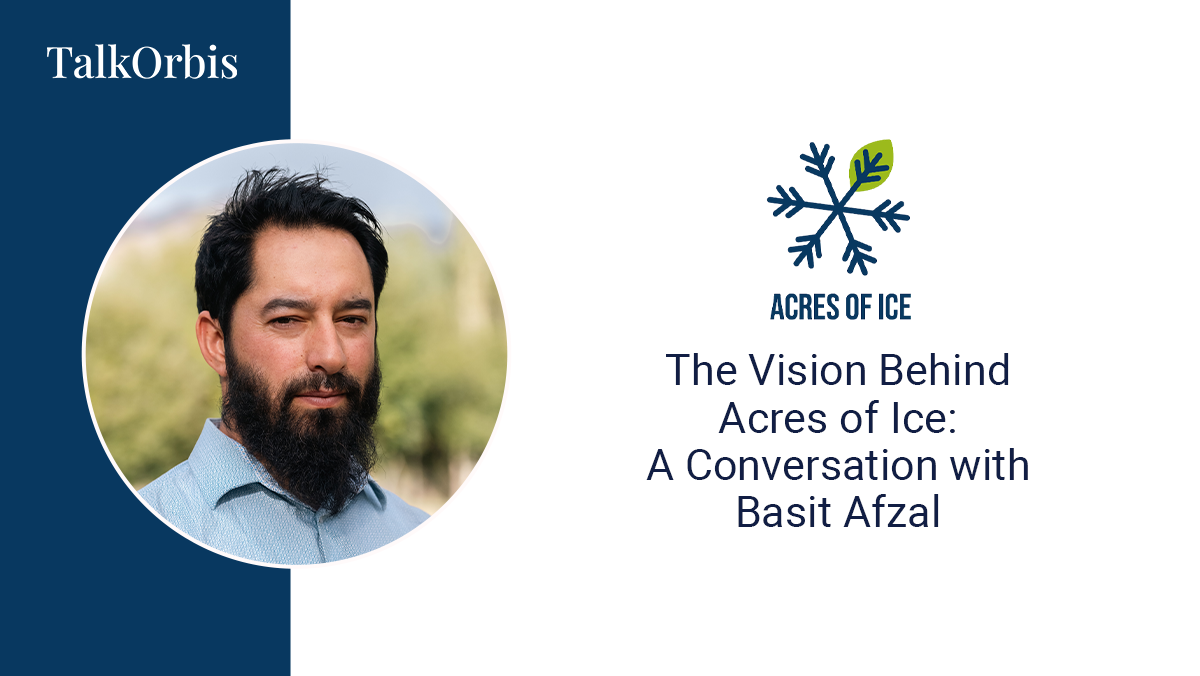
Basit Afzal, Co-founder of Acres of Ice, has an engineering background with an M.Tech in Soil & Water Conservation and an MBA. He brings practical experience in water-management systems, with professional exposure across London, Dubai, and Delhi. His expertise spans technology, water conservation, innovation, and the techno-commercial aspects of sustainable businesses. At Acres of Ice, he combines these experiences to develop scalable, sustainable solutions for water-stressed communities.
SUMMARY
- Automated Ice Reservoirs (AIR) : Capture and store winter water as ice, making it available for irrigation during spring and early summer when water is scarce.
- GLOF Mitigation : Smart Siphoning Systems help manage glacial lake water levels and support efforts to reduce risks associated with excessive water accumulatio
- Automated Micro-Irrigation : Automate water delivery to crops to reduce water wastage, minimise manual effort, and improve irrigation efficiency.
Your journey into water and ice innovation began well before Acres of Ice, through your work and experiences in Ladakh. What did you see or experience there that made you realise water security in these regions was a problem you wanted to work on seriously?
After completing my engineering, I developed a strong interest in water management and joined a leading multinational company in the micro-irrigation sector. This experience gave me practical insights into water-related challenges and the solutions available in the market. I also worked closely with vulnerable farmers whose crops depended entirely on water availability, which helped me understand the realities of farming in water-scarce regions.
My professional journey took me to countries such as the UAE and Israel, and I later spent four years in London, where I gained a deeper understanding of sustainability and the importance of reducing carbon emissions. These experiences inspired me to return to the mountains and dedicate my knowledge and expertise to building sustainable water solutions for mountain communities.
When you started exploring solutions around artificial ice reservoirs, what were your earliest experiments like? Was there a particular assumption, experiment, or early result that changed the way you thought about the problem?
After completing my engineering degree, I began working in Ladakh, where I became deeply interested in the region’s unique water challenges. While most of my batchmates pursued an M.Tech, I struggled to find a research topic that truly inspired me. During my work in Ladakh, I came across the fascinating concept of storing water in the form of ice. Around the same time, Mr. Sonam Wangchuk approached me to work on irrigation design, which eventually led me to choose Artificial Ice Reservoirs as my research topic. What began as an academic pursuit soon became a personal mission—to find sustainable solutions to water scarcity in the Himalayan region and help communities secure their water future.
You cannot create water, but you can capture it, store it, and save it for when the world needs it most
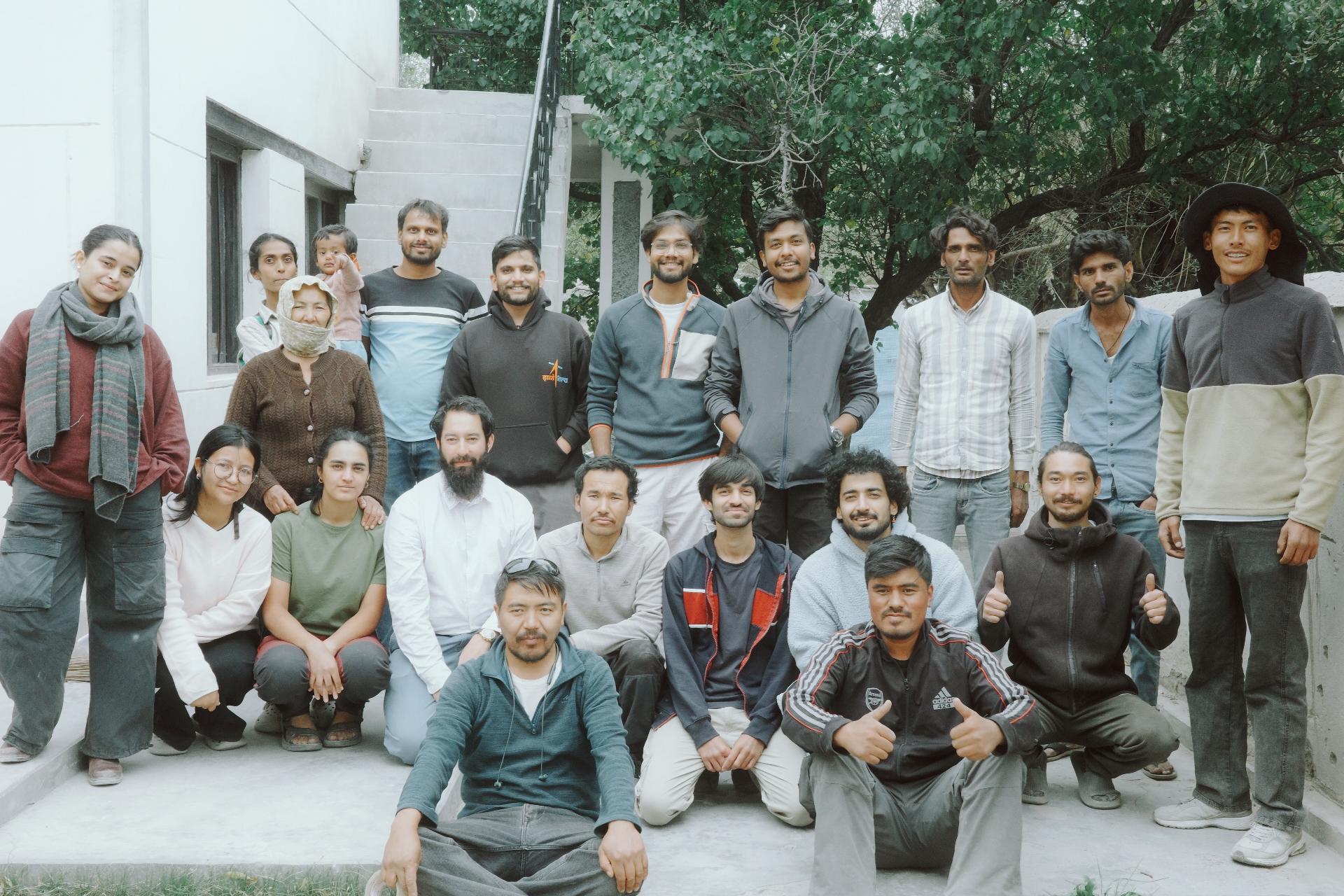
What was the hardest part of turning the idea from research and field experimentation into something that could actually work reliably in remote, high-altitude communities? Please share a challenge or failure that taught you something important.
There were several ideas and concepts in mind, but translating them into practical, on-the-ground solutions was the most challenging part. In the case of Artificial Ice Reservoirs (AIR), one of the initial hurdles was engaging with local communities and gaining their trust and acceptance for implementing the technology. This was followed by funding constraints and technical challenges related to the region’s complex topography, extreme weather conditions, and temperature thresholds required for ice formation. Overcoming these challenges required continuous experimentation, adaptation, and close collaboration with local communities to transform the concept into a viable and sustainable solution.
At some point, the work had to move beyond individual projects and become a scalable venture. What made you realise that Acres of Ice needed to exist as a company, and what changed in your thinking when you made that transition?
While living in London, I realised that individual efforts, although valuable, can only take us so far. To achieve a larger and more sustainable impact, it is essential to build a team with a shared vision and purpose. This realisation laid the foundation for the formal establishment of Acres of Ice, for which a Private Limited Company was the most suitable structure. Our journey has been one step at a time, with gradual progress, continuous learning, and growing momentum towards our larger vision of creating sustainable water solutions for water-scarce communities.
Once you began deploying your solutions in real communities, what did the people, farmers, and local conditions teach you that research or laboratory work could not? Was there anything you had to completely rethink because of what happened on the ground?
On-ground experience is very different from what we imagine or plan on paper. Our implementation journey at Acres of Ice taught us invaluable lessons about engaging with local communities, managing diverse teams in challenging environments, and ensuring that tools and machinery are always in order. We learned to anticipate what could go wrong, assess potential risks, and respond to unexpected challenges. Most importantly, we realised that the success of a single solution often depends on a combination of several small and sometimes larger factors, from local cooperation and technical precision to weather conditions, terrain, logistics, and timely execution. These experiences helped us understand that innovation is not just about developing a solution; it is about making it work reliably on the ground.
Looking back, was there a particular deployment, result, conversation, or milestone that made you feel Acres of Ice was no longer just an experiment, but a solution that could genuinely make a difference at scale?
Our project in collaboration with King’s College London received approval from the European Research Council, marking a significant milestone in our journey. It was a defining moment that strengthened our confidence and made us realise that we could contribute much more to the fight against climate change.
The recent floods in Nepal further reinforced our belief that we are moving in the right direction. They highlighted the urgent need for innovative, sustainable, and locally adapted solutions to address the growing challenges posed by climate change. For us, this was a reminder that our work at Acres of Ice is not just about water management; it is about building climate resilience and helping vulnerable communities adapt to an increasingly uncertain future.
Climate-tech solutions often require long development cycles, field testing, infrastructure, and patience before the impact becomes visible. What has been the most difficult phase of building Acres of Ice, and what kept you going when the path was uncertain?
Indeed, the annual cycle of our work makes it challenging to measure, evaluate, and present our impact within that period. However, someone had to bell the cat, and we felt we were ready to take on that responsibility. The challenges and hardships faced by mountain communities are far greater than the difficulties we encounter as an organisation. Their resilience and determination inspire us to keep going, overcome obstacles, and continue working towards sustainable water solutions. That purpose is what keeps us moving forward, even when the results take time to materialise.
Acres of Ice is now looking beyond individual projects and thinking about how this approach can be adapted to other high-altitude and water-stressed regions. What are you ultimately trying to build, and what would success look like for Acres of Ice a decade from now?
Our mission is to take these innovative solutions to mountainous communities across the world, many of which have long been neglected and underserved. We envision a future where mountain communities do not merely survive but thrive, making the most of their limited resources through sustainable water management, innovative technologies, and locally adapted solutions.
Is there one lesson, belief, or experience from your journey with Acres of Ice that you would especially like readers to remember?
People dream of visiting the very places where we get to work and serve communities. What more could one ask for than the privilege of working in such beautiful landscapes while making a meaningful difference in people’s lives?
Trending Interviews









Trending Interviews
Related Popular Interviews
-
 By Prerna Saini | October 15, 2026
Turning Cows into a New-Age Resource: The NAMO Vardan Story
Read More -
 By Prerna Saini | October 09, 2026
Saubha Aerial Systems – Building Safety Layer for Autonomous Airspace
Read More -
 By Prerna Saini | October 06, 2026
Sanyark Space: Building India’s Navigation Satellite Backbone
Read More