BOSON Whitewater: Building India’s Third Source of Water
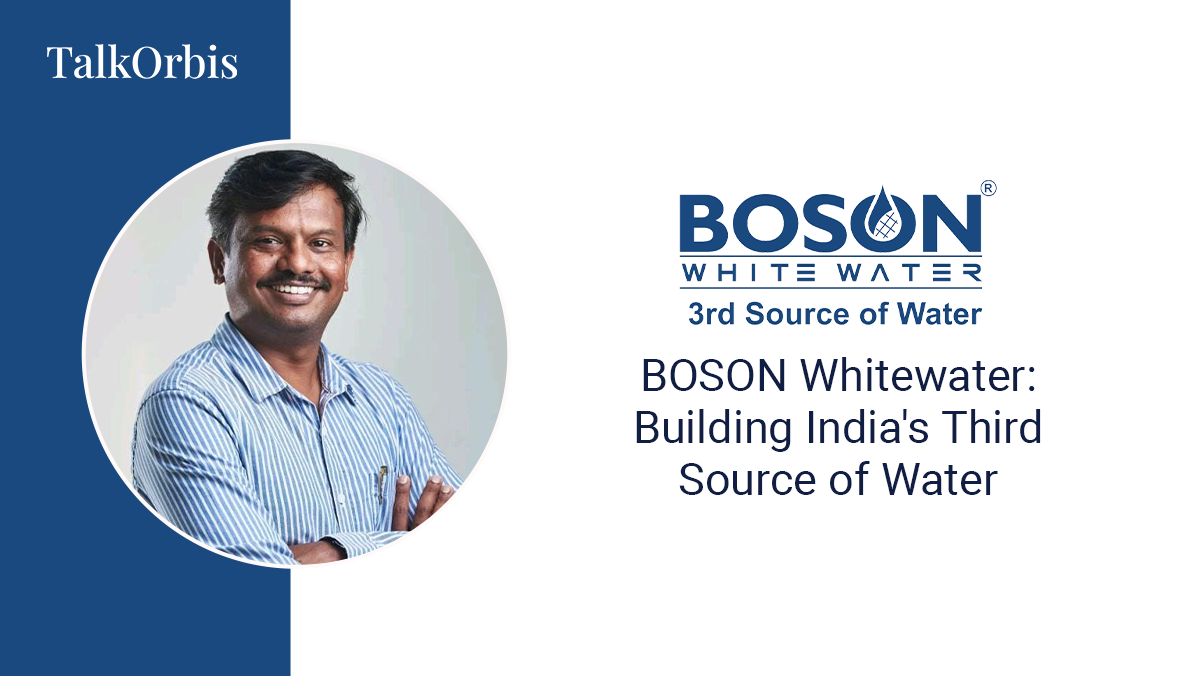
Gowthaman Desingh, Co-Founder, BOSON Whitewater
Gowthaman Desingh is Co-Founder of BOSON Whitewater, a Bengaluru-based CleanTech startup dedicated to converting wasted STP-treated water into a reliable, reusable water source. His journey reflects innovation, resilience, and a deep commitment to solving urban India's growing water scarcity.
SUMMARY
- Founded in 2011, BOSON Whitewater converts STP-treated wastewater into high-quality reusable water.
- Backed by Indian Angel Network and Zerodha's Rainmatter, with $1.6M+ raised to date.
- Operates a zero-capex, pay-per-use model across 30+ sites in Bengaluru, Chennai, Coimbatore & Hyderabad
How did the concept of a "Third Source of Water" originate, and why is it crucial for India's urban future?
The idea of a “Third Source of Water” came from a simple observation: Indian cities like Bengaluru rely almost entirely on two sources – groundwater (borewells) and Surface water (like Cauvery water) – and both are under severe strain. What we noticed was that apartment complexes, IT parks, Data centers and malls with their own sewage treatment plants were already treating large volumes of wastewater to a fairly good standard, then simply discharging around 80% of it to drain because they had no economical way to use it further. That treated water, if upgraded just one step further, is a ready-made water resource sitting untapped in every large residential and commercial complex. We realized that if we could recover and upgrade this water reliably, at scale, and affordably, it could become a genuine third pillar alongside groundwater and municipal supply – one that doesn’t require to exploit ground water, new borewells, or long-distance transport. For a city like Bengaluru, which generates roughly 2,000 MLD of wastewater but treats and reuses only a fraction of it, this isn’t a nice-to-have; it’s essential infrastructure. Decentralized reuse reduces pressure on depleting aquifers, cuts down tanker dependency, and keeps water within the community that generated it. That’s the thinking that shaped BOSON Whitewater from day one.
How did you initially overcome the psychological block or "yuck factor" associated with recycled wastewater?
The “yuck factor” is real, and we never tried to argue people out of it – we tried to build trust instead. Early on, we focused on transparency rather than persuasion: every batch of water we supply is quality-tested, and we introduced digital water quality monitoring so clients can see water quality parameters, and other parameters for each delivery in real time. We also invested in an IoT-enabled monitoring system that continuously tracks water quality at the plant, not just at the point of delivery, so deviations are caught immediately rather than discovered later. On the positioning side, we made a deliberate choice to first target applications like cooling towers, boilers and industrial processes – use cases where the psychological barrier is much lower. This let clients experience the reliability and consistency of our water without asking them to make an uncomfortable leap on day one.
What major infrastructural bottlenecks do you face when trying to capture the 80% wasted STP water from apartments?
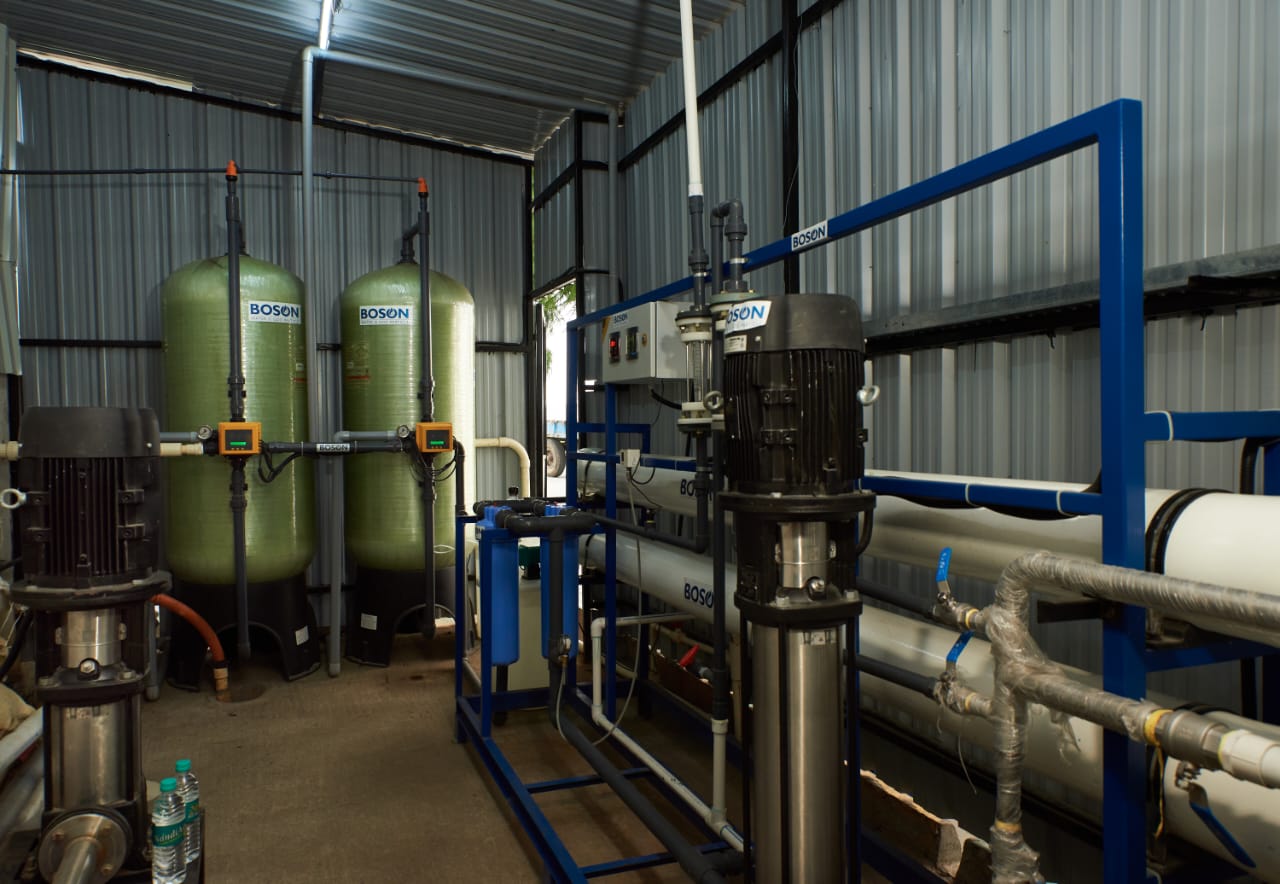
The biggest bottleneck is retrofitting our treatment train into infrastructure that was never designed for reuse. Most apartment STPs were built purely for compliance – to treat sewage to a dischargeable standard – not to feed a downstream recycling system. That means we often have to work with limited space for new tanks, older civil structures, and inconsistent inlet water quality depending on how well the existing STP is maintained. Interconnecting pipework, treated water transfer infrastructure, and identifying space for additional tank are almost always client-side constraints we have to design around rather than dictate. On the operations side, capturing the full 80% of wasted water also depends on the existing STP being properly maintained and operated – if the upstream biological treatment is inconsistent, it directly affects what we can recover downstream. We’ve addressed this by standardizing our scope of supply and technical specifications clearly upfront, and by offering our OPEX model, which shifts the burden of capital investment and much of the engineering complexity onto us rather than the client, making adoption far more feasible for apartment associations.
Every drop we recover from an STP is a drop that doesn't need to be pumped from the ground or trucked in by tanker
Why is your "Whitewater" chemically more efficient for Data Center cooling towers compared to standard water tankers?
STP Treated Water or Standard tanker water sourced from borewells is highly inconsistent – TDS, hardness, and mineral content vary tanker to tanker, which is a real problem for cooling towers where scaling and fouling directly hurt heat-exchange efficiency and increase maintenance costs. Our Whitewater goes through a controlled, multi-stage treatment process, so the output quality is consistent and predictable, batch after batch, with parameters like low TDS and controlled hardness engineered specifically for industrial reuse. For data centers in particular, cooling tower makeup water needs to minimize scaling and biological growth to protect chillers and reduce blowdown frequency – our treated water is designed with exactly this application in mind. Because we monitor and log water quality continuously through our IoT system, data center operators also get verifiable, real-time records of what they’re using, which matters a great deal for facilities that run strict water-quality SLAs. On top of the technical fit, there’s a cost and reliability advantage: our OPEX model means data centers pay only for water consumed, without tanker logistics risk, price volatility, or the carbon footprint of transporting water over long distances. It’s a more dependable, better-engineered input for a mission-critical cooling application.
How do your automated IoT dashboards and digital water quality slips maintain real-time transparency for corporate clients?
Every BOSON installation is connected through IoT sensors that continuously capture key parameters directly at the plant. This data is transmitted in real time to a central monitoring system, which lets our operations team track performance across all our sites from one place and respond immediately if a plant deviates from expected quality or output. For our corporate clients, this same data feeds into dashboards they can access, giving them visibility into exactly how much water is being generated and consumed, without having to take our word for it. For every tanker delivery, we also issue a digital water quality slip – a record of the tested parameters for that specific batch, tied to a QR code for traceability. This closes the loop between what’s measured at source and what’s actually delivered on-site. For corporate and institutional clients, this level of transparency is often as important as the water itself – it lets facility teams document compliance, build internal reporting, and trust the supply without needing to run independent verification each time.
How is your high-profile public-private collaboration with the BWSSB helping you scale your operations efficiently?
Working alongside a body like BWSSB matters because decentralized water reuse only scales city-wide if it’s aligned with how the city’s water utility thinks about supply and demand. Bengaluru already treats a significant share of its centralized sewage for agricultural reuse, but a large volume of decentralized STP water – from individual apartments and commercial complexes – sits outside that system entirely. Engaging with BWSSB and other civic stakeholders helps us align on standards, build credibility for recycled water as a legitimate supply category, and identify where decentralized recovery can complement, rather than compete with, centralized infrastructure. Practically, this kind of collaboration also helps us navigate approvals and positions BOSON as a trusted partner rather than an outside vendor, which matters when we’re asking large apartment associations and institutions to adopt a new water source. As these conversations mature, we see real potential for public-private models where utilities recognize decentralized reuse as part of the city’s overall water balance – reducing the burden on both groundwater and centralized treatment capacity, and helping Bengaluru move closer to closing its wastewater gap.
Water security in Indian cities won't come from one large solution - it will come from thousands of buildings each recovering what they already have.
Beyond commercial success, what ultimate legacy do you want Boson Whitewater to leave behind for India's water security?
Beyond the commercial success we’re building, what matters most to us is proving that decentralized water reuse can be a mainstream, trusted part of how Indian cities manage water – not a niche, experimental idea. If BOSON Whitewater succeeds, the legacy we’d want to leave is a simple shift in mindset: that every large residential or commercial complex sees its own wastewater not as a liability to discharge, but as a resource to recover. If we can get to a point where the “Third Source of Water” is as normal a part of a building’s infrastructure as its overhead tank or its STP, we will have meaningfully reduced the pressure on groundwater and municipal supply in cities like Bengaluru, Chennai, and beyond. That’s the real measure of success for us – not just the volume of water we recover, but the number of communities who no longer have to worry about where their next tanker is coming from.
Trending Interviews










Trending Interviews
Related Popular Interviews
-
 By Prerna Saini | October 09, 2026
Saubha Aerial Systems – Building Safety Layer for Autonomous Airspace
Read More -
 By Prerna Saini | October 06, 2026
Sanyark Space: Building India’s Navigation Satellite Backbone
Read More