
Akshar Foundation: How Government School Children Are Learning to Teach,Learn, Earn and Care
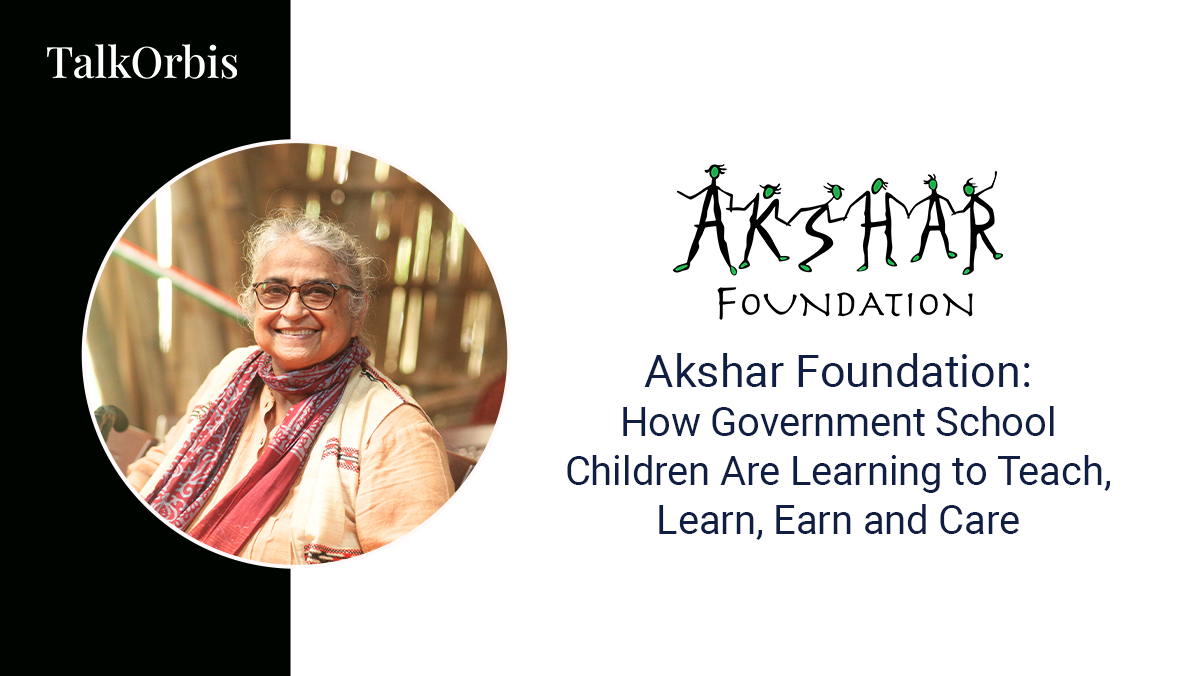
Prof. Alaka Sarma, Founder & Managing Trustee and Executive Director of Akshar Foundation
Prof. Alaka Sarma, Founder & Managing Trustee and Executive Director of Akshar Foundation, began building an alternative approach to education around the idea that learning should develop the whole child—not just academic knowledge. Alongside Co-Founders Parmita Sarma and Mazin Mukhtar, she has helped develop and implement the organisation's Indian Education Model, combining academics with practical and experiential learning, skills development, technology and physical development. From the Akshar Forum model school in Assam to work with government schools and efforts to make the model replicable, the foundation is working toward a broader transformation in how education can be designed and delivered.
SUMMARY
- How Prof. Alaka Sarma and the Akshar Foundation team developed an alternative approach to education centred on learning by doing.
- The journey from building the model at Akshar Forum to making the approach more replicable across schools.
- How learning and earning, including vocational training, can help students develop practical skills, contribute to their families, and stay engaged in school.
When Akshar Foundation began, what made you feel that education needed to work differently from the conventional system?
The conventional system of education cannot create a “level Playing ground” for students irrespective of their background. Students from the poorer sections are at a loss. The system does not have the flexibility that such students need, the system does not empower these students by imparting expertise in vocations, the content of the system is not relevant to lives of such students. In short, the conventional system of education, helps rich become richer and renders the poor more poor. The only way to break vicious cycle of poverty is by evolving a system of education, which provides an equal playing ground to all. A system which does not focus only on academics but imparts skills, is flexible enough to incorporate those students who are slow learners, imparts values like teamwork, lifelong desire to learn, gives a first-hand experience of national building by equipping students to solve the issues facing their communities.
If you could implement just one Akshar idea in every government school in India, what would it be—and why?
If we could implement just one Akshar idea in every government school in India, it would be the early initiation of children into vocational training.
I would choose it for three reasons. First, it makes children self-reliant by giving them practical skills to enter the job market with confidence. Second, children learn better through hands-on experience, where practical work reinforces academic theory—reflecting Mahatma Gandhi’s philosophy of Nai Talim, which has shaped Akshar from the beginning. Third, it prepares them for the future, where practical skills, problem-solving, and adaptability will matter increasingly alongside degrees. Most importantly, vocational training helps keep children in school by giving them and their families a tangible reason to stay.
We made school itself the source of income, so a child never has to choose between learning and earning.
Akshar combines learning with earning. What unexpected lesson did you discover after putting this model into practice?
The first is how powerfully it works. We expected earning to keep children in school, but it turned out to address far more than dropout alone. Absenteeism fell, discipline improved, and children who were earning and valued at school became less vulnerable at home. Giving a child a productive role, and an income, changes not just their attendance but their standing within their own family.
The second surprised us even more: how differently children respond depending on where they live. In an urban setting like Dharavi in Mumbai, where markets and enterprise are part of everyday life, students grasp the earning model and become self-sufficient remarkably quickly. In a rural setting like Charaideo in Assam, the same journey takes longer. That taught us to adapt our pace and expectations to each community, rather than assume one timeline fits every child.
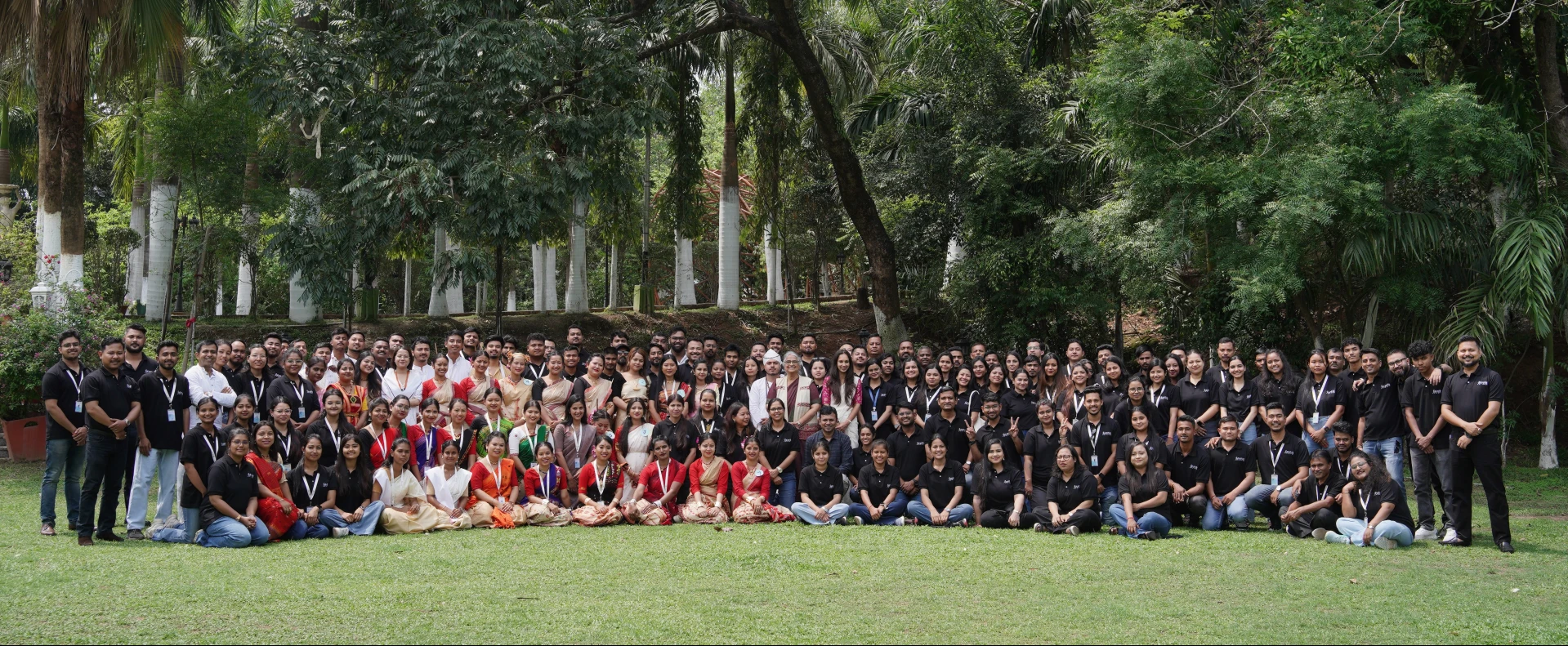
Akshar gives older students the opportunity to teach younger ones. What changes have you seen in students when they move from being learners to becoming teachers?
When a student steps into the role of a teacher, the transformation is remarkable. Younger children receive valuable one-on-one support, while older students develop empathy, patience, confidence, and responsibility. Teaching also strengthens their own understanding because explaining a concept requires mastering it first. This creates a powerful cycle where better teaching leads to better learning, building not only knowledge but also leadership, communication, and a sense of purpose.
The idea of students contributing plastic waste instead of traditional school fees is quite unconventional. What impact has this initiative had on students and their families ?
At Akshar Forum, we do not charge any fees. The only fees the students bring is clean, used plastic bags from home. One major impact is that both students and their family members begin to look up to plastic as a resource and not a waste product.
Alongside it comes awareness. Families come to understand the environmental harm done by plastic bags that are simply dumped or burnt. This lesson lands especially close to home for our children. Most of their families live in low-lying areas and bear the brunt when the city floods, flooding that discarded plastic, by clogging drains and waterways, only makes worse. Through this initiative, they come to see that scientific disposal of used plastic is not a small chore but a genuine act of nation-building, one that protects their own community.
What is one experiment or approach Akshar tried that didn’t work as expected, and what did it teach you?
Our work in the first government school in Assam was one such failed experiment. Later we realised that in working with the government system, self-righteousness does not help. To reform any system, one must first gain the confidence of the stakeholders, and only then demonstrate the better way of doing things.
On paper, we were doing everything right. We had an MoU with Samagra Shiksha, so we were correct both in the letter and the spirit of our agreement. Our mission was compliant with the visioning mission of the National Education Policy 2020. In our subsequent government school project, we got rid of the self-righteousness, invested first in building the trust of the people inside the system, and then showed rather than told. The results were far more encouraging. It taught us something we now treat as a principle: real reform is not imposed, it is earned, one relationship at a time.
What has been the biggest challenge or unexpected reality you encountered while taking Akshar’s model from one school to government schools at scale?
Scaling is challenging in itself, and the challenges come in two kinds: those from within the organisation, and those from our interaction with the system. Within the organisation, the difficulties are nuanced. In our first few schools, every decision was made in response to that particular school. To scale, we needed coherent templates and policy guidelines that even a newcomer could act on.
Processes slowly became packages, and the moment you rely on a package, some of the creativity and innovation is compromised. Measuring impact grows harder too. We work with students, teachers, guardians, administrators and the system all at once, and the small qualitative changes we see are difficult to add up, like adding apples to oranges.
The second set of challenges comes from working within the government system. Departments are structured so that the senior-most officer plays a decisive role in enabling our work. By the time we have built a strong rapport, and the officer has come to appreciate the model and its significance, they are often transferred, and with the new officer the process begins afresh. There is also a lesson we learned about sustainability. Most of our team members are young, often in their first job, working alongside a senior and experienced education establishment. In that dynamic, it is easy for our staff to simply step in and do the work themselves.
Neither students nor teachers are bad, the fact is one size does not fit all
Is there a student, teacher, or school transformation that made you realise, “This is exactly why we built Akshar”?
When Deep (name changed) first came to Akshar Forum, he was only dropping off his sister. At nine, he spent his days breaking stones to support his family and had never attended school. After we reassured him that Akshar was a safe place to learn, he put on a school uniform for the first time.
Deep quickly showed a natural talent for mathematics and embraced every opportunity to learn. He began tutoring younger children, caring for animals, working in the garden, and earning through recycling and vocational activities while continuing his studies. The income gave him a sense of dignity and independence. Now nineteen and completing his board exams, Deep’s journey from breaking stones to completing his education reflects the purpose behind Akshar’s work.
If we walked into an ideal Indian government school in 2035, what would you want to see that doesn’t exist in most schools today?
If we walked into an ideal government school in 2035, the first thing I would want to see is vocational and hands-on training given the same importance as academics. Today, vocational education is too often treated as a fallback for children who are considered weak at studies. That idea has to be discarded. Every student, whatever their academic ability, should leave school equipped with real skills, some understanding of how markets work, and the experience of working as part of a team.
Second, I would want to see genuine flexibility built into school education, so that each child can learn according to their own capacity and aptitude rather than being pushed through a single pace set for everyone.
Third, I would want to see the hub-and-spoke model that Akshar Foundation follows replicated across the country. Each hub school would anchor the schools around it, and would house a shopping complex where the products made by students across that entire community, their furniture, produce, recycled goods, and crafts, are brought together and sold. The school would no longer be a place children simply pass through. It would become a working part of the local economy, and the children within it contributors to their community rather than only recipients of an education.
In your experience, what is the biggest mindset shift India needs to truly break the cycle of poverty through education?
The biggest mindset shift we need is to stop dividing children into good students and bad students. In my experience, that single idea does more damage than almost anything else in our schools.One may have a mind for numbers, another a gift for working with their hands, another the ability to lead, or to care for others. The problem is that our school system recognises only one narrow kind of ability, the academic kind, and quietly writes off every child who does not fit it.
The real job of a school is not to sort children into the able and the unable. It is to locate the talent in each child and nurture it, so that every student finds the field in which they can excel. When we do that, a child who was thought to have no future turns out to be capable, confident, and skilled. Not by ranking children, but by refusing to give up on a single one of them, and by helping each of them discover what they are good at and build a life on it.
Trending Interviews







Trending Interviews
Related Popular Interviews
-
 By Prerna Saini | October 09, 2026
Saubha Aerial Systems – Building Safety Layer for Autonomous Airspace
Read More -
 By Prerna Saini | October 06, 2026
Sanyark Space: Building India’s Navigation Satellite Backbone
Read More -
 By Prerna Saini | October 02, 2026
From Voice Agents to Voice-First Hardware:The Story Behind Antimattr
Read More