
Turning Cows into a New-Age Resource: The NAMO Vardan Story
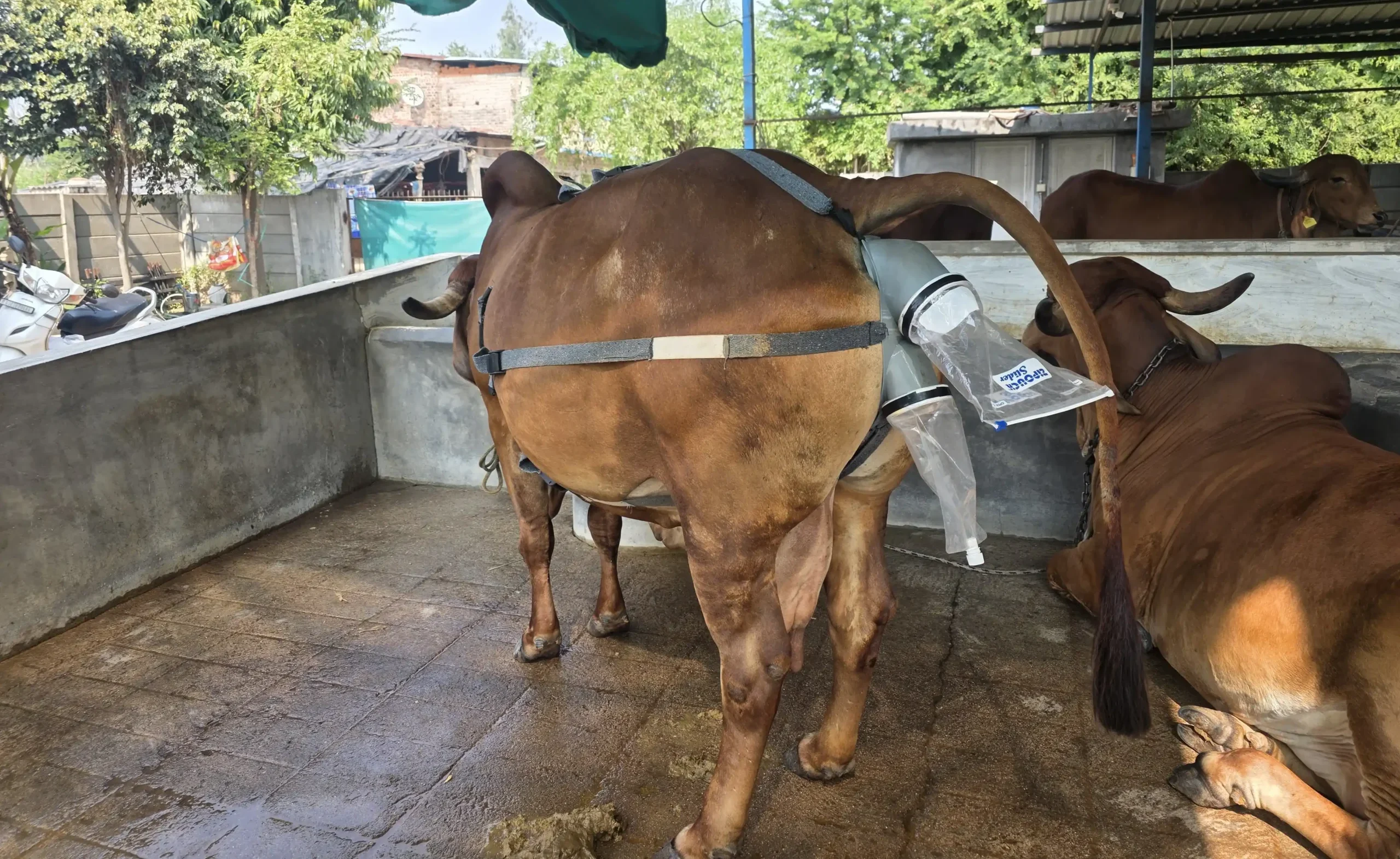
Abhishek Pansuriya is the Founder and CEO of NAMO Vardan, an agriculture and animal husbandry venture developing practical solutions for Indian farms. His flagship innovation, NAMO Vardan, is a wearable cattle-waste collection device designed to separately collect manure and urine directly from cattle. His journey combines an understanding of agriculture and dairy with a focus on building practical, field-oriented innovation for farmers.
SUMMARY
- NAMO Vardan transforms cattle manure and urine collection from a daily cleaning challenge into an organized resource-recovery system.
- The product is being developed specifically around Indian cattle, with a strong focus on animal comfort, practical usability and field validation.
- Natural Jivamrut aims to connect cattle resources with natural agriculture, contributing to Green, White and Rural Revolutions.
Could you tell us a little about your journey as a founder and the experiences or interests that led you to work on such an unconventional problem as cattle-waste management?
My journey has been closely connected with agriculture and the dairy ecosystem, where I gained an understanding of the everyday challenges faced by Indian farmers. One issue that stood out was the difficulty of hygienically collecting cattle manure and urine separately, often making their further utilization challenging. I began viewing cattle waste not as something to discard, but as a valuable resource that deserved better management.This led to a simple question: why isn’t there a practical way to collect these resources directly from the source? NAMO Vardan emerged from this idea, evolving into a prototype that we continue to test and improve. The journey has reinforced my belief that meaningful agricultural innovation begins with understanding real problems firsthand.
How did the initial idea evolve into the current cattle-waste collection device? What were some of the biggest challenges while developing the first working prototype?
The initial idea was very simple: create a system that could collect manure and urine directly from the animal instead of allowing them to fall onto the cattle-shed floor. Turning that simple thought into a wearable product was much more complicated. The first challenge was designing a system that could remain properly positioned while the animal walked, sat, stood and moved its tail. At the same time, the device needed to collect two different materials separately without creating discomfort for the animal.
We had to experiment with the harness arrangement, attachment points, collection bags, holders and materials. Even small changes in belt positioning could affect movement and comfort. Another major challenge was balancing functionality with simplicity. A farmer should not need complicated equipment or training to use the product. The device therefore had to be practical to attach, remove, empty and clean. The current prototype is the result of repeatedly identifying what did not work, testing alternatives and learning from every iteration.
The hardest part was not imagining the product; it was making the idea work comfortably on a living animal. Every prototype taught us something new about movement, fit, hygiene and practicality.
Since the device needs to be worn by cattle, how did you approach challenges such as comfort, movement, fit, safety, and suitability for Indian cattle?
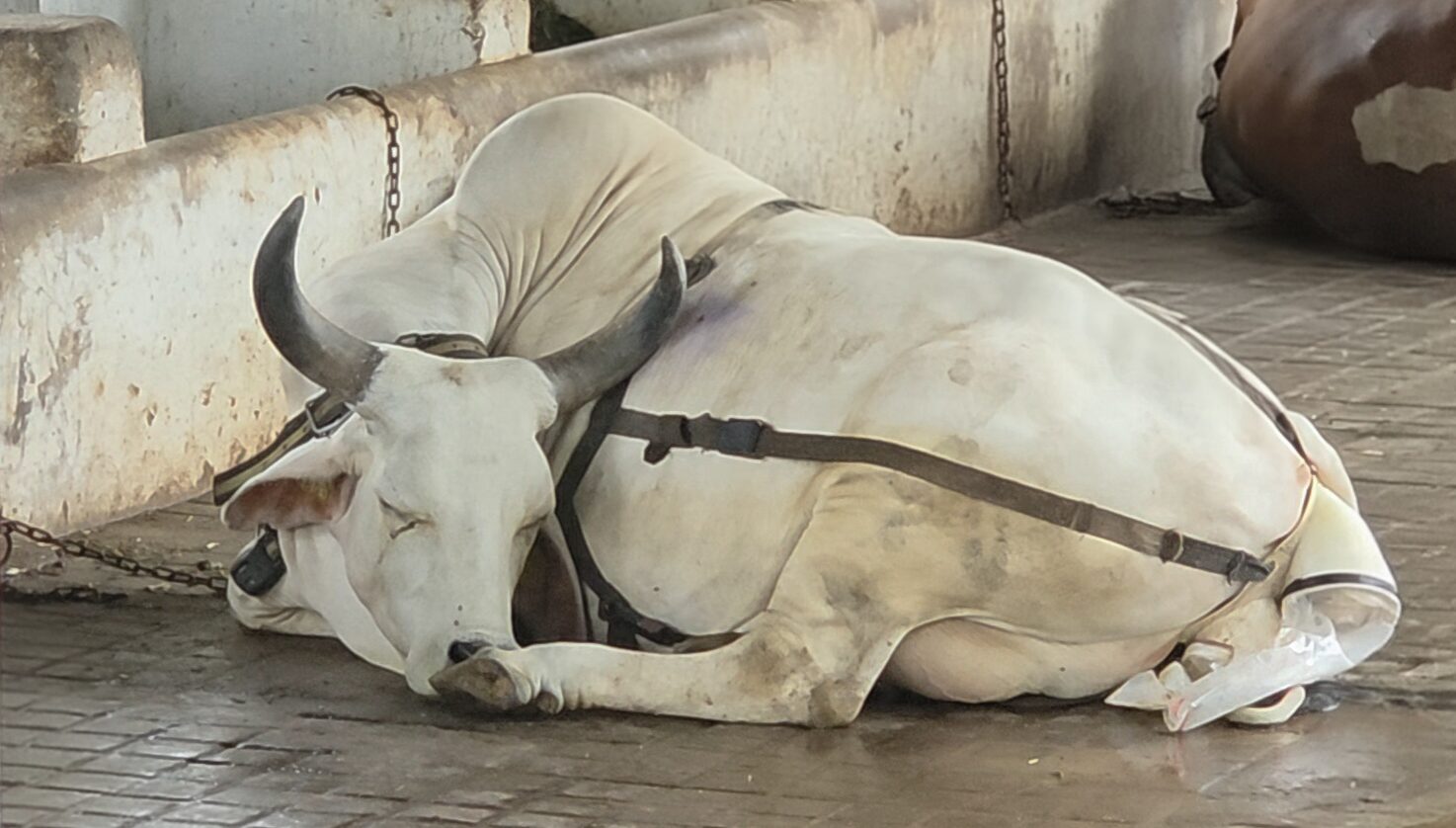
Animal comfort has been a key priority throughout NAMO Vardan’s development. We understood from the beginning that NAMO Vardan could only succeed if the animal could wear it without unnecessary stress or restriction. The harness, belts, holder and bags all have to work together while allowing the cattle to walk, stand, sit, move their tail and carry out normal activities.
We also learned that Indian cattle are not uniform. Different breeds and body structures create different requirements for fit and positioning.
Our development process therefore involves field observation, prototype modification and validation. We are paying particular attention to areas where straps or components come into contact with the animal, because comfort and safety are more important than simply achieving collection efficiency. We are continuing validation with Indian cattle so that the final product is based not only on engineering assumptions but also on real animal behaviour and field conditions.
What did you learn from your early testing, farmer interactions, or feedback, and how did those learnings influence the product?
One of our biggest learnings has been that a product can look technically good in a workshop and still need significant improvement when placed in a real farm environment. Early testing made us pay much more attention to practical details such as belt positioning, movement, fit, ease of attachment, bag handling and the interaction between the device and the animal. We learned that farmer usability and animal comfort have to be considered together.
We also learned that different cattle can behave differently and have different body structures. This reinforced the need for adjustability and for testing the product across different animals rather than validating it on only one prototype. Feedback has therefore become part of our development cycle. Instead of treating criticism as a rejection of the idea, we use it to identify what needs to change.
The product we have today is not the result of one perfect design. That has probably been one of the most valuable lessons of building NAMO Vardan.
What potential do you see in separately collecting cattle manure and urine, and how could NAMO Vardan help farmers make better use of these resources?
Cattle manure and urine are produced every day, but their value depends greatly on how cleanly they are collected, handled and utilized. When they fall onto a cattle-shed floor, they can mix with soil, water and other contaminants, making organized collection more difficult. Manure can be used in composting, natural fertilizer preparation, biogas-related applications and other value-added processes. Similarly, separately collected urine can be utilized in appropriate agricultural formulations and processing systems, subject to proper validation and standards.
NAMO Vardan is designed to address the first part of this chain: collection at the source. By separating manure and urine during collection, the product can make subsequent handling and utilization more organized. We want to contribute to a resource-recovery ecosystem in which cattle-derived materials can create value for agriculture and rural communities. For us, the real opportunity is changing the mindset from “cattle waste” to “cattle resource.”
What has been the biggest challenge or turning point in NAMO Vardan’s journey so far, and what helped you overcome it?
The biggest challenge has been turning a simple idea into a practical solution for real farm conditions, where cattle movement, behaviour, comfort, and daily routines all influence the design. Each prototype brought new challenges, teaching us that improving one feature could affect another. By adopting a continuous cycle of observation, testing, and refinement, we have steadily improved our approach.This journey has taught us that entrepreneurship is not about getting everything right the first time, but about persistence and learning. Although development is ongoing, every improvement strengthens our confidence in NAMO Vardan potential.
What have you learned about developing and validating a practical innovation for Indian farms, and what has surprised you most during this journey?
Our biggest learning has been that agricultural innovation must reflect the realities of Indian farms. Beyond technical design, a product must be comfortable for animals, easy to use and maintain, and economically practical for farmers. Continuous testing and field feedback are essential to refining the solution, as even simple problems can involve unexpected challenges. This journey has taught us the importance of patience, observation, iteration, and persistence in building meaningful agricultural innovations.
Agricultural innovation cannot be built from a desk alone. You have to take the product to the farm, observe what happens, listen carefully, and keep improving until it works in the real world.
What is your vision for NAMO Vardan over the next few years, and what would you ultimately like to change in the way cattle waste is managed?
Our vision is to make NAMO Vardan a practical and scalable cattle-waste collection solution for Indian farms by improving its comfort, durability, and usability across different breeds and farming environments. Through collaborations with farmers, gaushalas, dairy cooperatives, FPOs, and institutions, we aim to reach more communities and transform cattle manure and urine into valuable resources. Ultimately, we aspire to support natural agriculture, rural employment, and farmer income by building a circular economy focused on cleaner farms, better cattle management, and greater value from existing resources.
Trending Interviews









Trending Interviews
Related Popular Interviews
-
 By Prerna Saini | October 14, 2026
The Vision Behind Acres of Ice: A Conversation with Basit Afzal
Read More -
 By Prerna Saini | October 09, 2026
Saubha Aerial Systems – Building Safety Layer for Autonomous Airspace
Read More -
 By Prerna Saini | October 06, 2026
Sanyark Space: Building India’s Navigation Satellite Backbone
Read More