
Green Sole Foundation: Turning Footwear Waste into Sustainable Impact
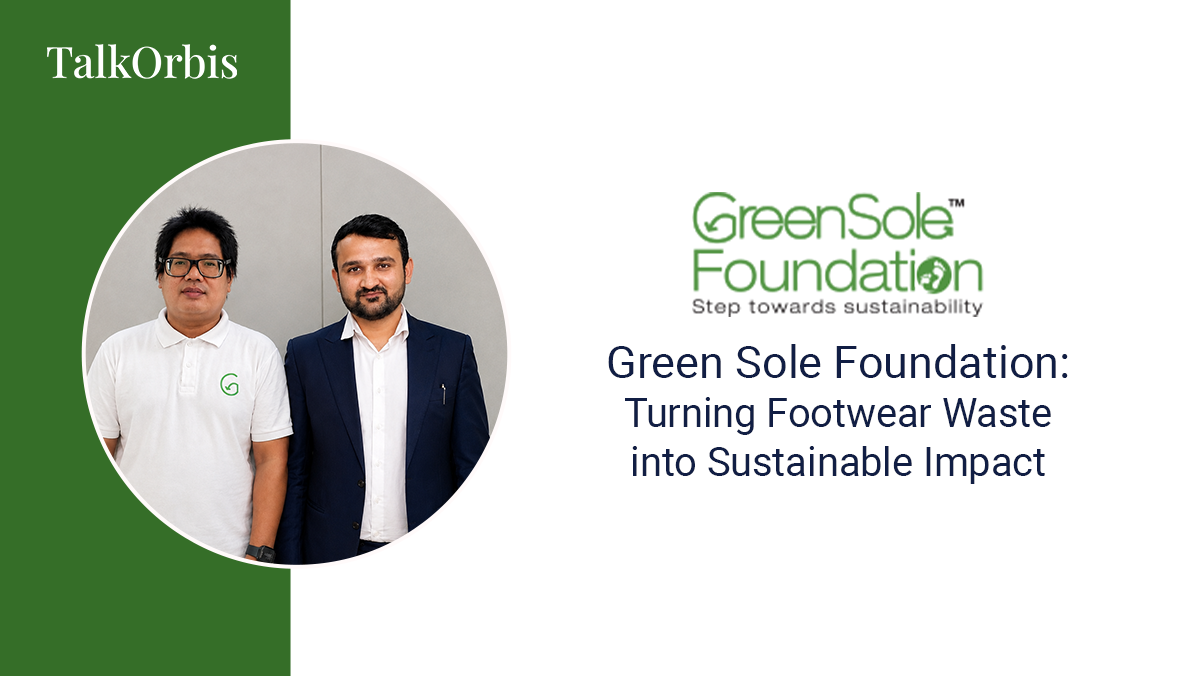
Shriyans Bhandari and Ramesh Dhami, Co-Founders of GreenSole
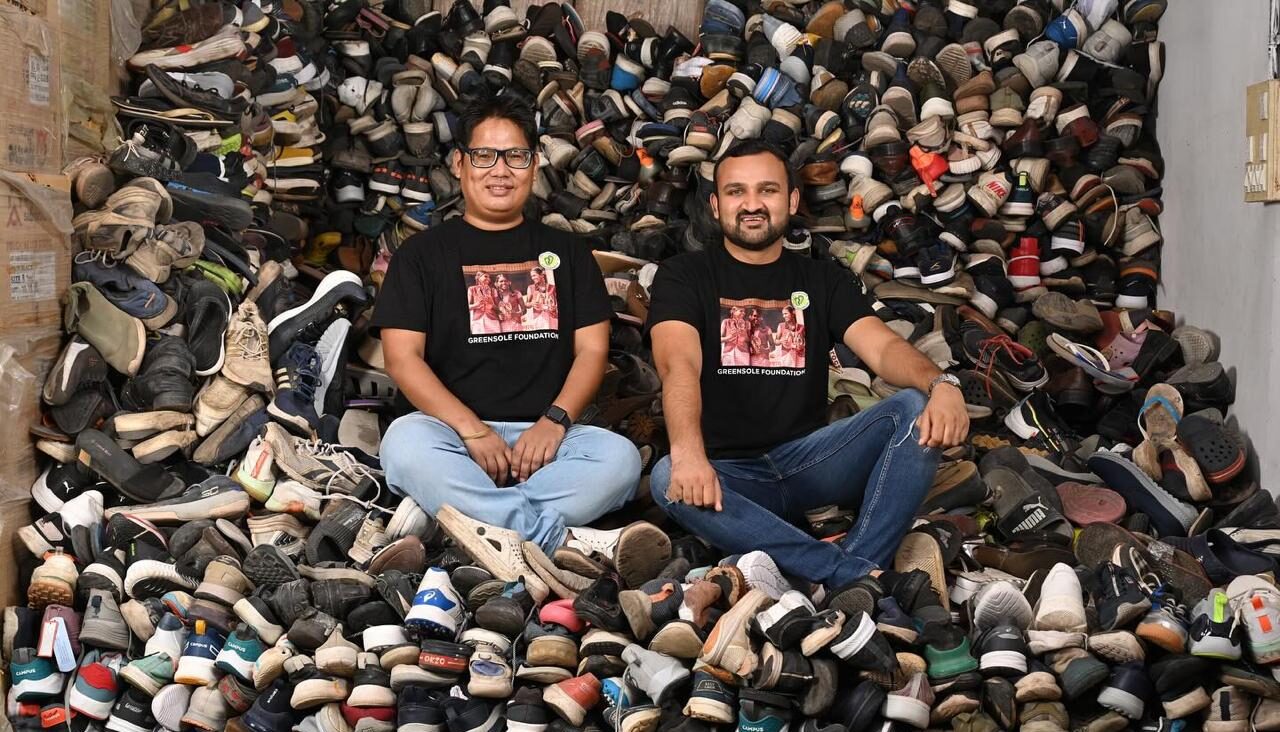
Shriyans Bhandari and Ramesh Dhami, Co-Founders of GreenSole, are on a mission to tackle one of the overlooked challenges in the footwear industry: discarded shoes. What began with two athletes looking for a way to reuse their worn-out sports shoes evolved into a sustainability-focused venture that upcycles discarded footwear into useful products while creating social impact. From transforming old shoes into slippers for children in need to building a circular approach to footwear waste, GreenSole is working to give discarded footwear a second life and make sustainability more accessible.
SUMMARY
- GreenSole emerged from their own experience of repeatedly discarding sports shoes and their search for a more sustainable alternative.
- GreenSole collects discarded footwear, processes and upcycles different components into new footwear, while also finding ways to utilise residual material rather than sending it to landfill.
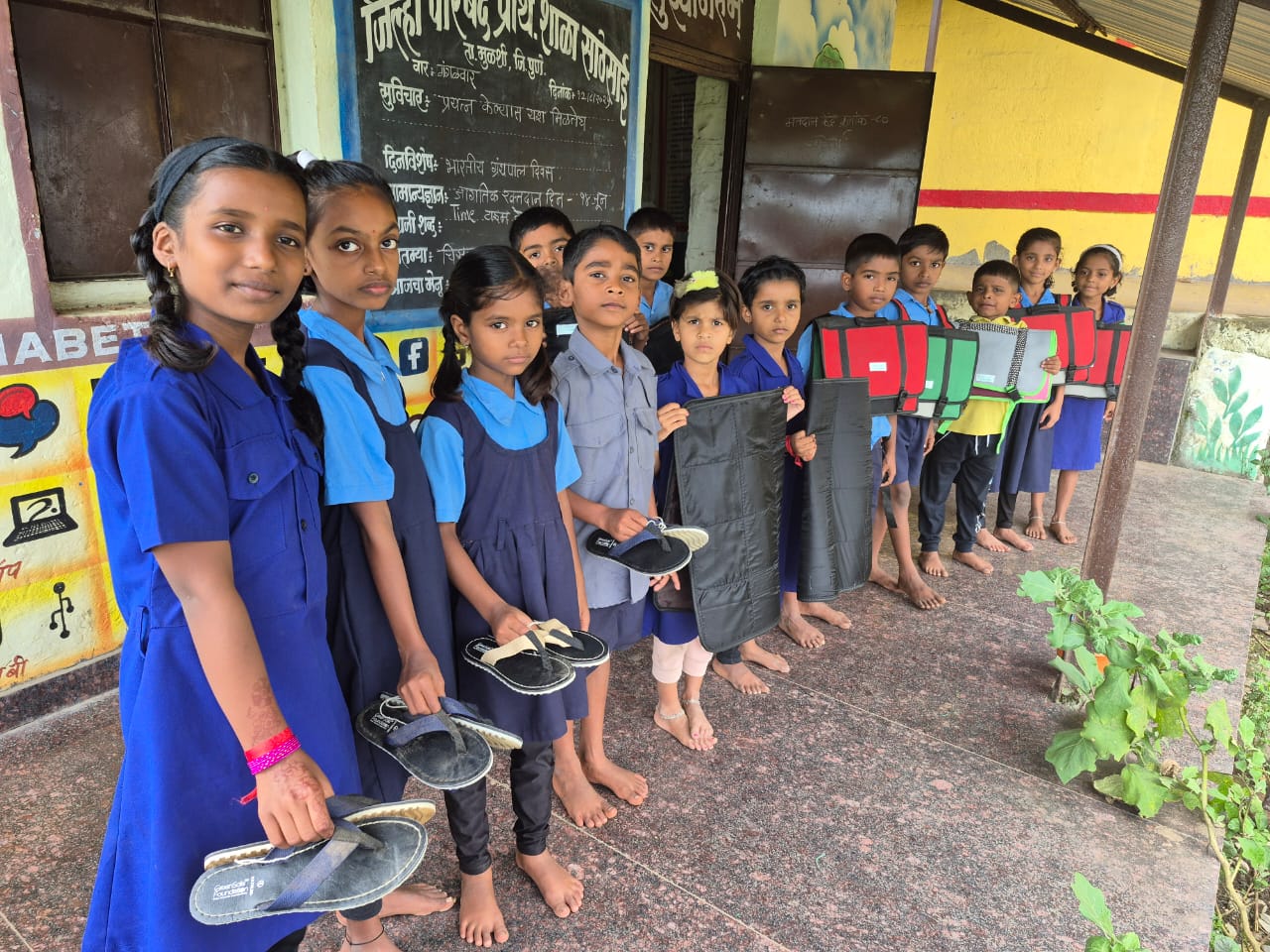
- Beyond recycling shoes, GreenSole has used its model to provide refurbished footwear to children in need and has expanded into sustainable retail, with circularity remaining at the core of its mission.
What does the name "Green Sole" represent, and what problem did you initially want to solve?
The name Green Sole originated from our initial approach to upcycling footwear. We reused old shoe soles to create new footwear products. This meant that we were reducing the need for new raw materials and energy in producing the sole. Today, our work has expanded significantly. We recycle and upcycle not only shoe soles but also shoe uppers, laces, slippers, and apparel, allowing us to address waste management and sustainability on a much larger scale.
What has been the biggest challenge you have faced as a founder?
The initial stage of building an organization is always challenging. You have an idea, but you need to figure out how to implement it, where to manufacture or process products, how to acquire technical knowledge, and how to operate without significant funding. It becomes a 360-degree challenge, where every aspect has to be figured out.
Even today, new challenges emerge as we grow. However, we now have a strong team that manages and executes many of our projects. One important lesson is that there is never just one challenge. As an organization grows and reaches a new level, new challenges appear. You solve them, learn from them, and continue growing.
How do you measure the success and long-term impact of the foundation?
We measure our impact through several parameters. These include the number of beneficiaries reached, the states impacted, the number of corporate partnerships established, and the geographical spread of our initiatives. These indicators help us understand not only how much we have grown as an organization but also how widely our work is creating social and environmental impact.
If you could change one thing about how people in India think about waste and sustainability, what would it be?
One of the most important changes we need is greater awareness and participation in waste segregation. Waste must be segregated properly so that it can reach the right channels for recycling and responsible processing.
As citizens, we also need to become active participants in the entire recycling and upcycling supply chain. This includes supporting sustainable products, making responsible purchasing decisions, and gradually changing our everyday habits. Sustainability should become a part of our daily lives rather than an occasional initiative.
Is GreenSole currently focused only on India, or do you have international plans?
Our work has primarily been focused on Pan India, where we have developed partnerships and operations across multiple states. However, our long-term vision extends beyond India. Greensole Foundation aim’s to explore opportunities to take our model and initiatives to other countries and create a broader international impact.
What message would you like to share with people who want to make a positive difference in society and the environment?
People should take their initiatives forward with confidence and persistence. India needs more social entrepreneurs, eco-entrepreneurs, and entrepreneurs who are willing to create solutions, generate employment, and address social and environmental challenges. At the same time, Indian organizations should also think globally. India is a large and diverse country, and sometimes organizations can spend significant resources addressing challenges domestically before they are able to expand internationally. We need more organizations that can build successful ventures in India while also creating a global impact.
What does the process look like behind the scenes, and what are the biggest operational challenges?
There is a significant amount of work happening behind the scenes. Every day involves activities such as collecting thousands of shoes, coordinating volunteers, managing the upcycling process, identifying beneficiaries, planning distribution, maintaining data, and coordinating with partners.
It is a complete social enterprise with multiple activities taking place simultaneously. Data and transparency are also important parts of our operations. Sharing our work through interviews and other communication platforms helps spread awareness and encourages more people and organizations to participate in sustainable initiatives.
What have collaborations with corporates, volunteers, NGOs, and communities taught you about creating lasting impact?
Corporate partnerships have played an important role in our journey. Many companies, particularly listed companies, have mandatory CSR commitments, and our projects align with several CSR priorities, including waste management, environmental sustainability, social welfare, and skill development.
However, partnerships are not only about funding. Transparency and accountability are equally important. Over the years, we have consistently participated in donation drives, maintained transparency, and provided reports as required by our partners. Building this level of trust and accountability has been an important part of our success.
How do you ensure that growth does not compromise your purpose or quality?
Maintaining our original purpose while scaling is one of our biggest ongoing responsibilities. As we grow, we have to continuously monitor whether our ground-level impact and quality of work remain consistent with why we started the foundation.
Sustainable growth requires a strong team and people who understand the organization’s original purpose. We encourage our team members to think with the same ownership and commitment that the founders had when the organization was still small.
When did you realize that Green Sole had found a sustainable model?
We are still on the journey, but an important turning point came when we demonstrated that discarded footwear could be successfully upcycled into usable products and donated to people in need. Once we established that the model could work with smaller quantities—such as 1,000 or 2,000 pairs in a year—we began to see its potential for scale.
Today, we have grown to processing and distributing approximately 200,000–300,000 pairs, demonstrating that the model can operate at a much larger scale. India has an enormous amount of footwear waste as well as a significant need for footwear. This creates a strong opportunity for our model.
We believe we have established a strong foundation and are working in a space that remains relatively unique. Our focus now is to continue improving, expanding, and creating greater impact.
Trending Interviews




Trending Interviews
Related Popular Interviews
-
 By Prerna Saini | October 15, 2026
Turning Cows into a New-Age Resource: The NAMO Vardan Story
Read More -
 By Prerna Saini | October 14, 2026
The Vision Behind Acres of Ice: A Conversation with Basit Afzal
Read More -
 By Prerna Saini | October 09, 2026
Saubha Aerial Systems – Building Safety Layer for Autonomous Airspace
Read More