From Plastic to Plate: How Kruvil Patel Built Trishula India into a Global Edible Cutlery Brand
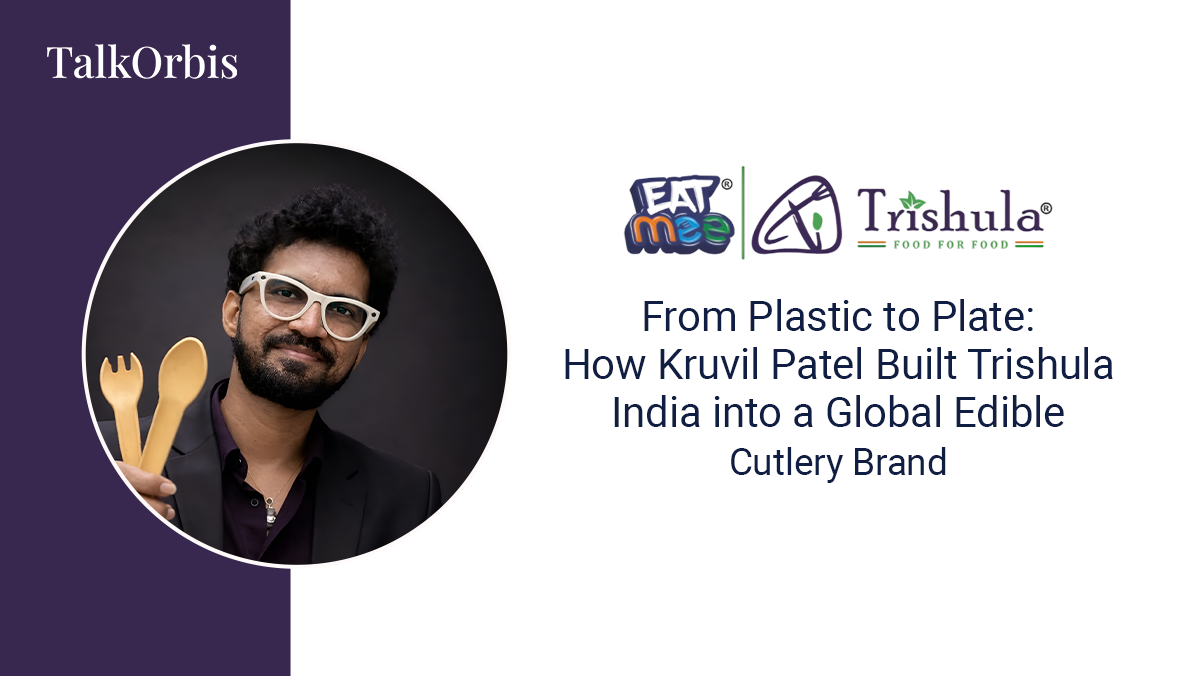
Kruvil Patel is the Founder of Trishula India, a food-tech company redefining sustainability through edible food-service products. Under his leadership, Trishula has expanded to 32 countries with a mission to eliminate single-use plastic by creating innovative products that people can simply use, eat, and leave nothing behind.
SUMMARY
- Building one of the world's largest edible cutlery manufacturers.
- Exporting sustainable innovations to 32 countries.
- Redesigning disposable culture through food technology.
Before starting Trishula India, what was your professional journey and what inspired you to become an entrepreneur?
I have always been fascinated by solving real-world problems through innovation. During my early entrepreneurial journey, I noticed how billions of plastic spoons, forks, and food-service products were used for just a few minutes before becoming waste that remained in the environment for centuries. That contradiction stayed with me.
Rather than creating another biodegradable alternative that still required disposal, I wondered whether the product itself could disappear after use. That simple question became the foundation of Trishula India.
Entrepreneurship, for me, has never been about building products—it has been about challenging accepted systems. Every business opportunity starts by asking why something has always been done the same way. Trishula was born from that curiosity, and today our mission continues to be designing products that solve environmental problems without creating new ones.
Can you share the story behind the name “Trishula India” and the brand “EATmee”?
The name Trishula is inspired by Lord Shiva’s trident, a symbol of destroying negativity and creating transformation. We wanted our company to represent the fight against one of today’s biggest environmental challenges – plastic pollution.
Our consumer brand, EATmee, reflects our philosophy in the simplest possible way. Instead of throwing away a spoon, why not eat it? The name instantly communicates our value proposition while making sustainability approachable and fun.
Together, Trishula and EATmee represent innovation that is practical, enjoyable, and environmentally responsible.
The idea of edible cutlery is incredibly unique. How did the concept first come to your mind, and how did you validate that consumers would actually be willing to eat their cutlery after a meal?
The idea came from observing something most people ignored. Every meal ended with plastic waste that served no purpose after just a few minutes of use.
We began asking a different question – not how to recycle plastic better, but whether disposable cutlery needed to become waste at all.
Consumer validation came through extensive product trials, exhibitions, and customer feedback. Once people experienced that the spoon was sturdy, tasted good, and could actually be eaten, skepticism quickly turned into excitement. We realized people were willing to adopt sustainable products when they enhanced the overall experience rather than asking consumers to compromise.
The best sustainable product isn't one that's disposed responsibly - it's one that never becomes waste in the first place.
What were the biggest engineering challenges in developing a spoon that was both edible, delicious, and functional enough to hold hot soups without dissolving?
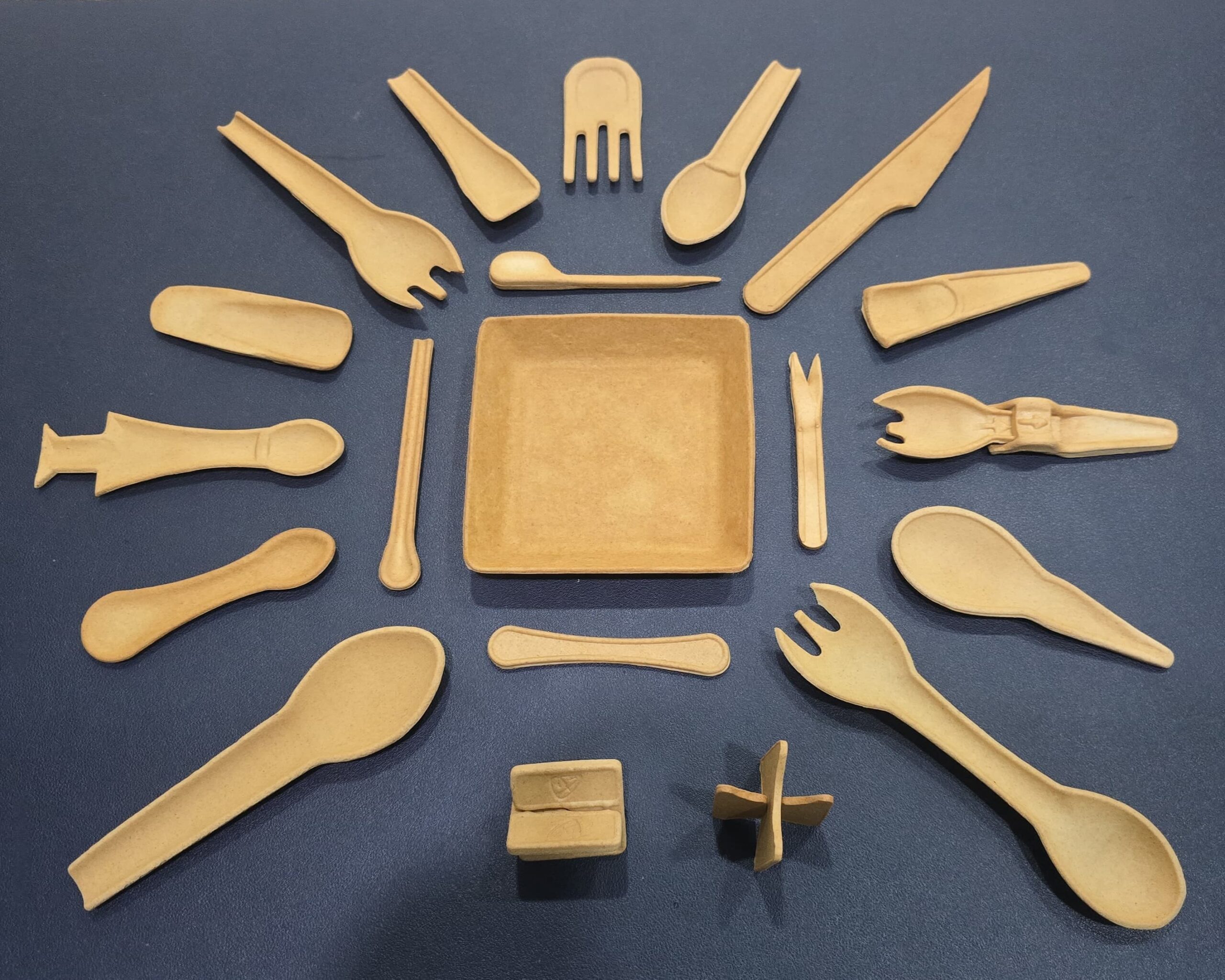
Creating edible cutlery required balancing three characteristics that rarely coexist: strength, taste, and shelf life.
Our products needed to withstand hot soups, frozen desserts, and everyday dining without breaking or becoming soggy. At the same time, they had to taste good enough that consumers would actually want to eat them.
Developing proprietary formulations, manufacturing processes, and production technology required years of research, testing, and continuous improvement. Today, our products deliver both functionality and an enjoyable eating experience while remaining completely food-safe and environmentally friendly.
Your products are now available in unique variations like Choco Lust, PiriPiri, and Masala Magic. How do you balance strict environmental sustainability with consumer taste and a great dining experience?
For us, sustainability should never feel like a compromise.
Consumers don’t choose products simply because they are environmentally friendly—they choose products that create better experiences.
That’s why we developed flavors like Choco Delight, Choco Vanilla, Crazy Cinnamon, and Simply Classic. Each product complements different foods while maintaining structural integrity during use.
We believe the future belongs to products that people choose because they are better, with sustainability becoming an added benefit rather than the only selling point.
What unique challenges did you face while scaling your supply chain and exporting to multiple countries?
Exporting to 32 countries has taught us that every market has unique regulations, certifications, consumer preferences, and quality expectations.
Building reliable manufacturing systems, obtaining international certifications, maintaining consistent product quality, and managing global logistics were among our biggest challenges.
However, these experiences strengthened our processes and enabled us to build long-term relationships with global partners across retail, hospitality, and food-service industries.
Innovation doesn't stop at the product. It continues through manufacturing, supply chains, and every customer experience.
What is one piece of unvarnished advice you would give to someone trying to build a business in the hard-tech or sustainability sector in India today?
Build solutions, not trends.
Sustainability is a long game. If you’re solving a real problem, expect skepticism, setbacks, and years of iteration.
Focus on creating genuine value rather than chasing headlines or funding.
The market eventually rewards businesses that solve meaningful problems consistently. Patience, resilience, and execution matter far more than having the perfect idea.
Plastic pollution is a global crisis, but India’s street food and catering culture uses massive amounts of single-use plastic. What is your grand vision for Trishula over the next 3 to 5 years to truly disrupt this space?
Our vision extends far beyond edible spoons.
We want Trishula to become the global benchmark for sustainable food-service innovation by replacing millions of single-use plastic products with edible and zero-waste alternatives.
Over the next five years, we plan to expand our product portfolio, strengthen international distribution, deepen partnerships with hospitality, aviation, QSR, and retail brands, and continue investing in automation and research.
Ultimately, our goal is simple: create a future where sustainability is no longer an alternative—it becomes the default choice. Every meal should leave behind memories, not waste.
Trending Interviews








Trending Interviews
Related Popular Interviews
-
 By Prerna Saini | October 09, 2026
Saubha Aerial Systems – Building Safety Layer for Autonomous Airspace
Read More -
 By Prerna Saini | October 06, 2026
Sanyark Space: Building India’s Navigation Satellite Backbone
Read More