Angirus: Building a Sustainable Future by Turning Plastic Waste into Wricks
Kunjpreet Arora, Co-founder and CEO
Kunjpreet Arora is the Co-founder and CEO of Angirus, a climate-tech startup transforming plastic and industrial waste into sustainable building materials called Wricks®. A civil engineer turned entrepreneur and Forbes 30 Under 30 Asia honouree, she is on a mission to make construction more sustainable, affordable, and environmentally responsible while turning waste into a valuable resource.
SUMMARY
- Innovation: Transforming plastic and industrial waste into high-performance, dampproof bricks called Wricks®.
- Impact: Recycled 1,200+ tonnes of waste, manufactured 400,000+ Wricks®, and avoided 220 tonnes of CO₂ emissions.
- Vision: Making sustainable construction affordable and accessible while creating a circular economy for waste.
What inspired you to start Angirus, and how did the idea of turning waste into sustainable construction materials come about?
I grew up in Udaipur, a city known for its beautiful lakes and the Aravalli hills. However, alongside this natural beauty, I witnessed plastic waste accumulating around our lakes and mountains, while marble slurry from local industries was being dumped into the surrounding environment. During our civil engineering studies, my co-founder Lokesh and I began exploring ways to put this waste to better use, and our first thought was to convert it into building materials. As we researched further, we discovered another major problem: India produces billions of clay bricks every year, consuming enormous amounts of fertile soil, coal and water. We realised that we could address both problems with one solution. We began experimenting with different combinations of plastic and industrial waste to develop bricks that could perform as well as, or even better than, conventional bricks.
After countless trials, failures and improvements, we developed Wricks®—bricks made entirely from recycled waste. What started as a college project eventually evolved into Angirus in 2020. For me, Angirus was never just about making bricks; it was about protecting the environment I grew up in while creating something that could make a difference far beyond my hometown.
Could you explain the technology behind your flagship product, Wricks, and how it differs from conventional bricks?
The simplest way to explain Wricks® is that we use waste to replace the natural resources traditionally required to manufacture bricks. Conventional clay bricks are made by shaping fertile soil and firing it in kilns at temperatures of around 1,200°C, consuming large amounts of soil, water and coal while releasing significant carbon emissions. At Angirus, we take single-use plastics, such as discarded packaging and plastic films, and combine them with construction, demolition and industrial waste. Using our proprietary manufacturing technology, we heat and mix these materials so that the softened plastic acts as a binding agent. The mixture is then shaped into bricks and cooled, eliminating the need for fertile soil, cement, kiln firing or water curing.
Our laboratory tests and field trials have demonstrated compressive strength of around 12–18 MPa, water absorption of approximately 2%, and improved thermal insulation compared with conventional clay bricks. For property owners, builders and occupants, this translates into strong, moisture-resistant walls and better thermal comfort. Our vision is to make people choose Wricks® not just because they are made from waste, but because they are genuinely high-performance building materials.
How do you ensure the strength, durability and quality of Wricks for real-world construction applications?
One thing we understood very early was that the construction industry cannot afford to compromise on safety. A brick may look simple, but once it becomes part of someone’s home, its performance matters enormously. That is why testing and quality assurance have been central to our journey. We have worked with independent laboratories to test Wricks® against relevant building standards for compressive strength, water absorption, dimensional accuracy, durability and other material properties. We have also conducted tests for flammability, leaching, microplastics, toxicity and environmental safety. We also closely observe how our bricks perform at actual construction sites, where Wricks® have been used in residential buildings, exposed brick walls, community spaces and various projects across India.
These applications help us understand practical aspects such as ease of installation, compatibility with mortar and feedback from builders. Manufacturing consistency is equally important, as working with waste requires careful control over raw material composition, moisture content and processing conditions. We continue to invest in testing and improving our technology, particularly in areas such as long-term performance and fire safety.
A sustainable building material must first be a good building material. If it cannot meet the expectations of builders and homeowners, its environmental benefits alone will not be enough.
What types of plastic and industrial waste do you use, and how do you transform them into valuable building materials?
We primarily work with plastic waste that conventional recyclers often struggle to process, including plastic films, carry bags, multilayer packaging and other mixed plastics that have limited recycling value due to their different layers and material compositions. Our process begins with sorting and preparing these materials. Plastics are cleaned or dried as required and reduced to the appropriate size, while mineral waste is processed to achieve the desired particle size and quality. We then combine them in carefully developed proportions using our proprietary manufacturing technology, where the softened plastic acts as a binding agent to hold the mineral particles together.
The mixture is moulded under controlled conditions and cooled to produce finished bricks. What excites me most about this process is how it changes the way we look at waste. A discarded plastic wrapper or construction debris may seem worthless on its own, but with the right technology, these materials can become part of a wall that lasts for years. That is the circular economy we want to build, where waste is treated as a valuable resource rather than something to be discarded.
How has the construction industry responded to Wricks, and what has been your experience in convincing builders and developers to adopt sustainable alternatives?
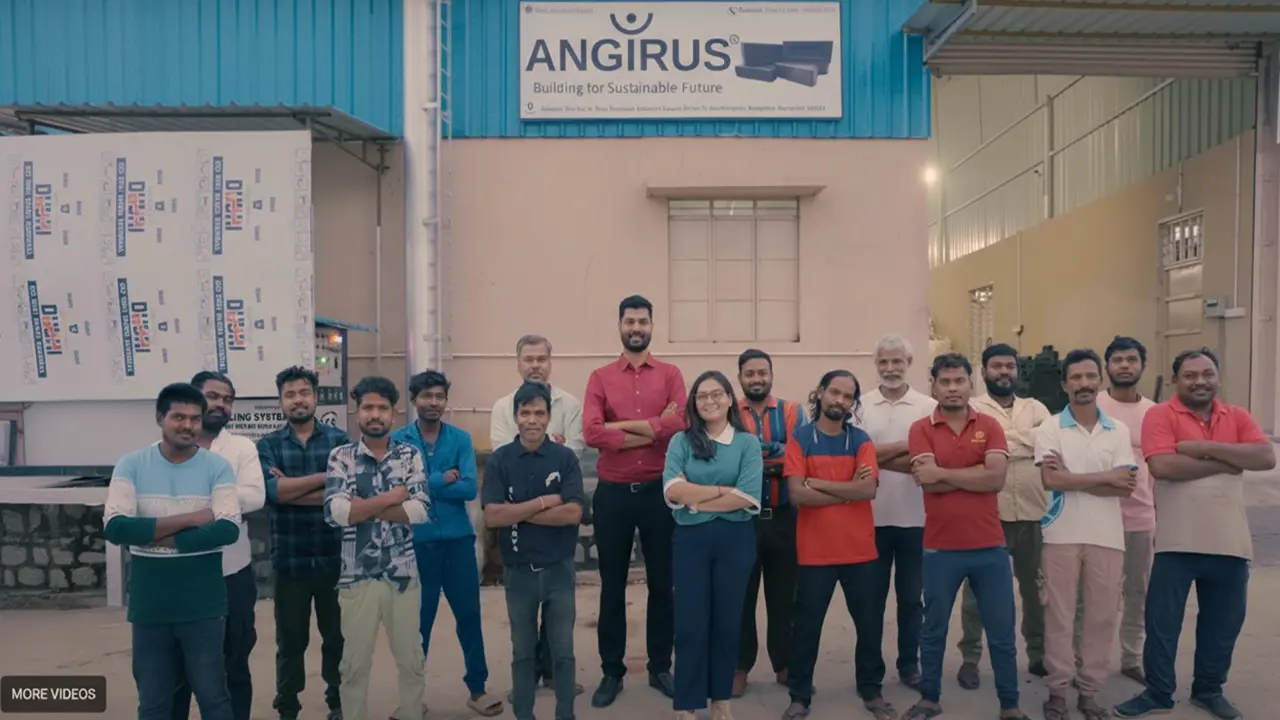
The construction industry is quite traditional, so introducing a new building material is never easy. When we first approached builders and developers with Wricks®, we received curiosity but also hesitation. Their biggest questions were whether Eco-Friendly Bricks could be strong and durable, whether they would bond properly with cement mortar, and how they would perform over time. We quickly realised that sustainability alone wouldn’t convince people to switch; Wricks® had to deliver real value through strength, water resistance, thermal insulation and overall construction economics. Instead of focusing only on environmental benefits, we prioritised laboratory testing, real-world demonstrations and pilot projects. We encouraged builders to try Wricks® in smaller applications, such as toilets and boundary walls, alongside their ongoing projects, which also aligned with our initial manufacturing capacity. We worked closely with architects, builders and masons, listened to their feedback and continuously improved our product.
Gradually, as they experienced its performance over months and years, their confidence grew. Today, Wricks® have been used in projects across different parts of India, and we are seeing growing interest from developers looking for sustainable alternatives. This journey has taught me that while people appreciate sustainability, they adopt a new product when they trust its performance and see genuine value in it.
What have been the biggest challenges in scaling Angirus, from manufacturing and raw material sourcing to market expansion?
Building a manufacturing company from scratch has been one of the biggest challenges of our journey. When we started, there were no ready-made machines or established processes to rely on, so we had to develop the technology ourselves, learn from failures and gradually move from small prototypes to industrial-scale equipment. Manufacturing continues to bring challenges, especially because waste is an inconsistent raw material that requires careful quality control. Alongside technology, we have to manage factory operations, skilled manpower, regulatory approvals, maintenance and working capital.
We have also faced delays in setting up and relocating manufacturing facilities, impacting production and customer commitments. Expanding into new markets is equally challenging, as the construction industry takes time to trust and adopt new materials. This journey has taught me that building a company goes beyond developing a product; it requires the right team, systems, partnerships and trust. Despite the difficult phases, seeing our bricks being used in actual buildings makes it all worthwhile.
People often see the finished product, but they don't see the years of failed experiments, broken machines, delayed approvals, and difficult decisions behind it. Building Angirus has taught me that persistence is as important as innovation
How does Angirus measure its environmental impact, and what milestones have you achieved in reducing waste and promoting sustainable construction?
For us, environmental impact goes beyond simply calling a product eco-friendly; it is about measuring the difference we make. We track the plastic and construction waste processed, the Wricks® manufactured and the conventional materials replaced. We have also undertaken lifecycle assessments to compare our emissions with conventional alternatives. So far, Angirus has processed over 1,200 tonnes of waste, manufactured more than 400,000 Wricks® and reported approximately 220 tonnes of avoided CO₂ emissions. Beyond these numbers, we believe every tonne of waste converted into a useful resource creates environmental and economic value. As we grow, we aim to strengthen our impact measurement and demonstrate that environmental responsibility and a commercially successful manufacturing business can go hand in hand.
How has being recognised in Forbes 30 Under 30 Asia influenced your entrepreneurial journey and the growth of Angirus?
Being recognised in Forbes 30 Under 30 Asia in 2025 was a very special moment for me and the entire Angirus team. Building a manufacturing startup involves years of hard work, uncertainty and countless challenges that often go unnoticed, so this recognition felt like an acknowledgement of our journey and the people who believed in us. What started as a simple idea in Udaipur has grown through experimentation, persistence and continuous learning.
The recognition has also helped us introduce Angirus to a wider audience and connect with people passionate about sustainable construction. However, I don’t see an award as the destination. The real achievement will be when building materials made from waste become a mainstream choice for the construction industry. For me, this recognition is a reminder of how far we have come and how much more we have to achieve.
Trending Interviews


Trending Interviews
Related Popular Interviews
-
 By Prerna Saini | November 05, 2026
Seed Paper India: The Sustainable Vision of Shark Tank Finalist Roshan Ray
Read More