
Reviving Indian Heritage Through Micro-Luxury: Gaurav Mehta & Jaipur Watch Company

Gaurav Mehta, Founder of Jaipur Watch Company
Gaurav Mehta is a visionary entrepreneur and history enthusiast leading Jaipur Watch Company, India’s premier bespoke luxury timepiece house. His journey reflects a fusion of historical preservation, artisan craftsmanship, and relentless innovation, transforming how the world views Indian luxury watchmaking
SUMMARY
- Pioneered India's micro-luxury watchmaking segment by integrating historical artifacts like vintage coins into luxury timepieces
- Successfully bridged traditional Indian arts—such as Pichhwai and enameling—with precision mechanical watch movements
- Earned national and global acclaim, bringing handcrafted Indian horology into mainstream high-end lifestyle culture
You started by turning a 1946 British-India coin into a watch dial as a personal experiment. What did you see in that coin that made you think, “This could become a watch”?
I have always been a passionate numismatist and history lover[cite: 1]. A coin isn’t just a piece of metal; it’s a tangible freeze-frame of time, carrying stories of economics, art, royalty, and politics from a bygone era. When I held that 1946 King George VI coin, which holds immense significance as one of the last coins minted before India’s independence, I realized both coins and watches share a fundamental theme: time. A watch measures passing time, while a historical coin preserves frozen time.
Placing the coin on a watch dial felt like giving history a beat. The relief, detail, and patina of the coin possessed a character that standard watch dials simply couldn’t replicate. It was a personal project initially, purely driven by curiosity and design experimentation. But when people saw it on my wrist and reacted with genuine awe at how history was seamlessly worn as an everyday luxury object, I knew there was a larger story waiting to be told.
When you entered the luxury watch industry, how did you deal with the initial scepticism around building a homegrown Indian watch brand?
The watch industry, especially luxury, has historically been dominated by Swiss heritage and European storytelling. When we launched in 2013, the common perception was that India was primarily a consumer market for watches, not a maker of high-end horology. Skepticism was natural—retailers and collectors questioned whether an Indian brand could deliver luxury-grade finishes, reliable movements, and authentic design rigor.
We addressed this skepticism by focusing on uncompromised quality and authentic storytelling. We didn’t try to copy Swiss aesthetics; instead, we tapped into something uniquely ours—Indian history, art, and craftsmanship. We ensured that our mechanical movements, sapphire crystals, and casing met international standards while offering a cultural resonance no foreign brand could match. Once collectors held the watches and experienced the craftsmanship firsthand, skepticism turned into pride. Building a brand takes time, but staying true to your core identity eventually builds unshakeable credibility.
Luxury isn't just about price tags or foreign heritage; it's about authentic storytelling, rarity, and extreme attention to detail rooted in culture.
From vintage coin watches to collections such as Baagh and Gates of India, what has been the most challenging part of translating Indian heritage into a functional watch?
The biggest challenge is scale and precision. Indian heritage, whether architectural like the Gates of India or artistic like Baagh, is grand, elaborate, and deeply detailed. Translating that grandeur onto a canvas that is barely 35 to 42 millimeters in diameter, with fractions of a millimeter in thickness allowance for the hands to clear the dial, requires incredible horological discipline.
When working with vintage coins or miniature artwork, weight balance and thickness are constant hurdles. You cannot simply drop an old coin into a standard casing—it renders the watch too heavy or too thick for comfortable wear. We had to innovate custom casing techniques, micro-machining methods, and delicate dial mountings to maintain structural balance while keeping the movement completely protected.
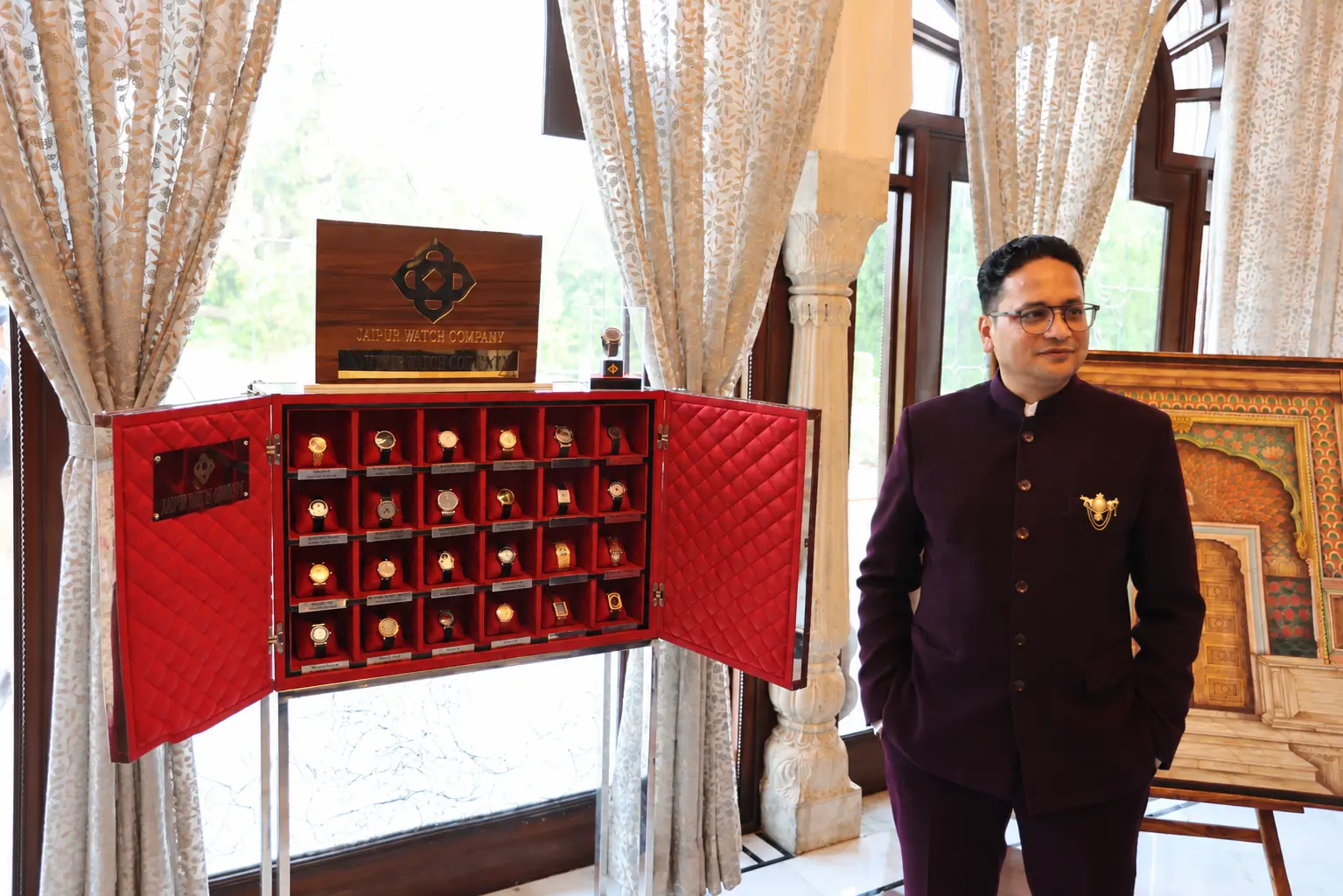
JWC offers everything from accessible luxury watches to highly bespoke timepieces. How do you maintain the same level of craftsmanship and attention to detail across different price segments?
For us, the philosophy of craftsmanship remains non-negotiable regardless of the price point. Whether an entry-level piece or a bespoke 18K solid gold timepiece, every watch originates from the same design studio and undergoes the same quality control standards.
The differentiation lies in the complexity of materials and hand-hours invested—such as solid gold vs. stainless steel, or intricate hand-painted Pichhwai art vs. specialized stamping. However, the core elements—such as hand-finishing, movement calibration, and ergonomic design—are identical across all tiers. We treat every watch as a collector’s piece because it carries our name and our heritage.
JWC has received significant public attention over the years, including its Shark Tank India appearance and visibility among prominent Indian personalities. How has this changed the way people perceive Indian luxury watchmaking?
It has fundamentally shifted the perception from curiosity to immense national pride. Earlier, Indian buyers automatically looked toward Europe for luxury wristwear. Platforms like Shark Tank and visibility among global personalities highlighted that an Indian brand could create horological pieces that are conversation starters.
It proved that luxury watchmaking doesn’t always have to be understated European minimalism—it can be rich, storied, and proudly Indian. Seeing leaders, artists, and global icons wear Jaipur Watch Company validated that Indian heritage belongs in high luxury.
Working with historical coins and other heritage elements involves questions of authenticity, sourcing and preservation. What goes into ensuring that these elements are responsibly and accurately incorporated into your watches?
Authenticity and legal responsibility are the bedrock of our coin-based collections. We strictly source coins through verified numismatic auctions, authorized dealers, and legal collections. We comply rigorously with all heritage preservation laws, ensuring we use coins that are legally permissible for private ownership and artistic repurposing.
When preserving them, our objective is minimal alteration. We treat every coin with extreme respect, cleaning and restoring its details without eroding its original patina or historical character. We are not destroying history; we are encapsulating and protecting it inside a sealed chamber of sapphire crystal, allowing it to be admired for generations.
JWC works with detailed miniature art and enamel craftsmanship. How do you adapt traditional Indian artistic techniques to the extremely small scale and precision required for a watch dial?
It requires adapting traditional techniques to micro-canvas constraints. Traditional Pichhwai or miniature artists are used to working on cloth or paper with space to move their brushes. On a watch dial, they are working under magnifying lenses using brushes made of a few squirrel hairs, applying natural pigments onto metal or enamel surfaces.
We spent years training master artisans to understand watch assembly mechanics. A single extra layer of paint can impede the movement of the hands, so the thickness tolerance is microscopic. It requires immense patience—often taking dozens of hours for a single dial. The result is a wearable masterpiece where traditional art meets horological engineering
When an artisan paints under a microscope to fit centuries of art onto a watch dial, timekeeping becomes an art form in itself
After more than a decade of building Jaipur Watch Company, what is the biggest lesson you would share with Indian entrepreneurs trying to build a high-value, design-led brand from India?
My biggest lesson is: Do not compromise on your narrative or your quality to fit quick trends. Building a luxury, design-led brand requires long-term patience. You cannot rush trust or heritage.
Focus on creating something deeply authentic to your roots rather than imitating global brands. India possesses an unmatched treasure trove of design, history, and craft—if you marry that richness with modern precision, global quality, and uncompromising customer experience, the world will listen. Own your identity proudly.
Trending Interviews










Trending Interviews
Related Popular Interviews
-
 By Prerna Saini | October 09, 2026
Saubha Aerial Systems – Building Safety Layer for Autonomous Airspace
Read More -
 By Prerna Saini | October 06, 2026
Sanyark Space: Building India’s Navigation Satellite Backbone
Read More