From Environmental Data to Climate Action: The Aurassure Story
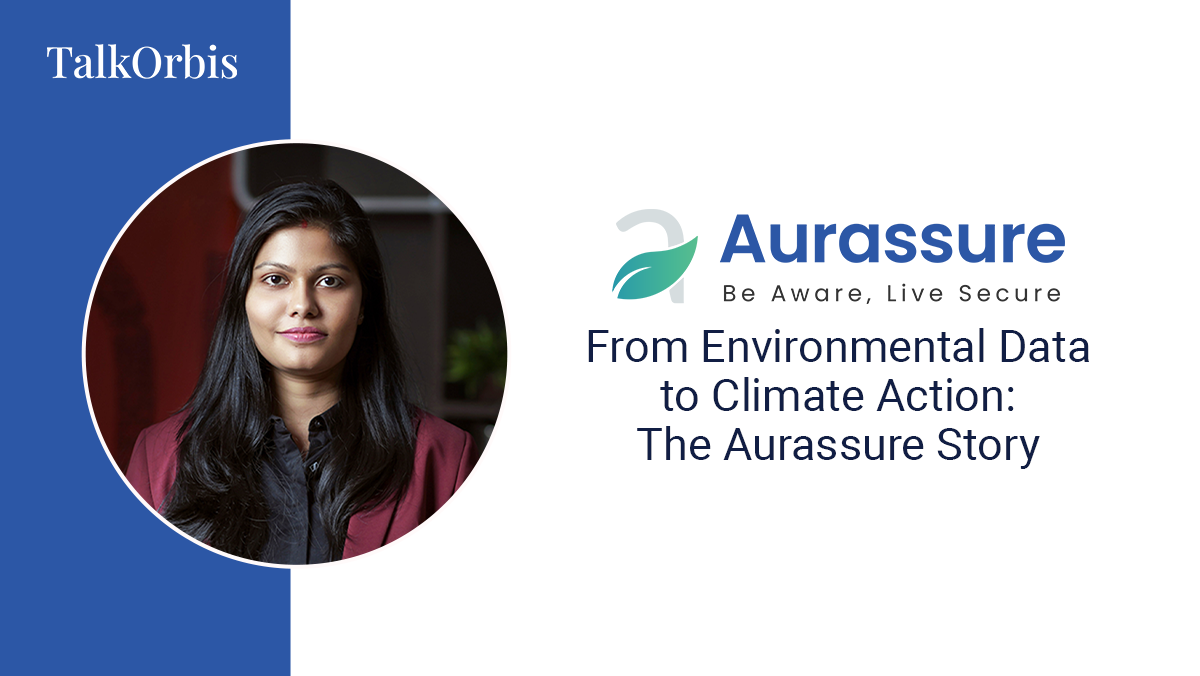
Akanksha Priyadarshini , Founder & CEO of Aurassure
Akanksha Priyadarshini is a climate-tech entrepreneur and the Founder & CEO of Aurassure, where she is building the next generation of hyperlocal climate intelligence. Her work brings together AI, real-time environmental data, and sustainability to help cities, businesses, and communities anticipate climate risks, make smarter decisions, and build long-term resilience.
SUMMARY
- Building Hyperlocal Climate Intelligence: Akanksha is building Aurassure to make real-time, hyperlocal environmental and climate intelligence more accessible for smarter, data-driven decision-making.
- Technology for Climate Resilience: Her work combines AI, IoT, real-time environmental data, and predictive intelligence to help cities, businesses and communities anticipate risks across air quality, flooding, heat and extreme weather.
- Driving Climate Action with Global Impact: With Aurassure’s solutions deployed across 350+ cities in India and Brazil, Akanksha is advancing practical climate solutions that connect technology, sustainability and public health.
What personal observation first made you realize that India critically needed better, hyperlocal environmental intelligence rather than generic weather updates?
What became clear to me was that environmental conditions are not uniform even within the same city. A city can have a single weather update or a limited number of monitoring stations, yet the experience of air pollution, heat, flooding or extreme weather can vary significantly from one neighbourhood to another. For citizens and decision-makers, knowing the city-wide average is often not enough to understand what is happening at a specific location or what action needs to be taken.
I also saw that much of the available environmental information was either too broad, delayed, or difficult to translate into actionable decisions. This created a gap between having environmental data and having intelligence that people could actually use.
That realization shaped my thinking around Aurassure: we needed to bring together ground-level, hyperlocal data with AI, predictive analytics and climate intelligence to provide a much clearer picture of environmental risks. The objective was not simply to tell people what the weather or air quality was, but to help them understand where risks were emerging, how they could evolve, and what they could do proactively.
When you started Aurassure, what assumption did you have about air quality and climate monitoring that turned out to be completely different in ground reality?
When we started Aurassure, we initially thought the biggest challenge was simply the availability of environmental monitoring infrastructure. Ground reality showed us that the challenge was much deeper: the availability of data does not necessarily mean the availability of useful intelligence.
Environmental conditions can change significantly across very small distances, while conventional monitoring and broad datasets can miss these variations. We also learned that different applications require different levels of spatial and temporal resolution. A city administrator, an industrial facility, a construction site, or a citizen may need very different environmental insights to make timely decisions.
This changed our approach. We realised that simply deploying more sensors was not enough. We needed to build a system that could combine hyperlocal ground-level observations with AI/ML, satellite and other datasets, validate the data, and translate it into actionable insights.
That learning became central to Aurassure’s approach: moving from monitoring environmental parameters to understanding environmental risk. Today, our focus is not just on measuring air quality, weather, flooding or heat, but on using that data to identify hotspots, forecast emerging risks, generate alerts and support proactive decisions.
The biggest shift in our thinking was moving from asking ‘What is the environmental condition?’ to asking ‘What does it mean, where is the risk, and what should we do about it?
Combining IoT hardware, AI, and climate data for extreme Indian weather is tough. What was the hardest technical or on-ground hurdle in keeping compact sensors accurate and calibrated?
The hardest challenge was maintaining measurement accuracy in real-world environments, where conditions are constantly changing. A compact sensor may perform well under controlled laboratory conditions, but outdoor deployments expose it to variations in temperature, humidity, dust, pollution levels and other environmental factors that can influence sensor behaviour over time.
We therefore realised that calibration could not be treated as a one-time activity. At Aurassure, we approach accuracy through multiple layers of validation, including laboratory calibration, NABL reference calibration, co-location validation studies and on-site calibration. We then complement this with AI/ML-based sensor fusion, adaptive learning, contextual calibration, and temporal and spatial interpolation.
The technical challenge was to make these approaches work together without compromising the compactness, scalability and field-readiness of the devices. Our focus has been to continuously learn from environmental conditions and improve the quality of measurements rather than relying solely on fixed calibration procedures.
This has shaped one of our core principles: accuracy in environmental monitoring is an ongoing process of validation, calibration and learning, not a specification achieved once and forgotten. Our current approach has demonstrated accuracy of more than 90% across our monitoring solutions.
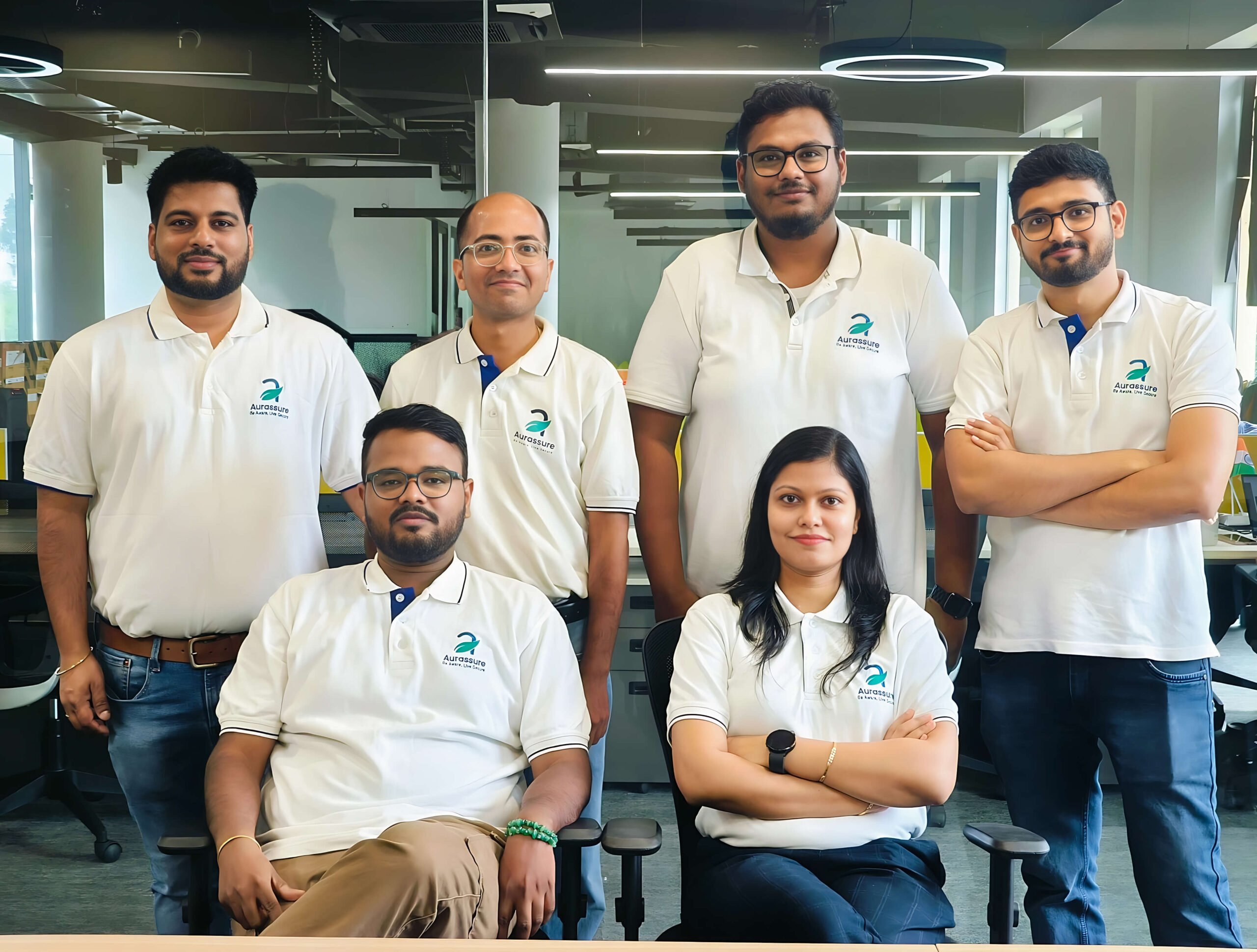
What has been the biggest lesson from building Aurassure as a Climate Intelligence company, and how has patience shaped its evolution?
The biggest lesson has been that building deep climate technology requires patience because you are not simply building a product; you are building an ecosystem and, in many ways, a new way of thinking about environmental risk.
That patience has allowed us to continuously learn from real-world deployments and evolve Aurassure from environmental monitoring towards a broader Climate Intelligence Platform focused on anticipating risks and enabling resilience.
From tracking real-time environmental data across various cities, what is one surprising pattern you discovered about how climate risks behave differently just two kilometers apart?
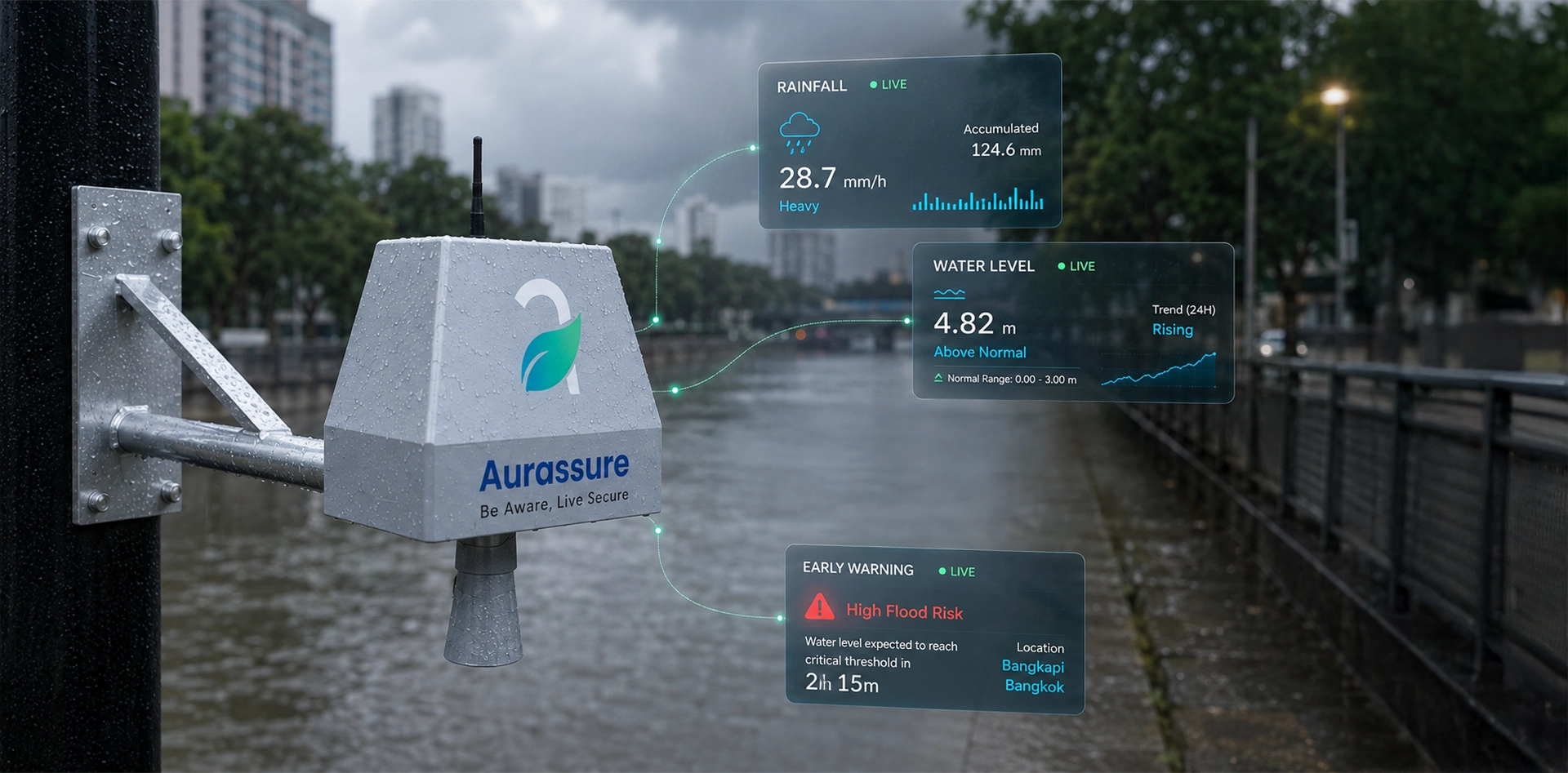
Aurassure works closely with smart cities and municipal bodies. What has this taught you about getting large-scale climate technology actually adopted in the real world?
We believe climate intelligence can become a critical layer of modern urban infrastructure, helping cities understand their environmental realities, anticipate emerging risks and make smarter decisions.
Looking back at Aurassure’s journey, what single decision or product breakthrough gave you the confidence that this deep-tech idea could become a massive, sustainable business?
The breakthrough for me was realising that Aurassure could evolve from an environmental monitoring solution into a broader Climate Intelligence platform. As we worked across different use cases, we saw that the value was not limited to measuring individual parameters. By bringing together hyperlocal ground-level data, historical datasets, satellite and reanalysis data, AI/ML and predictive modelling, we could create intelligence that could be applied across multiple climate risks and sectors.
That was a significant shift in our thinking. We realised that the larger opportunity was not simply in monitoring individual environmental parameters, but in addressing the data blind spots that prevent cities and institutions from understanding climate risks at the right scale and resolution. Our collaborations with governments and urban institutions reinforced this insight, there was a clear need to bring together fragmented datasets, ground-level observations and advanced analytics to create a more complete and actionable picture of environmental risk. That gave us the confidence that Aurassure could evolve into a climate intelligence layer that supports how governments and institutions understand, plan for and respond to climate risks, rather than being limited to any single monitoring application.
As climate monitoring becomes central to global smart infrastructure, what is Aurassure’s ultimate vision for making environmental data accessible and actionable across emerging markets?
Trending Interviews






Trending Interviews
Related Popular Interviews
-
 By Prerna Saini | October 09, 2026
Saubha Aerial Systems – Building Safety Layer for Autonomous Airspace
Read More -
 By Prerna Saini | October 06, 2026
Sanyark Space: Building India’s Navigation Satellite Backbone
Read More