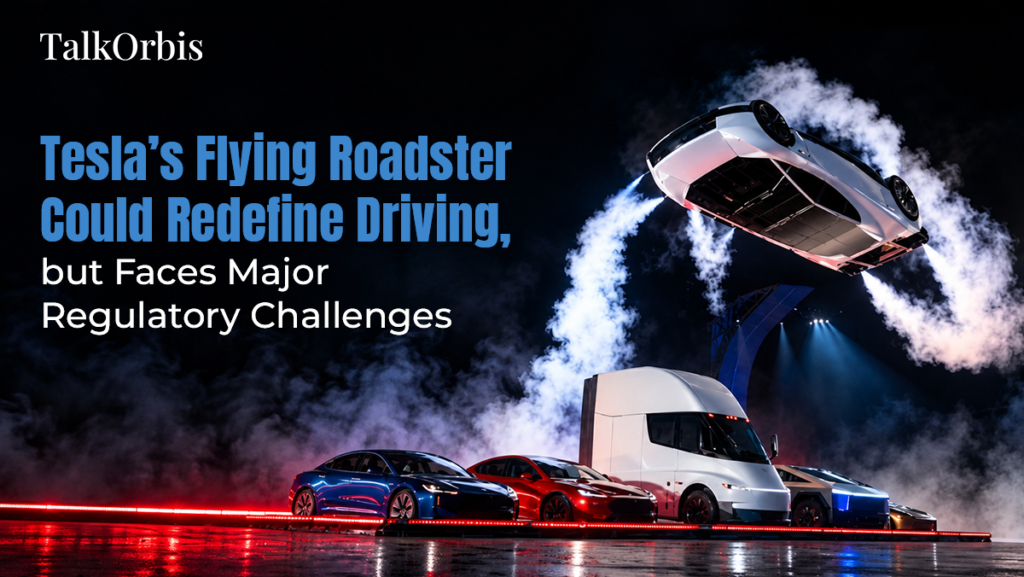
Tesla’s Flying Roadster Could Redefine Driving, but Faces Major Regulatory Challenges
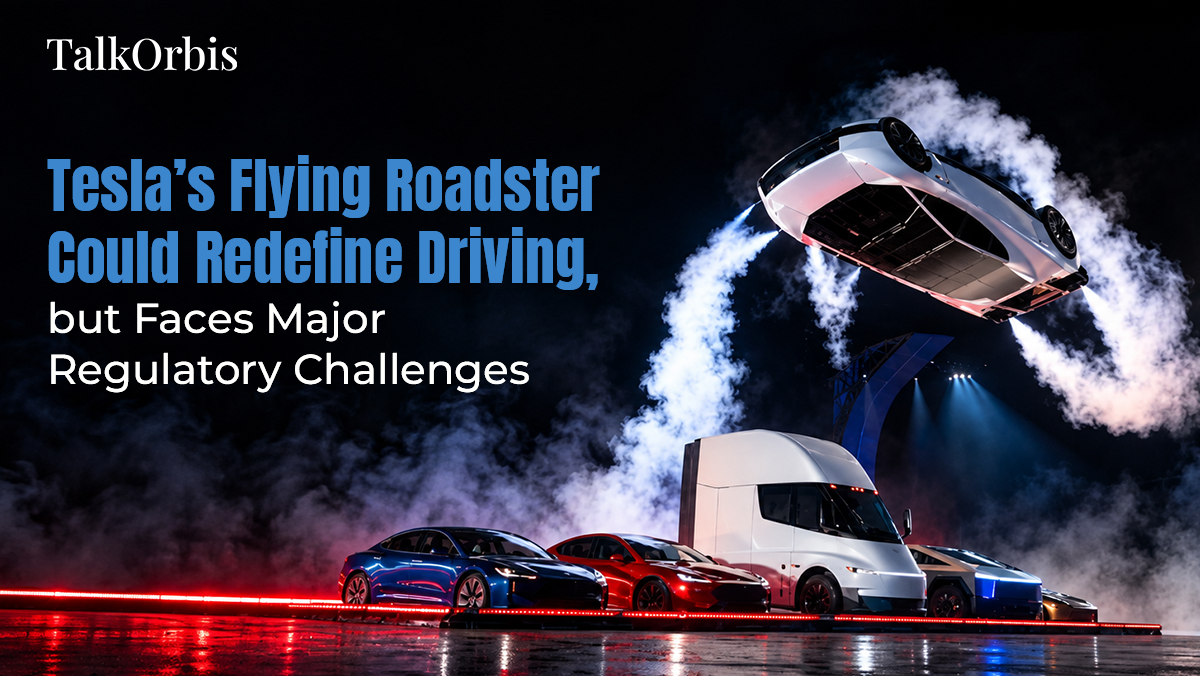
Tesla’s ambitious vision for the future of transportation has once again attracted attention with the concept of a flying Roadster. The idea combines the performance of an electric sports car with technology that could potentially allow the vehicle to rise above the ground. While the concept has generated excitement among technology enthusiasts, it also raises important questions about engineering, road safety, aviation regulations and the practical challenges of bringing such a vehicle to market.
Tesla’s Flying Roadster: A New Direction for Electric Vehicles
Tesla has built its reputation around electric vehicles, advanced software and innovations designed to change the automotive industry. The Roadster, positioned as a high-performance electric sports car, has long been associated with the company’s ambitions to push the boundaries of vehicle performance.
The flying Roadster concept takes that ambition a step further. Discussions surrounding the vehicle have included the possibility of using advanced propulsion technology to achieve short periods of flight or hovering. Such capabilities would represent a significant departure from conventional electric vehicles, which are designed primarily for travel on roads.
However, it is important to distinguish between a proposed feature, a demonstration and a commercially available product. Any claims about the Roadster’s flight capabilities need to be assessed against verified technical demonstrations and official specifications.
How Could a Flying Roadster Work?
Developing a vehicle that can operate both on roads and in the air would require considerably more engineering than building a conventional electric sports car. Engineers would need to address propulsion, vehicle stability, energy consumption, thermal management and passenger protection.
One possible approach could involve a specialised propulsion system that generates sufficient thrust to lift the vehicle. Technologies such as electric ducted fans or other forms of vertical-lift propulsion are being explored across the broader advanced air mobility industry. However, the precise technical configuration and capabilities of Tesla’s proposed Roadster should not be assumed without official confirmation.
Battery performance would also be a major consideration. Flying requires substantial energy, and adding aviation equipment could increase the vehicle’s weight. Engineers would need to balance acceleration, driving range, flight duration and passenger safety without compromising the car’s performance on ordinary roads.
Software would play an equally important role. A vehicle operating in two different environments would require reliable control systems, sensors and safeguards to manage transitions between road travel and any airborne operation.
Regulatory Approval Could Be the Biggest Obstacle
Even if the engineering challenges can be addressed, regulatory approval could prove to be one of the most difficult parts of bringing a flying Roadster to market.
Traditional passenger cars and aircraft are governed by different safety standards. A road vehicle must comply with applicable motor vehicle regulations, while an aircraft must meet aviation requirements covering areas such as airworthiness, propulsion, operating procedures and pilot or operator responsibilities.
A vehicle designed to perform both functions could face requirements from multiple regulatory authorities. In the United States, for example, the National Highway Traffic Safety Administration oversees federal motor vehicle safety standards, while the Federal Aviation Administration regulates relevant aspects of civil aviation.
Regulators would need to determine how such a vehicle should be classified, what testing it must pass and which operating restrictions should apply. The approval process could also depend on whether the technology is intended for private use, controlled demonstrations or broader commercial transportation.
These questions become even more complicated when considering where and how a flying vehicle could operate. Rules governing airspace, take-off and landing locations, minimum safe altitudes and proximity to populated areas would all be relevant.
Safety and Infrastructure Remain Key Concerns
The possibility of a car taking to the air may sound attractive, but practical deployment would require extensive safety measures. A flying vehicle would need to protect passengers while minimising risks to pedestrians, other motorists and people on the ground.
Potential failure scenarios would also require careful assessment. Engineers and regulators would need to consider what happens if a propulsion component fails, a battery overheats or the vehicle loses control during an airborne manoeuvre.
Infrastructure presents another challenge. Conventional cars can use existing roads, parking facilities and service stations. Vehicles capable of vertical take-off and landing may require designated operating areas, suitable clearances, emergency procedures and specialised maintenance facilities.
Noise, energy consumption and environmental effects would also influence public acceptance. Even if a flying Roadster could be technically demonstrated, making it safe, affordable and practical for everyday use would be a separate challenge.
What It Could Mean for the Future of Mobility
The flying Roadster concept reflects a wider interest in combining electric propulsion, automation and new forms of transportation. Companies working on electric vertical take-off and landing aircraft, often called eVTOLs, are already exploring ways to support specialised air mobility applications.
Tesla’s broader significance in this area would depend on the technology it can demonstrate and the practical benefits it can deliver. A successful road-and-air vehicle could potentially open new possibilities for performance engineering and personal transportation. However, it would also need to compete with the simpler economics and established infrastructure of conventional vehicles.
For consumers, the most important questions would concern cost, reliability, maintenance, insurance and where the vehicle could legally operate. These factors would ultimately determine whether flying capability becomes a useful transportation feature or remains a specialised demonstration of engineering.
Conclusion
Tesla’s flying Roadster concept highlights the growing ambition to move beyond traditional automotive design. Combining electric performance with airborne capability could represent a remarkable technological development, but it would require substantial engineering, rigorous safety testing and a clear regulatory pathway.
For now, the distinction between concept, demonstrated capability and an approved production vehicle remains essential. The future of such technology will depend not only on whether a vehicle can leave the ground, but also on whether it can do so safely, reliably and within the rules governing both road transport and aviation.
Source: Hindustan Times – Tesla’s flying Roadster defies gravity, and will be a regulatory puzzle
Trending News









Trending News
Related Popular News
-
 By Prerna Saini | October 19, 2026
Space Robotics Startup Cosmochute Raises $1.5 Million in Pre-Seed Funding
Read More -
 By Prerna Saini | October 14, 2026
TPG-Backed NewQuest Sells Additional Stake in Shadowfax Through Bulk Deal
Read More