The Rise of the Green Hydrogen Economy: Powering the Next Industrial Revolution
TalkOrbis News | Global Energy & Sustainability
As the world races toward net-zero emissions, green hydrogen is emerging as one of the most promising solutions to decarbonize heavy industries, transportation, and energy systems. Often called the “fuel of the future,” green hydrogen is now moving beyond pilot projects into large-scale investments, global partnerships, and national policy frameworks.
From Europe and the Middle East to India and Australia, governments and corporations are accelerating their commitments to build a robust green hydrogen economy — one that could redefine global energy markets over the next two decades.
What Is Green Hydrogen — and Why It Matters
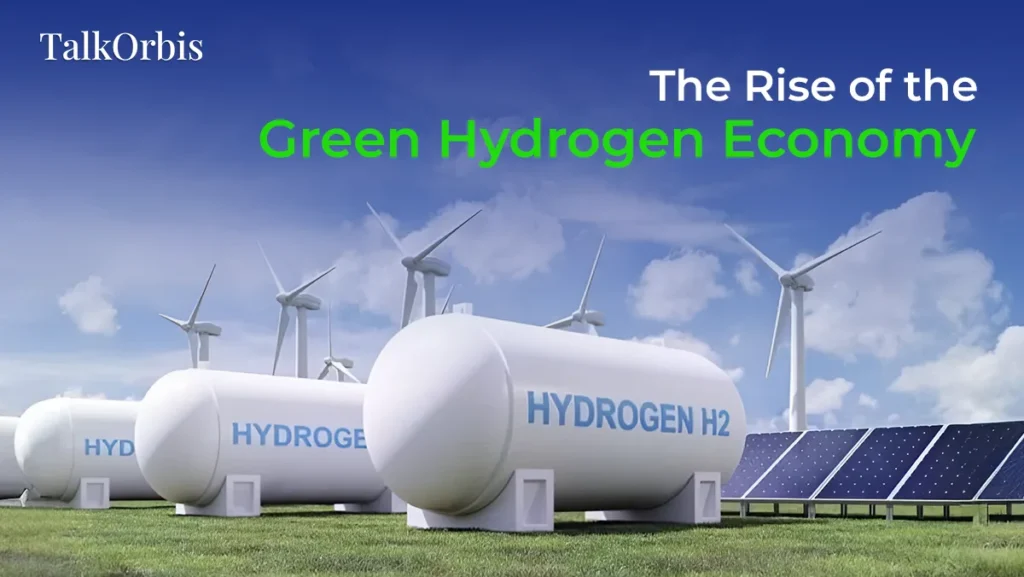
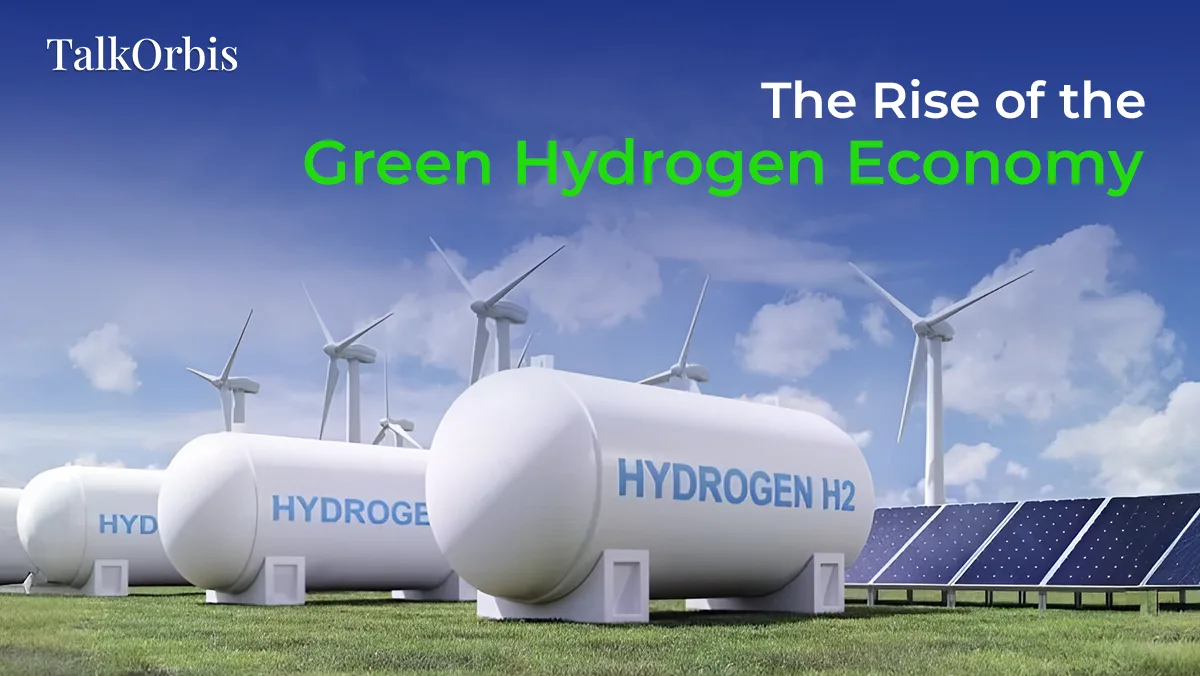
Hydrogen becomes “green” when it is produced using renewable energy sources such as solar or wind power through electrolysis, splitting water into hydrogen and oxygen without emitting carbon dioxide.
Unlike fossil-fuel-based hydrogen (grey or blue hydrogen), green hydrogen produces zero direct carbon emissions, making it a powerful tool in the fight against climate change.
Its applications are expanding rapidly across:
- Steel and cement manufacturing
- Fertilizer production
- Long-haul transportation
- Shipping and aviation fuel
- Energy storage and grid balancing
Energy analysts suggest green hydrogen could account for 10–15% of global energy demand by 2050.
Massive Global Investments Reshape Energy Markets
Over the past three years, global green hydrogen project announcements have crossed $300 billion in proposed investments, according to energy market trackers.
Major developments include:
- Europe’s Hydrogen Strategy targeting 40 GW of electrolyzer capacity
- Middle Eastern nations building large-scale hydrogen export hubs
- Australia positioning itself as a renewable hydrogen exporter
- India launching its National Green Hydrogen Mission
India alone has set a target to produce 5 million metric tons of green hydrogen annually by 2030, aiming to become a global export leader while reducing fossil fuel imports.
An energy policy expert noted:
“Green hydrogen has shifted from a climate experiment to an industrial priority. The countries that scale production first will dominate future clean energy trade.”
Industrial Decarbonization: The Biggest Opportunity
Heavy industries such as steel, chemicals, and refining account for a significant share of global carbon emissions. Many of these sectors cannot be easily electrified — making green hydrogen a viable alternative fuel.
Green hydrogen-based steel production, often called “green steel,” is already being piloted in Europe and Asia. If scaled effectively, it could dramatically cut emissions in one of the world’s most carbon-intensive industries.
Similarly, hydrogen-powered heavy vehicles and shipping fleets are being tested as solutions to reduce emissions in long-distance transport.
Challenges Slowing Widespread Adoption
Despite the optimism, the green hydrogen economy faces critical challenges:
- High production costs compared to fossil fuels
- Limited electrolyzer manufacturing capacity
- Infrastructure gaps in storage and transport
- Energy-intensive production processes
Currently, green hydrogen costs are estimated to be 2–3 times higher than grey hydrogen. However, experts expect prices to decline significantly by 2030 as renewable energy becomes cheaper and manufacturing scales up.
A renewable energy analyst stated:
“Cost parity is the tipping point. Once green hydrogen becomes competitive, adoption will accelerate exponentially.”
The Role of Public-Private Partnerships
The development of a global hydrogen economy requires collaboration across governments, corporations, utilities, and investors.
Several nations are offering:
- Production-linked incentives
- Carbon pricing mechanisms
- Infrastructure subsidies
- Research and development grants
Corporate giants in energy, shipping, automotive, and aviation are forming strategic alliances to build integrated hydrogen value chains — from production to distribution.
What This Means for Emerging Economies
For developing countries, green hydrogen presents both an environmental and economic opportunity.
Nations rich in renewable resources — such as solar and wind — can become exporters of clean fuel, attracting foreign investment, creating jobs, and strengthening energy independence.
India, in particular, is positioning itself as a low-cost hydrogen producer by leveraging its expanding renewable energy capacity and manufacturing ecosystem.
A Turning Point for Global Energy
The green hydrogen economy represents more than just a technological shift — it signals a structural transformation in how the world produces and consumes energy.
If costs decline and infrastructure scales efficiently, hydrogen could:
✔ Reduce global industrial emissions
✔ Strengthen energy security
✔ Create new global trade corridors
✔ Accelerate net-zero targets
Looking Ahead
The next five years will be decisive. Pilot projects must transition into commercial-scale operations, supply chains need to mature, and policy support must remain consistent.
While challenges remain, the momentum behind green hydrogen suggests it will play a central role in the next industrial revolution — one powered not by fossil fuels, but by renewable molecules.
TalkOrbis Insight:
Green hydrogen is no longer just a climate solution — it’s a geopolitical and economic strategy. Countries that lead its development today may control tomorrow’s clean energy markets.
Trending News









Trending News
Related Popular News
-

-
 By Prerna Saini | April 15, 2026
Real Estate Market 2026: Is It Booming or Heading for a Slowdown?
Read More