Boston Dynamics Appoints Rohit Prasad as CEO as AI and Robotics Converge
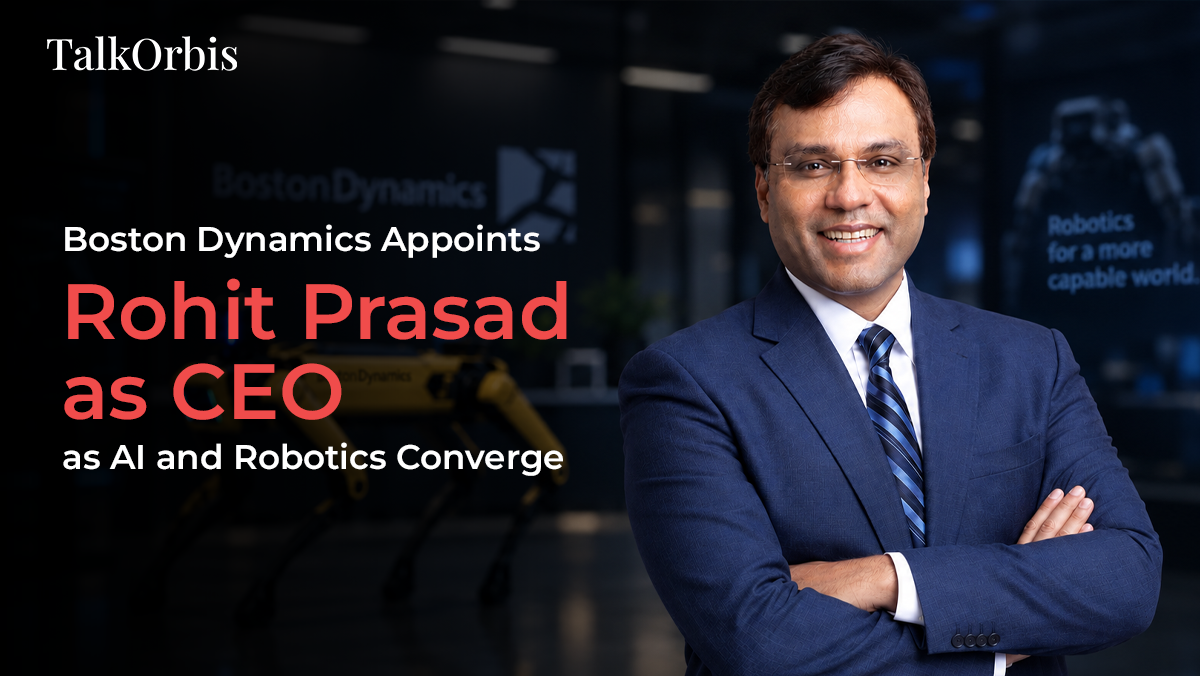
Boston Dynamics has named Rohit Prasad as its new CEO, marking another important step in the growing connection between artificial intelligence and robotics. The appointment comes at a time when robotics companies are increasingly looking beyond mechanical engineering to AI-powered systems that can understand their surroundings, make decisions, and perform complex tasks with greater independence.
The leadership change reflects a broader shift in the robotics industry, where the focus is moving from building machines that can move to developing robots that can think, adapt, and respond to real-world situations.
Bringing Artificial Intelligence and Robotics Closer Together
Boston Dynamics has earned global recognition for developing advanced robots capable of walking, running, maintaining balance, and navigating challenging environments. Its humanoid robot Atlas and four-legged robot Spot have demonstrated how far robotic mobility has progressed in recent years.
However, movement is only one part of the equation. For robots to become more useful in factories, warehouses, and other real-world settings, they also need to interpret information, recognize objects, respond to unexpected changes, and make decisions with minimal human intervention.
This is where artificial intelligence becomes increasingly important. By combining advanced robotics with AI, companies can work toward machines that do more than follow programmed instructions. They can develop systems that learn from their environments and adapt to changing conditions.
Why Rohit Prasad’s Appointment Matters
Prasad’s appointment comes at a significant moment for the robotics sector, as companies explore how AI can make physical machines more capable and practical. His background in artificial intelligence brings a relevant perspective to an industry that is increasingly focused on integrating intelligent software with advanced hardware.
The next phase of robotics will depend not only on how efficiently a robot moves but also on how well it understands its surroundings and determines what to do next. This combination of physical capability and machine intelligence could help expand the role of robots across industrial and commercial applications.
For Boston Dynamics, the challenge will be to translate advances in AI into reliable robotic systems that can operate safely and consistently outside controlled demonstration environments.
The Growing Role of AI-Powered Robots in Industry
AI-powered robotics is becoming an important area of development across manufacturing, logistics, healthcare, and other sectors. Businesses are looking for ways to automate repetitive tasks, improve operational efficiency, and reduce the risks associated with certain forms of manual work.
Humanoid robots, in particular, are attracting attention because their human-like form could allow them to operate in spaces designed for people. However, making these robots genuinely useful requires progress in perception, reasoning, manipulation, safety, and real-time decision-making.
Boston Dynamics’ work in robotic mobility provides a foundation for exploring these possibilities. The integration of more advanced AI capabilities could help bridge the gap between robots that perform impressive demonstrations and machines that deliver consistent value in everyday operations.
What This Means for the Future of Robotics
The convergence of AI and robotics is changing how the industry approaches automation. Traditional robots have generally relied on predefined instructions and structured environments. Newer AI-driven approaches aim to make machines more flexible, allowing them to respond to situations that were not explicitly programmed in advance.
Despite this progress, significant challenges remain. Robots must become more reliable, cost-effective, energy-efficient, and safe enough to work alongside people. Training AI systems to handle unpredictable physical environments also remains a complex task.
Boston Dynamics’ leadership transition arrives as the industry works to address these challenges and move toward broader commercial adoption.
Final Thoughts
Boston Dynamics’ appointment of Rohit Prasad as CEO highlights the increasing importance of artificial intelligence in the future of robotics. As the industry evolves, success will depend on bringing together capable hardware, intelligent software, and practical applications that solve real-world problems.
The long-term opportunity goes beyond creating robots that can walk or perform complex movements. It lies in developing machines that can understand their environments, make useful decisions, and carry out tasks reliably.
As AI and robotics continue to advance together, Boston Dynamics will be operating in a field with significant potential to reshape industrial automation and the way people interact with machines.
Trending News










Trending News
Related Popular News
-
 By Prerna Saini | August 18, 2026
Read-It-Later App Pocket Shut Down — Here Are the Best Alternatives
Read More