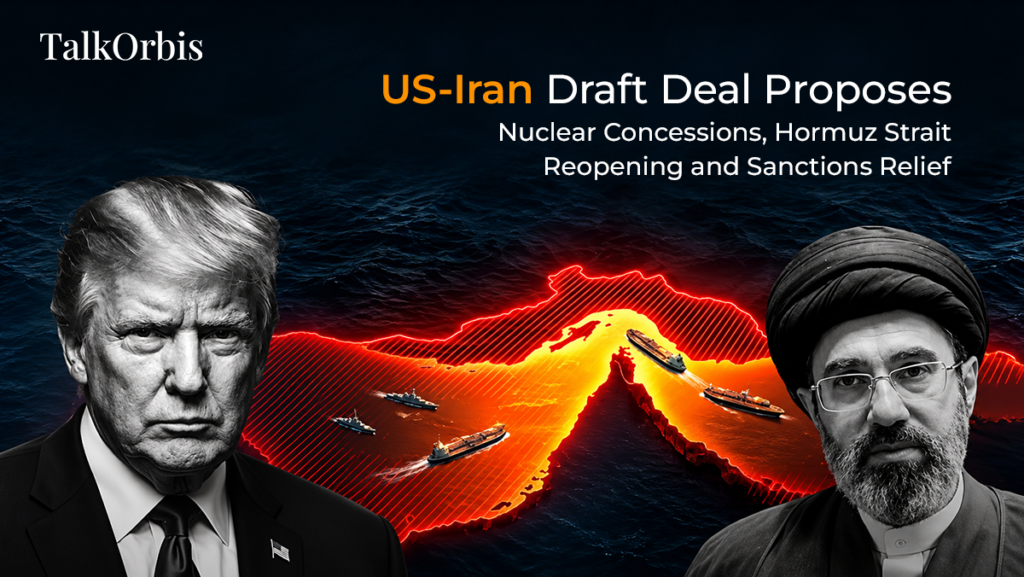
US-Iran Draft Deal Proposes Nuclear Concessions, Hormuz Strait Reopening and Sanctions Relief
A proposed framework between the United States and Iran is reportedly linking nuclear concessions, the reopening of the strategically important Strait of Hormuz and sanctions relief as part of a potential diplomatic agreement. The draft framework could offer a pathway toward reducing tensions between the two countries and restoring stability across the Middle East.
Nuclear Concessions at the Centre of the Proposed Framework
Iran’s nuclear programme remains one of the most significant issues in negotiations with Washington. The proposed framework reportedly focuses on securing commitments from Tehran to limit certain nuclear activities in exchange for economic and diplomatic benefits.
Potential measures could include restrictions on uranium enrichment, enhanced monitoring of nuclear facilities and greater cooperation with international nuclear inspectors. These steps would aim to address international concerns about Iran’s nuclear ambitions and reduce the risk of further escalation.
For the United States, ensuring that Iran’s nuclear programme remains subject to meaningful restrictions would be a central condition for any long-term agreement.
Strait of Hormuz Reopening Could Ease Global Trade Concerns
Another major element of the proposed arrangement involves reopening the Strait of Hormuz, one of the world’s most important maritime shipping routes. Located between Iran and Oman, the waterway connects the Persian Gulf with the Gulf of Oman and the Arabian Sea. It is a critical route for international energy supplies, with a substantial share of global oil shipments passing through it.
Any disruption to shipping through the strait can affect international oil prices, transportation costs and global energy markets. A commitment to ensure safe and uninterrupted commercial shipping could therefore become an important confidence-building measure under the proposed framework.
Sanctions Relief Could Provide Economic Benefits to Iran
Economic sanctions imposed by the United States have significantly affected Iran’s oil exports, financial transactions and access to international markets. The draft framework reportedly connects potential nuclear commitments and regional security measures with sanctions relief. If implemented, this could allow Iran to regain greater access to international trade, financial systems and energy markets. However, the extent and timing of any sanctions relief would likely depend on Iran’s compliance with the agreed conditions and the verification of its commitments.
Challenges Ahead for a Possible Agreement
Despite the potential benefits, reaching a final agreement could remain challenging. Both countries would need to address differences over nuclear restrictions, sanctions implementation, regional security and the verification process.
The proposed framework would also require careful negotiations to ensure that commitments are clearly defined and supported by effective monitoring mechanisms. Any agreement would need to balance Washington’s security concerns with Tehran’s demands for economic relief and recognition of its interests.
What It Could Mean for the Global Economy
A successful agreement between the United States and Iran could have implications far beyond the Middle East. Improved security around the Strait of Hormuz could reduce uncertainty in global energy markets and support international trade. Lower geopolitical risks could also help stabilise oil prices, improve investor confidence and ease concerns among countries dependent on energy imports.
For now, the proposed framework represents a potential diplomatic pathway rather than a confirmed final agreement. Its success will depend on whether both sides can turn the proposed conditions into enforceable commitments and achieve a lasting reduction in regional tensions.
Source: US-Iran draft deal proposes uranium transfer, reopening of Strait of Hormuz
Trending News










Trending News
Related Popular News
-
 By Prerna Saini | November 19, 2026
Amazon Announces $7 Billion Green Energy Investment Plan for India by 2030
Read More