From Homemaker to Building India’s First Human Assistance Platform – The Story of CarryMen
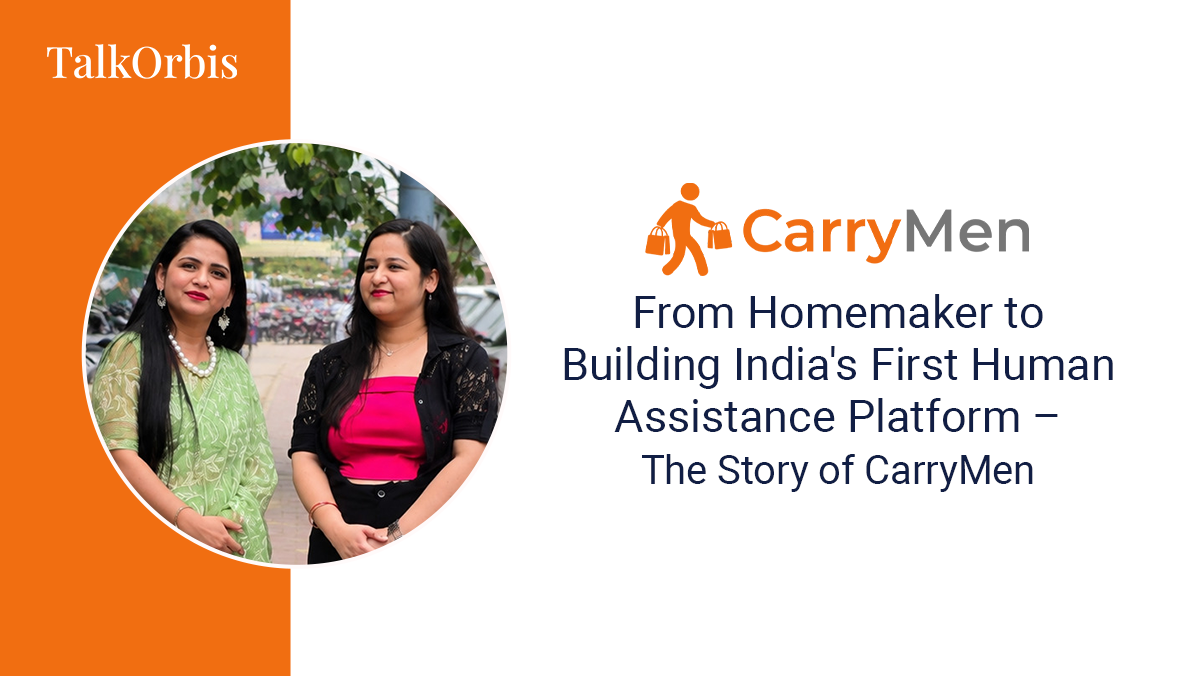
Kanishka Malhotra Co-Founder, CarryMen India Private Limited
Kanishka Malhotra is the Co-Founder of CarryMen India Private Limited, an emerging startup building India's first Human Assistance Platform. Inspired by a personal shopping experience, she transformed a simple everyday problem into an innovative business that provides trusted human assistance for shopping, travel, hospital visits, family support, and personal errands. Her entrepreneurial journey reflects resilience, empathy, and the belief that everyone deserves a helping hand when they need it most.
SUMMARY
- Founded CarryMen to solve a real-life problem experienced by millions—people needing a trusted helping hand for everyday tasks.
- Successfully transformed CarryMen from a shopping assistance service into India's emerging Human Assistance Platform, expanding into travel, healthcare, family assistance, and personal errands.
- Bootstrapped startup featured by BBC, ARD Germany, The Times of India, The Economic Times, Dainik Bhaskar, and several leading media platforms while preparing for nationwide expansion through technology and partnerships.
In an era completely obsessed with AI and automated tech, why did you choose to build a business that relies entirely on human effort and empathy?
Artificial Intelligence is transforming the world, and we believe it will continue to improve efficiency in countless ways. However, there are certain aspects of life where technology can never replace genuine human presence. AI can answer your questions, but it cannot hold your shopping bags while you comfort your child. It cannot accompany your elderly parents to a doctor’s appointment, assist a patient in a hospital, or stand beside someone who simply needs another person to help them.
CarryMen was born from this belief—that while technology should enable better services, empathy will always remain human. In fact, we are building a technology-driven platform, but the service itself is delivered by people. Our app uses technology for booking, scheduling, live tracking, payments, and transparency, while the actual value comes from trusted human assistants.
As families become smaller and people lead busier lives, the demand for reliable human assistance will only grow. We are not building a platform to replace people with technology; we are using technology to connect people who need help with people who can provide it. That’s why our tagline is “CarryMen Cares.” Technology powers us, but empathy defines us.
Indian shoppers have carried their own bags for decades; what mental fatigue or frustration did you spot that made them willing to pay for this service?
The problem was never just about carrying bags. It was about everything happening around those bags.
As a mother, I experienced this personally. While shopping, I was trying to manage my child, answer phone calls, compare products, find the right shops, keep track of purchases, and carry heavy bags—all at the same time. I realized the real burden wasn’t the weight of the bags; it was the mental load of trying to do everything alone.
When we spoke to other shoppers, we heard similar stories. Senior citizens found crowded markets exhausting. Families with young children struggled to enjoy outings. Busy professionals often postponed shopping because they didn’t have enough time or support.
People are not paying us to carry bags. They are paying for convenience, peace of mind, and a better experience. CarryMen gives them the freedom to focus on what truly matters while we handle the rest.
Handing over expensive shopping bags to a stranger requires immense faith; how did you crack the psychological barrier of customer trust on the chaotic streets?
Trust wasn’t something we expected customers to give us immediately—it was something we knew we had to earn.
From the very beginning, we focused on professionalism. Every CarryMen assistant is trained, verified, and expected to maintain high standards of behaviour. We also introduced transparent identification, uniforms, customer support, and technology-driven accountability to reassure users.
But the biggest trust-builder was our visibility. We didn’t hide behind an app. We started on the ground, interacting with customers face-to-face, listening to their concerns, and demonstrating our service. Over time, positive customer experiences, word-of-mouth recommendations, and media coverage helped strengthen credibility.
Today, as we transition to an app-based platform, technology such as live tracking, verified profiles, ratings, and secure bookings will further enhance customer confidence. Trust remains the foundation of CarryMen.
Technology can automate tasks, but only people can deliver empathy. CarryMen isn't replacing human connection—we're making it accessible whenever someone needs a helping hand.
When onboarding your assistants, did they initially hesitate to carry bags for others, and how did you help them overcome that mental block?
Initially, some people did associate carrying bags with a low-status job because of traditional social perceptions. Instead of focusing on the task itself, we changed the narrative around the role.
We explain to every CarryMen that they are not “bag carriers”; they are Human Assistants. Their responsibility is to make someone’s day easier—whether that’s helping a senior citizen at a hospital, assisting a family during wedding shopping, accompanying someone to the airport, or simply being an extra helping hand when needed.
We also emphasize dignity, professionalism, and customer service. Just as healthcare workers, hospitality professionals, or flight attendants assist people with care and respect, CarryMen assistants do the same. Once they understand the impact they’re creating in customers’ lives, they begin to take pride in their work. Today, many of our assistants see themselves not just as workers, but as problem solvers and trusted companions.
While social media debates the 'dignity of labor' behind your model, what is the actual ground reality—do your workers face cold snobbery or receive genuine respect?
Our experience on the ground has been far more encouraging than many online assumptions.
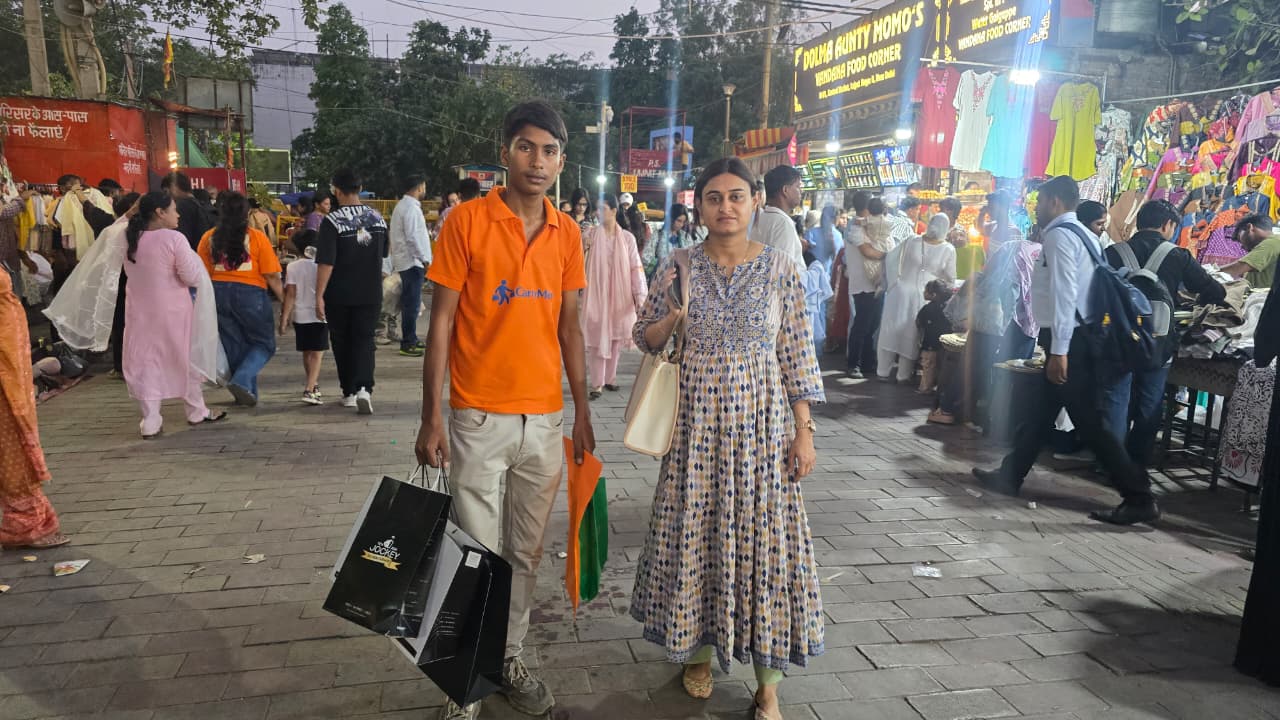
Most customers treat our CarryMen assistants with respect because they quickly realize the value they bring. Whether it’s helping a pregnant woman through a crowded market, supporting an elderly person during a hospital visit, or assisting a family at a railway station, customers often express gratitude rather than looking down on the service. Of course, changing perceptions takes time. Every new category faces questions in its early stages. But we believe dignity comes from the value you create, not from the label attached to a job.
For us, dignity of labour isn’t just a slogan—it’s one of the core values on which CarryMen has been built. Every helping hand deserves respect, and every person who offers that help deserves recognition.
At what point does a premium luxury like a personal porter cross the line and become an absolute everyday necessity for an urban shopper?
I don’t think CarryMen is a luxury service. I think it’s a convenience service that becomes a necessity depending on the situation.
When you’re a young parent managing children in a crowded market, a senior citizen visiting a hospital, someone recovering from an injury, a pregnant woman, or simply a busy professional trying to manage multiple responsibilities, having an extra helping hand is no longer a luxury—it becomes essential. Urban life has changed dramatically. Families are becoming smaller, people are living away from their parents, and time has become one of our most valuable resources.
CarryMen exists for those moments when people need support but don’t have someone available. We are not replacing family—we are filling the gap when family or friends cannot be there. Just as ride-hailing apps made personal transportation more accessible and food delivery changed how we eat, we believe trusted human assistance will become a natural part of urban life.
People don't pay CarryMen to carry bags—they pay us to carry stress, save time, and give them the freedom to enjoy life's important moments.
Do you view CarryMen internally as a logistics network, a premium lifestyle brand, or a social engine designed to provide grassroots employment?
CarryMen is none of those individually—it is a Human Assistance Platform.
While logistics, convenience, and employment are all outcomes of what we do, our primary purpose is much broader. We connect people who need trusted human assistance with trained individuals who can provide that support. On one side, we’re improving everyday life for customers by saving them time, reducing stress, and making daily activities more convenient. On the other side, we’re creating flexible earning opportunities for thousands of people through a dignified, technology-enabled platform.
Our vision isn’t to build India’s biggest shopping assistance company. It’s to build India’s most trusted human assistance network—one that people rely on whenever they need an extra helping hand.
As modern cities become more digital and isolated, do you believe the future actually requires more human-to-human assistance platforms rather than less?
Absolutely.
Technology has made our lives more connected digitally but, in many ways, more isolated socially. Families are increasingly nuclear, children often live in different cities from their parents, and busy schedules leave little time to help loved ones with everyday tasks.
Technology can automate processes, but it cannot replace genuine human presence.In fact, I believe the future will combine both. Technology will make it easier to access services, while people will continue to deliver empathy, care, and trust. CarryMen is being built exactly on this principle. Our app uses technology for booking, scheduling, live tracking, and payments, but the real service is still delivered by another human being.As society evolves, I believe human assistance platforms will become just as important as mobility, food delivery, and healthcare platforms.
Do you foresee a future where mega-malls and traditional markets integrate assisted shopping as a standard infrastructure service rather than a luxury add-on?
Yes, I genuinely believe so.
Retail has evolved from simply selling products to creating memorable customer experiences. Today, malls offer valet parking, concierge desks, children’s play areas, and wheelchair assistance because they understand that convenience encourages people to stay longer and enjoy their visit.
I believe assisted shopping will naturally become another layer of customer experience. Whether it’s helping families with children, assisting senior citizens, supporting tourists, or simply making shopping more comfortable, having trained human assistants available will become part of how modern retail destinations differentiate themselves.
Just as free Wi-Fi was once considered a luxury but is now expected, I believe trusted human assistance will gradually become a standard feature in organized retail.
After watching thousands of shoppers and workers interact closely in Delhi’s busiest markets, what major misconception about human nature was shattered for you?
One misconception that changed for me was the belief that people hesitate to ask for help because they don’t need it. In reality, many people need help—but they hesitate because they don’t want to inconvenience others or feel dependent.We’ve seen customers initially decline assistance, only to later admit how much easier and more enjoyable their experience became after accepting help.
Another realization was how respectful people are when they genuinely understand the value of a service. Many customers don’t see our CarryMen assistants as workers—they see them as companions, problem solvers, and trusted helping hands. That has reinforced our belief that human connection still matters. No matter how advanced technology becomes, kindness, empathy, and a willingness to help will always have a place in society.
Trending Interviews









Trending Interviews
Related Popular Interviews
-
 By Prerna Saini | October 09, 2026
Saubha Aerial Systems – Building Safety Layer for Autonomous Airspace
Read More -
 By Prerna Saini | October 06, 2026
Sanyark Space: Building India’s Navigation Satellite Backbone
Read More