Innovating for a Cleaner Future: How Prasinos Tech is Solving Environmental Challenges
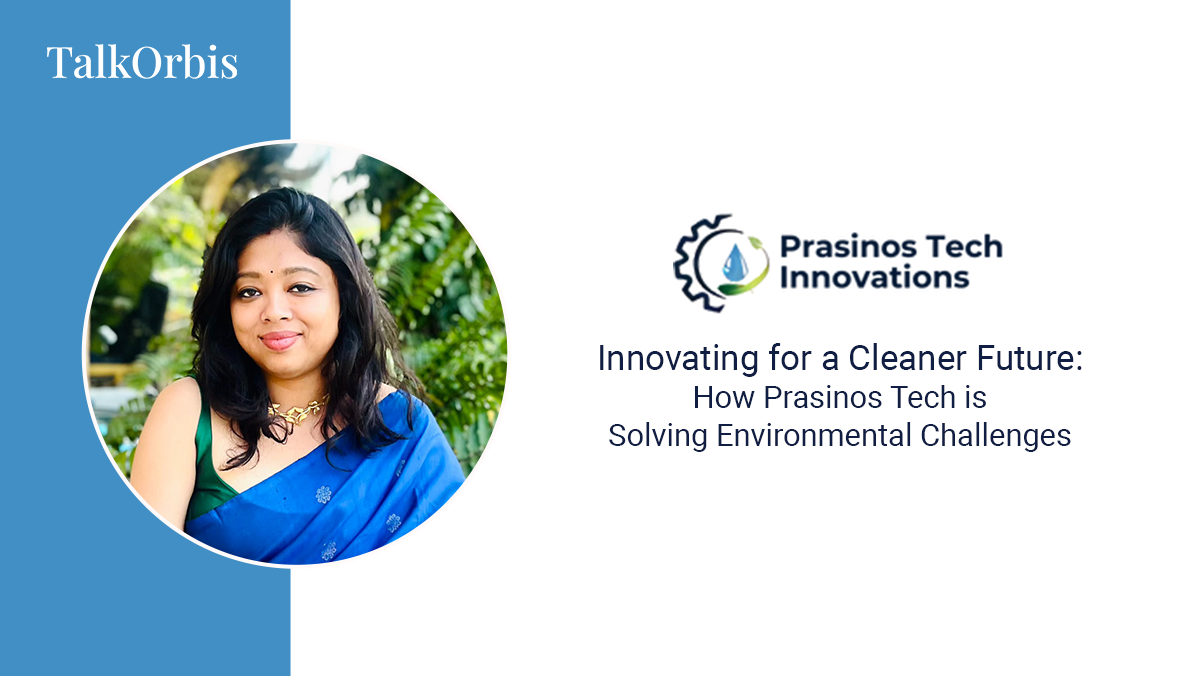
Dr. Aditi Mullick, Founder & MD
Dr. Aditi Mullick is the Founder and Managing Director of Prasinos Tech Innovations Pvt. Ltd., a clean-tech company dedicated to delivering sustainable solutions for water management, wastewater treatment, environmental restoration, and bioenergy applications. With a strong research background in chemical engineering and process intensification, she is driving innovation through advanced technologies that help industries and municipalities improve environmental performance while reducing resource consumption. Her entrepreneurial journey reflects a commitment to transforming environmental challenges into sustainable opportunities.
SUMMARY
- End-to-end environmental solutions provider specializing in water management, wastewater treatment, lake rejuvenation, and bioenergy applications for industries, municipalities, ULBs, and government agencies.
- Developer and manufacturer of advanced CleanTech solutions, including nanobubble systems, hydrodynamic cavitation reactors, ozone treatment systems, ultrasonic algae control technologies and advanced oxidation technologies.
- Committed to sustainability and resource efficiency, helping clients reduce chemical consumption, improve treatment performance, and achieve long-term environmental and operational benefits through innovative, Made-in-India, patented technologies.
For those discovering Prasinos Tech for the first time, what's the story behind the company and the problem you set out to solve?
Prasinos Tech Innovations Pvt. Ltd. was established with a simple yet powerful vision: to bridge the gap between advanced scientific research and real-world environmental challenges. Despite significant investments in water and wastewater infrastructure, many industries, municipalities, and Urban Local Bodies (ULBs) continue to struggle with issues such as poor water quality, algal blooms, inefficient treatment processes, high chemical consumption, and rising operational costs.
Drawing upon years of research and expertise in process intensification technologies, Prasinos Tech set out to develop practical, sustainable, and cost-effective solutions that deliver measurable environmental and economic benefits. The company specializes in advanced technologies such as nanobubbles, hydrodynamic cavitation, ozone-based treatment systems, and ultrasonic algae control, offering end-to-end solutions for water management, wastewater treatment, lake rejuvenation, and bioenergy applications.
By combining scientific innovation with on-ground execution, the company helps clients reduce chemical dependency, improve resource efficiency, restore water bodies, and achieve their sustainability goals. Our mission is to create cleaner, healthier, and more resilient ecosystems through technology-driven environmental stewardship.
Looking back, which decision seemed risky at the time but became a turning point for Prasinos Tech?
One of the most important decisions that shaped Prasinos Tech was transforming years of academic research into commercial products. The foundation of the company was built on the research carried out during research period for both the founder at Indian Institute of Technology Kharagpur, and BITS Pilani where they worked extensively on process intensification technologies such as hydrodynamic cavitation, ultrasound, and advanced treatment processes.
Developing hardware technologies involves long development cycles, extensive field validation, customer education, and continuous refinement. We began with a single technology platform and gradually expanded our portfolio based on industry needs and real-world challenges. Over time, this evolved into multiple product lines, including nanobubble systems, hydrodynamic cavitation reactors, ozone-based treatment solutions, ultrasonic algae control systems, and integrated water treatment solutions. Each successful deployment strengthened our confidence and validated our approach.
Looking back, the decision to build upon a strong research foundation and invest in indigenous product development became the turning point for Prasinos Tech, enabling us to grow from a research-driven startup into an end-to-end environmental solutions provider serving industries, municipalities, ULBs, and other sectors.
What growth strategy worked unexpectedly well for you?
As a technology-driven company introducing innovative solutions such as nanobubbles, hydrodynamic cavitation, and ultrasonic algae control, we initially found that customers were often hesitant to move away from conventional treatment methods. By allowing industries, municipalities, and ULBs to witness the technology’s performance under real operating conditions, we were able to demonstrate measurable improvements in water quality, process efficiency, chemical reduction, and operational costs.
Another factor that contributed to our growth was leveraging our strong research foundation and maintaining close engagement with customers to understand their challenges. This enabled us to continuously refine existing products and develop new solutions tailored to market needs. What started as a necessity due to limited marketing resources ultimately became one of our strongest growth drivers, helping us establish long-term relationships and accelerate adoption across diverse sectors.
The best environmental technologies are often the ones that quietly solve problems every day without adding complexity.

Could you walk us through the Prasinos Tech product portfolio and explain the real-world problem each solution is designed to solve?
What is a belief about the water treatment industry that most people agree with, but you strongly disagree with?
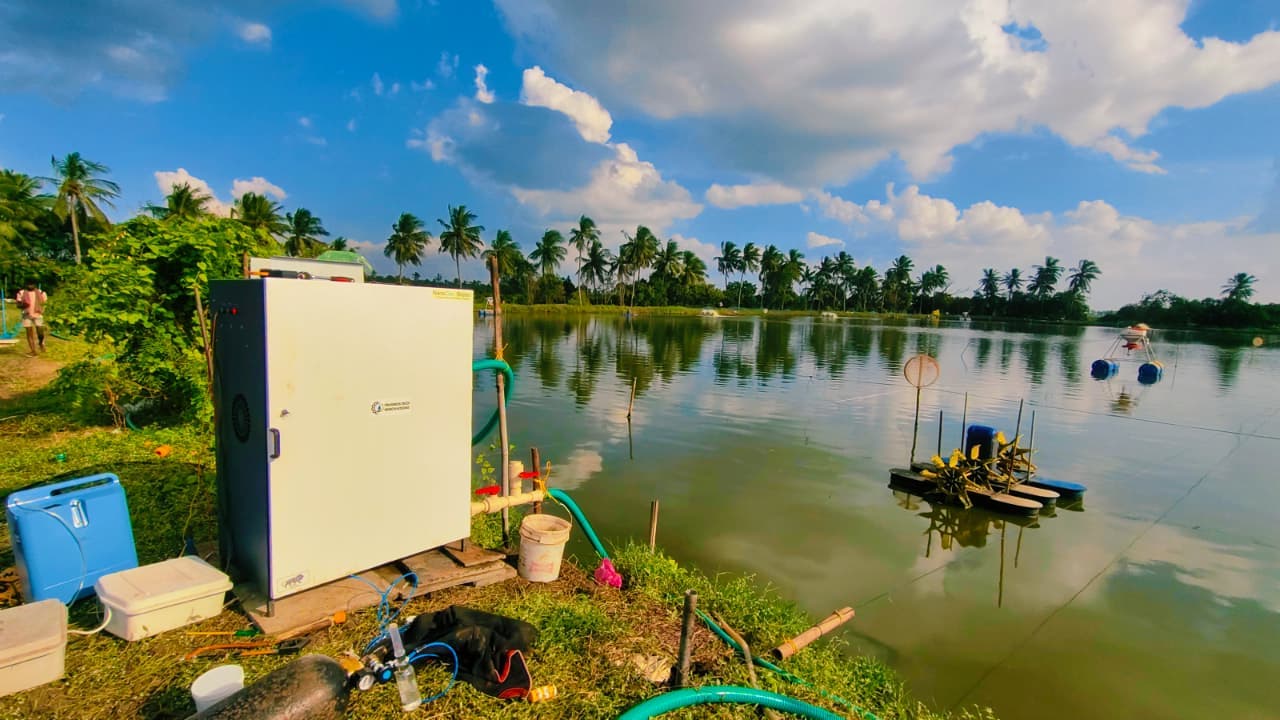
Your solutions focus heavily on reducing chemical dependency. Do you believe the future of water treatment will become largely chemical-free?
Clean water will define the next decade of sustainability. Success will belong to solutions that are intelligent, decentralized, affordable, and scalable.
Which technology trend do you think is overhyped, and which one is being underestimated?
What is one major problem in environmental sustainability that startups are still not solving effectively?
One major problem in environmental sustainability that startups are still not solving effectively is the gap between innovation and large-scale implementation. We see many promising technologies being developed for water treatment, waste management, carbon reduction, and resource recovery, but very few successfully transition from pilot projects to widespread adoption.
The challenge is often not the technology itself—it is scalability, affordability, ease of operation, and integration with existing infrastructure. Many solutions perform well in controlled environments but struggle when deployed in real-world conditions where budgets are limited, operational expertise varies, and infrastructure constraints exist.
In the water sector, for example, there is no shortage of innovative technologies. What is often missing is a holistic approach that combines technology, implementation, financing, stakeholder engagement, and long-term operation. I believe the next generation of successful sustainability startups will be those that focus not only on innovation but also on creating scalable, locally relevant, and implementation-ready solutions that deliver measurable impact at the ground level.
What does the future of water management look like 10 years from now?
Ten years from now, I believe water management will become far more decentralized, intelligent, resource-efficient, and sustainability-driven than it is today. The focus will shift from simply treating water and wastewater to managing water as a valuable resource that can be reused, recovered, and continuously monitored.
We will see wider adoption of advanced technologies such as nanobubbles, advanced oxidation processes, process intensification, smart sensors, AI-driven monitoring, and real-time control systems. The biggest transformation will be the move from reactive management to proactive management, where water quality issues, equipment failures, and pollution risks are identified and addressed before they become major problems.
Freshwater availability is becoming increasingly constrained, making wastewater a valuable resource rather than a waste stream. Water treatment plants will evolve into resource recovery facilities that recover water, energy, and valuable nutrients. At the same time, environmental restoration will become a much larger priority. Lakes, rivers, wetlands, and urban water bodies will no longer be viewed as isolated assets but as critical components of resilient urban infrastructure and climate adaptation strategies.
The most successful solutions will not necessarily be the most complex; they will be the ones that can deliver measurable impact at scale. Ultimately, the future of water management is about doing more with less—less water consumption, less energy, less chemical usage, and less environmental impact—while ensuring sustainable access to clean water for growing populations and industries.
The future of water management lies in smarter, resource-efficient systems that enable water reuse, ecosystem restoration, and sustainable growth while making every drop count.
Trending Interviews










Trending Interviews
Related Popular Interviews
-
 By Prerna Saini | October 09, 2026
Saubha Aerial Systems – Building Safety Layer for Autonomous Airspace
Read More -
 By Prerna Saini | October 06, 2026
Sanyark Space: Building India’s Navigation Satellite Backbone
Read More