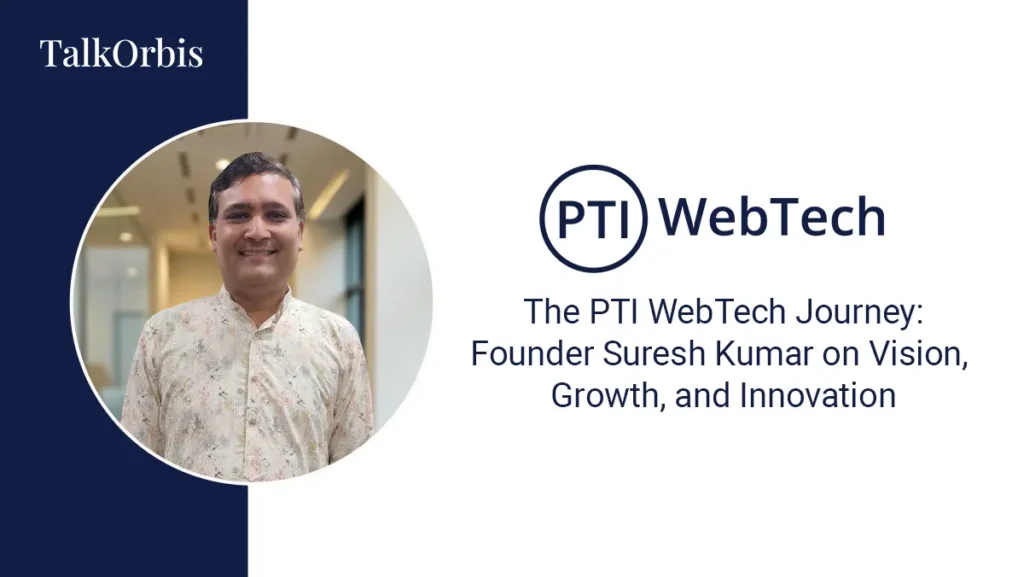
Suresh Kumar, Founder & CEO of PTI WebTech, at the PTI WebTech office in Jaipur.
PTI WebTech is a technology services company specializing in digital transformation, AI-driven solutions, and scalable software development. The company partners with global clients to deliver reliable, future-ready solutions with a focus on innovation, quality, and sustainable growth.
SUMMARY
- The founding journey of PTI WebTech and its evolution into a scalable technology services company
- Leadership decisions, company culture, and lessons from building a resilient team
- The role of AI, automation, and innovation in shaping the future of IT services
What inspired you to co-found Prerna Trimurty Infotech Pvt. Ltd., and what problem were you aiming to solve initially?
I was inspired by a colleague who successfully generated IT project sales through online channels. Using the right tools, platforms, and programming languages, I was able to transform any idea into a practical, technology-driven solution.
How has the vision of PTI WebTech evolved from its inception to today?
Early on, we focused on building a solid technical foundation, overcoming resource constraints, and delivering quality projects on time. The company’s vision expanded from project execution to creating scalable, innovative, and client-centric digital solutions.
As a technology company, PTI WebTech seeks to deliver measurable business value through long-term partnerships, continuous innovation, and long-term partnerships. Our aim is to adopt emerging technologies, improve internal processes, nurture talent, and help clients grow sustainably in an ever-changing digital landscape.
How would you describe your leadership style, especially during uncertain or challenging times?
It is important to me to lead in a collaborative, transparent, and solution-oriented manner, especially during times of uncertainty or challenge. My belief is that clear communication, realistic expectations, and empowering the team are essential to a successful project. When faced with challenging situations, I focus on staying calm, assessing risks pragmatically, making informed decisions, and keeping the team on track.
What has been the most difficult decision you’ve had to make as a CEO?
As a CEO, I have had to make people-related decisions during a critical growth phase. It sometimes meant letting go of team members who were hardworking, but not aligned with the evolving skill requirements and work culture. The decisions were emotionally challenging, but necessary for the long-term stability and performance of the team. Building a strong, future-ready organization requires empathetic yet decisive leadership.
As CEO, I faced the most difficult decision of managing growth responsibly and scaling the business. Our long-term vision and delivery capabilities required us to turn down projects that did not align with our long-term vision and delivery capabilities. A controlled growth strategy ensured quality, client trust, and sustainable progress, but it required discipline and tough decisions.
Taking that decision contributed to the organization’s resilience and focus.
Building a future-ready company requires saying no to the wrong opportunities and staying focused on long-term value. Leadership, especially during uncertain times, is about staying calm, making informed decisions, and being transparent with the team. I believe in empowering people with clarity and responsibility rather than control. When trust and accountability guide decision-making, organizations become more resilient and future-ready
The tech industry is rapidly shifting toward AI and automation—how is PTI WebTech adapting to this change?
By integrating AI and automation into both our solutions and internal processes, PTI WebTech is proactively adapting to this rapid shift. To enhance efficiency, accuracy, and scalability, we constantly upskill our team, experiment with AI-driven tools, and evaluate emerging technologies.
Our focus is on using artificial intelligence, not replacing human expertise, to automate routine workflows, explore AI-powered analytics, personalization, and decision support. We can deliver smarter, faster, and more future-ready solutions by keeping our eyes on long-term business goals and keeping our hands on client needs.
What role do AI, automation, and SaaS play in your current and future service strategy?
AI, automation, and SaaS are central to both our current and future service offerings. Our scalable, cost-effective solutions help us streamline development and improve operational efficiency. Using SaaS models, we ensure flexibility, quicker deployment, and easy scalability, as well as reducing manual effort.
As we look forward, we will focus on building AI-enabled SaaS platforms that adapt to client needs, support data-driven growth, and provide continuous value to clients. With these technologies, we are able to move beyond project-based delivery to long-term digital partnerships.
The IT services industry has seen significant ups and downs in recent years. How did PTI WebTech navigate this phase?
The resilience, adaptability, and trust of PTI WebTech helped them navigate the industry’s ups and downs. We prioritized financial discipline, operational efficiency, and transparent communication during uncertain periods. Instead of reacting impulsively, we reassessed priorities, strengthened core offerings, and optimized internal processes.
During this phase, we also upskilled our workforce, adopted automation, and diversified our service offerings. Despite market fluctuations, we emerged stronger, more agile, and better prepared for future growth due to this proactive and steady approach.
Technology should solve real business problems, not just follow trends. At PTI WebTech, we adopt innovation only when it delivers measurable value and integrates seamlessly with client needs. This approach keeps our solutions practical, scalable, and future-ready.
How important is global clientele to your growth strategy, and what challenges come with it?
A global client base is a key part of PTI WebTech’s growth strategy. It helps us diversify revenue, understand different markets, and build solutions that meet international standards. Working with clients from around the world also pushes us to maintain high levels of quality, security, and scalability while staying competitive.
At the same time, global work brings challenges such as time-zone differences, cultural variations, compliance needs, and communication gaps. We manage these through well-defined processes, clear documentation, the right collaboration tools, and a strong client-first approach. When handled effectively, a global clientele not only supports growth but also strengthens our capabilities and long-term resilience as an organization.
What qualities do you value most when building a strong team?
When building a strong team, I place equal importance on attitude, ownership, and adaptability, along with technical skills. Skills can always be developed, but qualities like integrity, accountability, and a genuine desire to learn are critical for long-term success. I look for people who take responsibility for their work, communicate clearly, and work well with others.
I also value resilience and a problem-solving mindset, especially in a fast-changing technology environment. A team built on trust, continuous learning, and a shared sense of purpose not only delivers better results but also grows stronger along with the organization.
What role does company culture play in sustaining long-term growth?
Company culture plays a key role in supporting long-term growth. At PTI WebTech, our culture shapes how we think, work together, and handle challenges. By focusing on trust, accountability, and continuous improvement, we encourage our teams to take ownership, innovate thoughtfully, and stay aligned with the company’s long-term goals.
A strong culture helps us attract and retain the right people, stay resilient during uncertain times, and deliver consistent value to our clients. Over time, this creates a solid foundation for growth—one that scales without compromising on quality, values, or integrity.
Market slowdowns and tough phases tested patience and belief, not just strategy. Those moments reinforced the importance of fundamentals and built long-term resilience.
What makes PTI WebTech different from other technology service companies in the market?
With PTI WebTech, you get deep technical expertise combined with a deep understanding of business needs. Instead of just delivering technology, we build solutions that solve real problems, scale with growth, and deliver measurable results.
Keeping ahead of change and embracing new technologies like AI and automation is possible through our partnership-driven approach, commitment to quality, and ability to adapt. With a culture of ownership, transparency, and continuous learning, PTI WebTech delivers long-term digital success for its clients.
What are your top priorities for PTI WebTech in the next 2–3 years?
In the next two to three years, PTI WebTech will focus on sustainable growth, innovation, and strengthening client partnerships. Our goal is to expand our AI powered services offerings, develop scalable SaaS solutions, and expand our expertise in emerging technologies.
To support growth without compromising quality, we will continue investing in talent development, process maturity, and operational excellence. A key priority of our next phase will be to expand our global footprint while maintaining strong client trust and a people-centric culture.
How do you see AI reshaping IT services and software development in the coming years?
Across the entire software development lifecycle, AI is set to fundamentally change IT services and software development. In addition to automating coding assistance and testing, AI will enable predictive maintenance, intelligent analytics, and personalized user experiences.
We will see an increase in proactive, insight-driven IT services over the next few years. The development of software will become more adaptive, data-driven, and scalable, enabling businesses to innovate faster while maintaining quality. Our goal at PTI WebTech is not to replace human expertise with AI, but to enhance creativity and decision-making, while providing a long-term benefit to our clients.
A strong, trusted team and a value-driven culture have been central to overcoming challenges. Every client partnership is treated with ownership and accountability, shaping the value we deliver.
What advice would you give to aspiring entrepreneurs entering the IT services industry?
For aspiring entrepreneurs entering the IT services industry, I recommend focusing on fundamentals before pursuing scale. Deliver on your commitments consistently, build strong technical credibility, and understand your clients’ real business problems. It takes time to build trust and reputation, but it can be lost quickly as well.
Be prepared for setbacks in a rapidly changing technology landscape. Invest in continuous learning, embrace new tools like AI and automation thoughtfully, and embrace continuous learning. Build a team that shares your values and vision, because people and culture are as important to sustainable IT success as technology.
If you could go back and give one piece of advice to your younger self, what would it be?
Growing quickly or having all the answers is easy in early stages, but real progress comes from making consistent efforts, learning from failures, and considering options carefully.
I would also remind myself to invest in people, processes, and relationships early on. Achieving short-term success is important, but sustainable success is built with resilience, adaptability, and being true to yourself.
How would you like Prerna Trimurty Infotech Pvt. Ltd. to be remembered in the long run?
Prerna Trimurty Infotech Pvt. Ltd. wants to be remembered for trusted leadership, delivering value through innovation, and fostering lasting impact for both its clients and employees in the long run. We have always strived to solve real problems, build long-term partnerships, and grow responsibly beyond technology.
As our company grows, I hope we leave behind a legacy of reliability, excellence, and positive impact in the technology ecosystem, as well as a strong culture, ethical leadership, and commitment to continuous improvement.
Trending Interviews
Trending Interviews
Related Popular Interviews
-
 By Prerna Saini | March 11, 2026
Divyansh Gupta: The Mind Behind Vipnik Studio’s 3D Animation
Read More