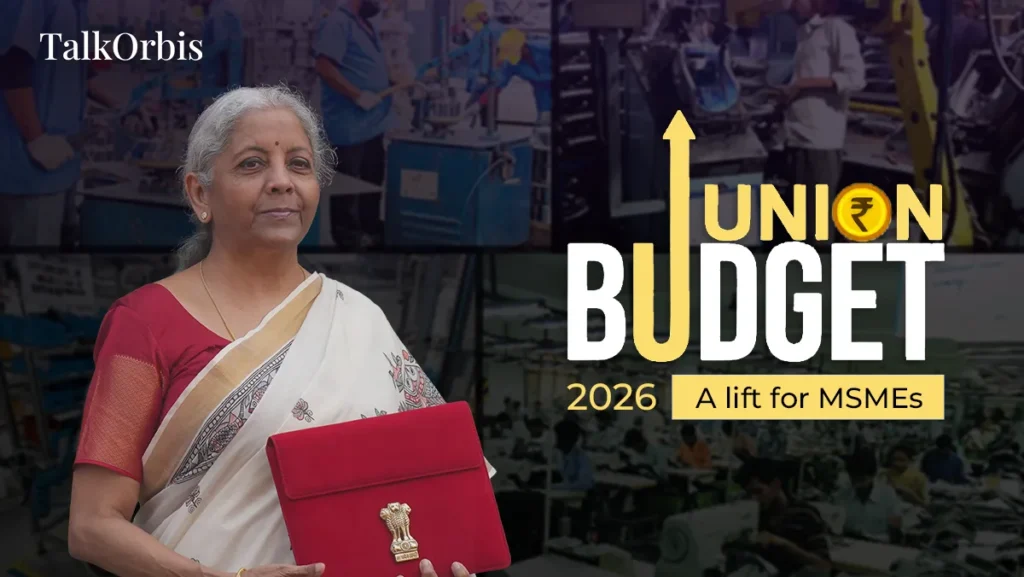
Union Budget 2026: SME Growth Fund, Credit Reforms, and Higher Allocations Signal Strong Push for Startups and MSMEs
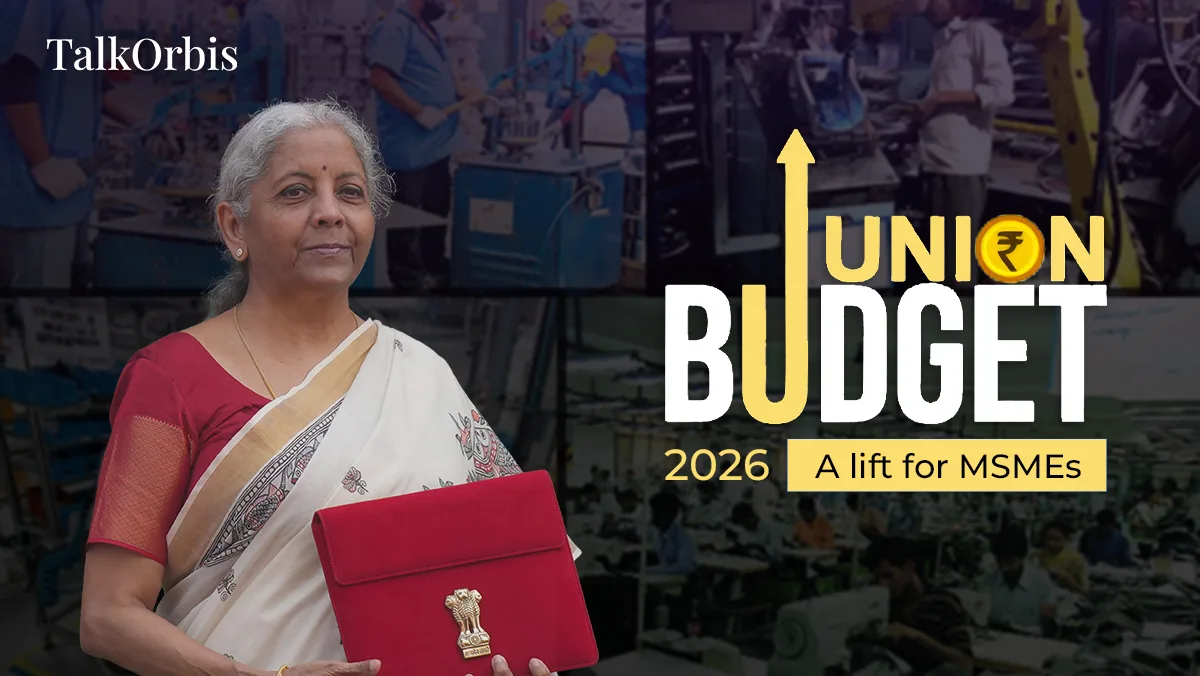
New Delhi:
The Union Budget 2026 has reinforced the government’s commitment to startups and Micro, Small and Medium Enterprises (MSMEs) through higher fiscal allocations, the launch of a ₹10,000 crore SME Growth Fund, and structural reforms aimed at improving liquidity, compliance, and credit flow. Compared to Union Budget 2025, this year’s budget places greater emphasis on execution-driven financial support rather than only regulatory intent.
Finance Minister Nirmala Sitharaman stated that strengthening MSMEs and startups remains critical to sustaining economic growth, employment generation, and export competitiveness.
₹10,000 Crore SME Growth Fund: A Major Budget Highlight
One of the most significant announcements in Union Budget 2026 is the creation of a ₹10,000 crore SME Growth Fund, designed to provide long-term equity and growth capital to scalable MSMEs.
Unlike traditional debt-focused schemes, the SME Growth Fund will support expansion-stage businesses seeking capital for modernization, capacity expansion, and global market entry. Industry observers view this as a strategic shift from short-term credit relief to sustainable enterprise growth.
Source: Union Budget 2026
The SME Growth Fund fills a long-standing gap in patient capital for MSMEs, especially those ready to scale but constrained by balance-sheet limitations,” said a senior industry expert.
Higher Budget Allocation for MSMEs Compared to Budget 2025
The allocation for the Ministry of MSME has been increased to ₹26,000 crore in Budget 2026, compared to approximately ₹22,000 crore in Budget 2025, reflecting a year-on-year increase of nearly 18%.
This rise is largely directed toward:
- Credit facilitation and guarantee schemes
- Technology upgradation programs
- Digitization and skill development initiatives
The increased allocation underscores a shift toward strengthening MSME competitiveness amid rising input costs and global economic uncertainty.
Expanded Credit Guarantee and Liquidity Support
The Credit Guarantee Fund Trust for Micro and Small Enterprises (CGTMSE) has been further expanded in Budget 2026, enabling higher collateral-free loan limits and encouraging banks and NBFCs to extend credit to smaller businesses.
Budget estimates suggest that the enhanced guarantee coverage could help unlock ₹3–4 lakh crore in additional institutional credit, significantly higher than the credit mobilization pace seen in FY 2025.
Corporate Mitras and TReDS Reforms Improve Compliance and Cash Flow
Union Budget 2026 introduces structural measures to ease compliance and improve liquidity through the expansion of Corporate Mitras and reforms to the Trade Receivables Discounting System (TReDS).
Corporate Mitras will act as facilitation partners to help MSMEs navigate regulatory filings, tax compliance, and financial reporting addressing a key operational challenge for small enterprises.
Meanwhile, reforms to the TReDS platform aim to:
- Improve MSME onboarding
- Increase participation of large buyers
- Ensure faster invoice discounting and payments
These steps are expected to reduce payment delays and improve working capital cycles, an issue that remained largely unresolved in Budget 2025.
TReDS reforms could materially improve MSME liquidity if large corporations participate actively,” noted an MSME policy advisor.
Startup Tax Continuity and Funding Support
Building on Budget 2025’s regulatory simplification, Union Budget 2026 extends startup tax holidays and compliance relaxations, providing greater fiscal certainty to early-stage companies.
The Startup India Fund of Funds has also received additional capital infusion, with targeted investments in deep-tech, artificial intelligence, clean energy, fintech, and health-tech startups.
Compared to Budget 2025, which focused on ecosystem stability, Budget 2026 adds stronger financial backing to innovation-led entrepreneurship.
Digital Adoption and Fintech Integration
Digital enablement receives higher funding in Budget 2026, with incentives for MSMEs adopting:
- Cloud-based systems
- AI-driven analytics
- Digital accounting and invoicing
- Cybersecurity frameworks
Manufacturing, Exports, and Employment Linkages
The budget strengthens MSME participation in Production-Linked Incentive (PLI) schemes, benefiting MSME-led supply chains across electronics, textiles, pharmaceuticals, and renewable energy.
Export-oriented MSMEs also gain from enhanced export credit support and market access initiatives. Employment-linked incentives and expanded skill development programs reflect a stronger job-creation focus compared to the previous budget.
Industry Outlook
Experts note that while Budget 2025 laid the groundwork through compliance and policy reforms, Union Budget 2026 marks a decisive shift toward capital deployment, liquidity solutions, and execution-focused measures.
The SME Growth Fund and TReDS reforms signal a more mature and targeted approach to MSME development,” said an economist tracking India’s fiscal strategy.
Conclusion
With the launch of the ₹10,000 crore SME Growth Fund, higher MSME allocations, expanded credit guarantees, and compliance and liquidity reforms, Union Budget 2026 presents a more data-backed and growth-oriented roadmap for startups and MSMEs than Budget 2025. Effective implementation will be key, but the budget clearly positions emerging enterprises at the center of India’s economic agenda.
Trending News










Trending News
Related Popular News
-
 By Prerna Saini | October 09, 2026
Boston Dynamics Appoints Rohit Prasad as CEO as AI and Robotics Converge
Read More -
 By Prerna Saini | August 18, 2026
Read-It-Later App Pocket Shut Down — Here Are the Best Alternatives
Read More